How to Choose the Right Medical Device Components?

How to Choose the Right Medical Device Components?

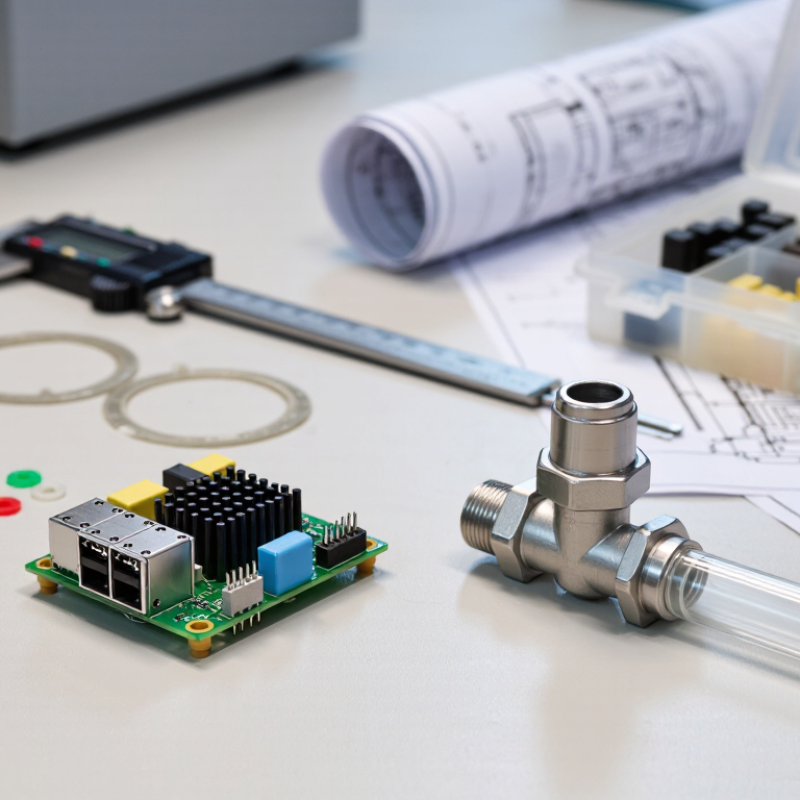
Choosing the right medical device component begins with the device’s intended use, not a supplier’s catalogue. A connector inside a compact monitor faces different demands from a valve exposed to repeated cleaning. Define the operating conditions early. Note temperature, pressure, contact with fluids, expected service life, and how the device will be assembled. Small details matter.

Material choice deserves careful attention. A polymer may reduce weight, while a metal part may provide strength or dimensional stability. Neither is automatically better. Check how materials respond to wear, cleaning agents, sterilization methods, and nearby substances. Confirm that dimensions and tolerances fit the design, especially where seals, moving parts, or electrical contacts meet. A slight mismatch can become a costly problem during assembly or testing.

Supplier selection matters, too. Review technical drawings, material specifications, quality records, and change-control practices. Ask how the supplier verifies consistency between batches. These records help teams assess whether a part can be sourced and inspected reliably. They do not replace engineering review. Discuss critical choices with qualified design, quality, and manufacturing professionals, and verify performance through suitable testing before production decisions are final.

There is no universal checklist. A component that works well in one device may fail in another context. Even careful teams can overlook an interaction between a coating and a cleaning process. That possibility is worth acknowledging. A structured comparison of function, materials, fit, evidence, and supply risks can make decisions clearer—and expose unanswered questions while there is still time to address them.
How to Choose the Right Medical Device Components?

Translate Intended Use into the EU MDR’s Four Risk Classes and Component Needs

How to Choose the Right Medical Device Components?

Translate intended use into risk before comparing component specifications. Under EU MDR 2017/745, devices fall into Classes I, IIa, IIb, or III, from lower to higher risk. Classification depends on the device’s intended purpose and Annex VIII rules, not on a component viewed alone. A sensor used for routine monitoring may call for different evidence than one guiding a critical treatment decision. Same part. Different consequences.

For each component, document its function, patient contact, materials, software role, and effects on safety and performance. A housing may need validated cleaning or sterilization evidence; a patient-contacting polymer may need biological evaluation; a measurement component may need accuracy and stability data. Class I devices can include sterile or measuring devices, with additional requirements for those characteristics. For higher-risk devices, stronger design, verification, and supplier-control evidence is generally needed. Don’t assume “small part” means small risk.

The market is substantial: MedTech Europe’s 2024 Facts & Figures reports a European medical technology market worth about €170 billion in 2022. That scale makes traceable component decisions practical, not paperwork for its own sake. Keep a clear link from intended use to classification, hazards, specifications, and test records. It’s easy to miss one interface. Review changes too: a material swap or firmware update can alter performance, even when the component looks unchanged. The classification rationale deserves a second look.

How to Choose the Right Medical Device Components?

Translate intended use into the EU MDR’s four risk classes and component needs.

How to read this chart: The values show only the ascending order of the EU MDR’s four main risk classes—not measured risk scores. Classification depends on the device’s intended purpose and the applicable rules in MDR Annex VIII; components are not automatically classified separately.

  • Class I: For example, many non-invasive devices under Rule 1. Select components for their intended function and applicable safety, material, and performance requirements. Class I sterile, measuring, and reusable surgical instrument devices have additional classification considerations.
  • Class IIa: Some active diagnostic or monitoring devices fall here, depending on the applicable rule. Check component performance, electrical safety, software, and measurement needs where relevant.
  • Class IIb: Some active therapeutic and longer-term devices fall here, depending on the applicable rule. Consider reliability, protection against foreseeable faults, and performance verification.
  • Class III: Certain implantable devices and devices contacting the heart, central circulatory system, or central nervous system fall here under specified rules. Component selection calls for rigorous evidence on safety, materials, performance, and traceability.

These are general examples, not classification decisions. Confirm the device’s intended purpose and apply the relevant MDR Annex VIII rules before setting component requirements.

Compare Materials Using ISO 10993-1’s Risk-Based Biocompatibility Framework

Choosing a medical device component starts with its contact profile, not a material’s reputation. ISO 10993-1 frames biological evaluation around risk, including the type and duration of body contact. A brief skin-contact part and a long-term implant do not call for the same assessment. Map each component’s contact site, contact time, and intended use before comparing materials. Keep the drawing nearby. A small change in surface area can matter.

Then examine the finished component, not just its raw material. Additives, colorants, machining residues, cleaning, and sterilization may affect biological risk. Review relevant supplier data, but check whether it covers the same formulation and processing conditions.

Identify the biological endpoints that apply to the device’s contact category and duration; do not order tests by habit alone. This is not always tidy. Evidence may be incomplete, or two options may carry different uncertainties. Record those gaps, assess the likely exposure, and seek qualified biocompatibility input when needed.

A simple comparison table can help: contact profile, material composition, processing history, available evidence, and unresolved questions.

The safest choice is not automatically the material with the longest history. It is the one whose risks are understood for its actual use.

Match Electrical Components to IEC 60601-1 Safety and Performance Requirements

Choosing electrical components for a medical device starts with the hazards they could create. IEC 60601-1 addresses basic safety and essential performance at the equipment level; a compliant component alone does not make a compliant device. Check the applicable edition, product classification, and any relevant particular standards before setting requirements. Details matter.

For a power supply, review isolation ratings, dielectric strength, creepage and clearance distances, and patient or enclosure leakage-current limits. Then check temperature rise under expected load, including during a fault condition where required. A small transformer may fit the board but run hot beside plastic insulation. That can change the risk picture. Connectors, switches, and cables also need suitable ratings for voltage, current, insulation, and foreseeable handling.

Ask suppliers for traceable test reports and clear conditions behind their ratings. Compare those conditions with the device’s actual operating environment, not just a catalogue headline. Evaluate the assembled system through risk management and testing; electromagnetic compatibility requirements may also apply under IEC 60601-1-2. Keep evidence for design reviews and changes. A spreadsheet can miss a real-world mismatch, so inspect the layout and test representative units. I would revisit assumptions when the enclosure, cable length, or intended use changes. Safety is rarely settled by one certificate.

How to Choose the Right Medical Device Components? — Match Electrical Components to IEC 60601-1 Safety and Performance Requirements

Component Primary function IEC 60601-1 selection considerations Useful verification evidence
Power supply or AC/DC converter Converts input power to the voltages needed by the device. Assess insulation, leakage current, protective-earth provisions where applicable, temperature rise, and performance under normal and single-fault conditions. Suitability depends on the end-equipment design and applied parts. Safety test reports, insulation specifications, leakage-current data, temperature-rise results, and documentation for the intended operating conditions.
Isolation transformer Provides electrical separation between circuits or from the supply. Determine the required means of protection and insulation level from the equipment’s risk analysis and circuit design. Check working voltage, dielectric strength, creepage and clearance distances, and thermal limits. Construction details, insulation-system information, dielectric test results, spacing drawings, and temperature ratings.
Fuse or circuit protective device Limits the consequences of overcurrent or certain fault conditions. Select ratings and interrupting capacity for the supply and prospective fault current. Verify that protection coordinates with wiring and components and does not create unacceptable hazards during fault testing. Rated voltage and current, interrupting-capacity data, time-current characteristics, and fault-condition test results.
Protective-earth terminal and conductor Connects accessible conductive parts to protective earth when required by the equipment’s protection class. Check secure connections, conductor sizing, mechanical robustness, and continuity. Protective-earth arrangements and testing depend on the equipment configuration and applicable requirements. Connection drawings, conductor specifications, assembly instructions, and protective-earth continuity test results.
Insulating enclosure or barrier Prevents access to hazardous live parts and separates circuits. Evaluate insulation type, material properties, thickness, creepage and clearance distances, pollution degree, and expected environmental conditions. Required dimensions cannot be selected without the relevant electrical and construction details. Material specifications, dimensional drawings, flammability information where applicable, and dielectric or accessibility test results.
Signal isolator or optocoupler Transfers signals while providing electrical separation between circuits. Check the component’s insulation ratings against the actual working voltage and required means of protection. Also assess spacing, temperature, aging, and the complete circuit layout; a component rating alone does not establish equipment compliance. Insulation and isolation ratings, package drawings, manufacturer test data, PCB layout review, and system-level dielectric testing.
Connector and cable assembly Carries power or signals between internal circuits, accessories, or the device and patient-contact parts. Confirm voltage, current, insulation, strain relief, temperature, and mechanical endurance. For patient connections, consider applied-part classification and the complete patient circuit, not just the connector. Electrical ratings, wiring diagrams, cable construction data, mechanical test results, and leakage-current test results for the assembled device.
Battery and battery-management circuit Supplies portable or backup power and manages charging and discharge. Assess charging faults, overcurrent and overtemperature protection, accessible voltages, and risks associated with battery failure. Verify performance in normal use and relevant single-fault conditions. Cell and pack specifications, protection-circuit details, charging limits, temperature data, and fault-condition test results.
PCB, tracks, and circuit insulation Provides electrical interconnection and separation between circuits. Review working voltages, creepage and clearance, board material, contamination assumptions, coating use, and manufacturing tolerances. Requirements depend on the circuit’s insulation role and the complete equipment design. PCB layout and stack-up, spacing calculations, material documentation, production controls, and dielectric or leakage-current test results.
Temperature sensor and thermal cutoff Monitors or limits temperatures that could create a hazard or impair performance. Check operating range, placement, response time, failure behavior, and compatibility with the thermal risk analysis. Confirm that relevant normal and single-fault conditions remain controlled. Sensor specifications, calibration records where applicable, circuit response analysis, and thermal test results.

Selection note: IEC 60601-1 compliance is assessed for the finished medical electrical equipment, not established solely by choosing individually rated components. Requirements depend on the device’s intended use, applied-part classification, electrical design, and risk management. Consult the applicable edition and national deviations when planning evaluation.

Qualify Suppliers Against ISO 13485:2016 and the FDA’s 2026 QMSR

How to Choose the Right Medical Device Components?

Qualify Suppliers Against ISO 13485:2016 and the FDA’s 2026 QMSR

A component’s drawing is only part of the decision. Check whether the supplier can consistently meet your specifications, control changes, and provide traceable records. The FDA’s Quality Management System Regulation (QMSR) takes effect on February 2, 2026, and incorporates ISO 13485:2016 by reference, alongside FDA-specific requirements. Supplier qualification should reflect the component’s risk and its role in device safety. A critical molded part deserves closer scrutiny than a standard office item. Certification can be useful evidence, but it does not replace your own evaluation.

Tips: Review the supplier’s quality procedures, inspection records, and change-notification process. Ask how nonconforming parts are contained and investigated. Where risk warrants it, audit the production site or review sample records. Paperwork can look reassuring. It is not proof by itself.

Set acceptance criteria before placing an order. Verify material specifications, tolerances, and packaging requirements against approved documents. Confirm who owns testing, record retention, and notice of process changes. Reassess suppliers when defects, ownership changes, or manufacturing moves occur. Keep decisions and follow-up actions documented. A checklist helps, but it can miss context; discuss unusual findings with quality and engineering staff. Qualification is not a one-time pass. A supplier’s process may change quietly, and that detail can matter.

Validate Components with Risk-Based Tests and Applicable IEC/ISO Standards

A component should be tested against the risks it creates in the finished device, not against a generic checklist. Start with its intended function, patient contact, operating environment, and failure modes. A connector that powers a monitor may need retention, temperature-rise, and electrical testing. A seal may require leak checks after repeated cleaning or aging. Small details matter.

Use the device risk analysis to set test scope and acceptance limits. ISO 14971 can guide risk-management activities, while IEC 60601-1 may apply to medical electrical equipment. For patient-contacting materials, assess biological safety using the ISO 10993 series. These standards do not automatically certify a component. Confirm the applicable edition, device classification, contact type, and regulatory market with qualified specialists. Test evidence should reflect the actual material, supplier process, and intended use.

Build realistic stresses into the plan. Cycle a cable through expected bends, expose a polymer part to its intended sterilization process, or test a seal after storage and temperature changes. Record methods, sample sizes, failures, and reasons for acceptance. Keep traceable supplier and lot information. A clean report is useful, but it can still miss a weak assumption. One awkward question is worth asking: did the test reproduce how the device will really be used? Review results when designs or manufacturing processes change.