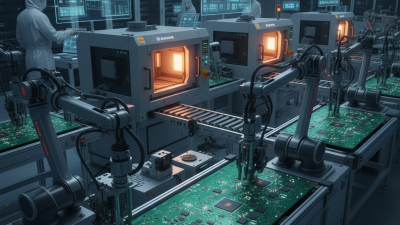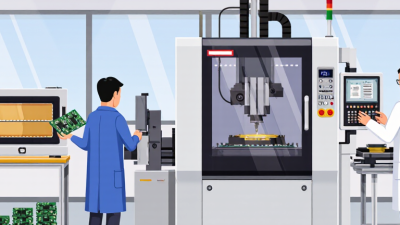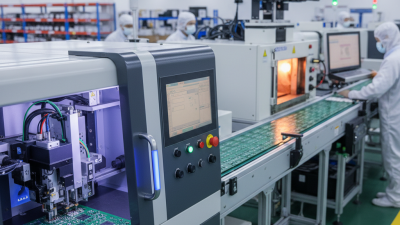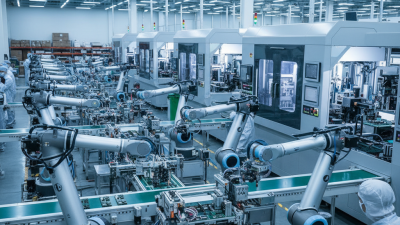
The global printed circuit board industry is becoming more demanding, precise, and equipment-intensive. Modern factories must produce thinner boards, finer traces, higher layer counts, and stronger reliability. Every drill, exposure unit, plating line, and inspection station can affect yield.
IPC’s World PCB Production Report consistently identifies Asia as the dominant PCB manufacturing region. Its findings also highlight the industry’s dependence on advanced production capacity and regional supply chains. Prismark’s Global PCB Industry Report points to continued growth in high-performance applications, including automotive electronics, data centers, telecommunications, and industrial controls. These markets require equipment that can maintain tight tolerances while supporting stable, repeatable output.
Yield matters most.
This is where pcb manufacturing equipment suppliers become strategic partners, rather than simple machinery vendors. A reliable supplier should provide accurate specifications, installation support, process training, spare parts, and measurable after-sales service. SEMI’s semiconductor equipment outlook also shows how strongly manufacturers are investing in automation, inspection, and process control. PCB producers face similar pressures, although their equipment needs differ across fabrication, assembly, and testing.
This guide examines ten leading suppliers worldwide. The evaluation considers drilling accuracy, imaging capability, plating performance, automation, energy efficiency, software integration, and global technical support. Public company information, industry reports, and practical production requirements inform the comparison. No ranking is flawless. Supplier strength can vary by region, board type, factory scale, and maintenance capability. A machine that performs well in a high-volume automotive plant may not suit a flexible prototype workshop. That distinction deserves more attention.
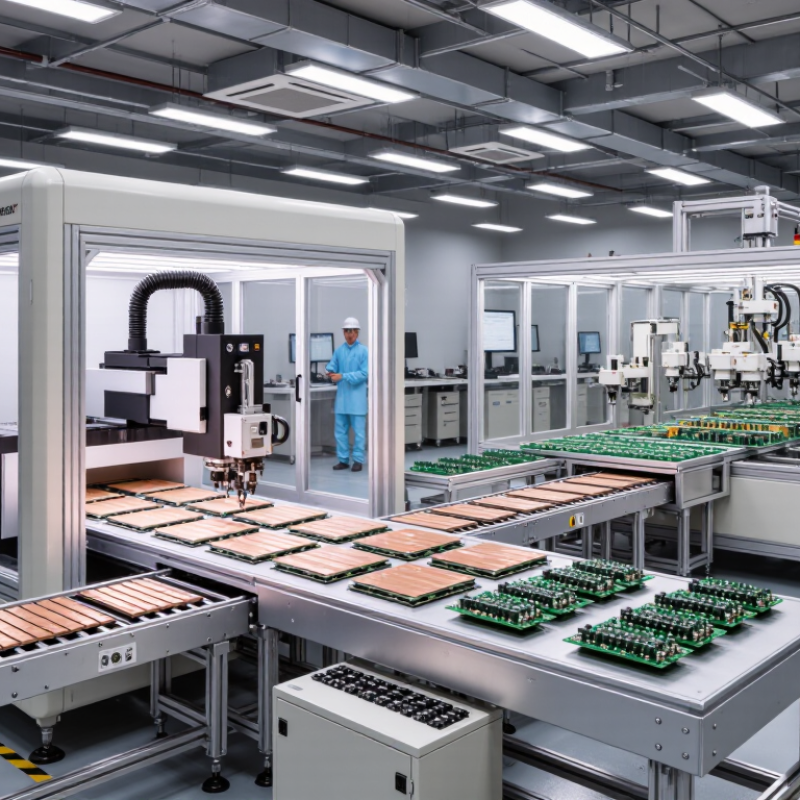
PCB manufacturing equipment suppliers provide far more than individual machines. They support the complete production flow, from material preparation to final inspection. Typical equipment includes CNC drilling systems, laser drills, exposure units, etching lines, plating systems, laminating presses, routing machines, and electrical testers. A copper-clad panel may pass through several controlled stages before becoming a reliable circuit board. Suppliers also provide installation, operator training, process documentation, and maintenance guidance. These services often determine whether equipment performs consistently on the factory floor.
Experienced suppliers help engineers match equipment with board thickness, production volume, line spacing, and factory layout. They may offer automation modules, dust collection, chemical control, spare parts, and software integration. Some also support sample production and process validation before full installation. This practical step can reveal problems with heat, alignment, cycle time, or operator access. No supplier gets every line perfect. Equipment can meet its specifications yet still require adjustment during real production.
Tips: Ask for measurable details, not broad promises. Check drill accuracy, throughput, energy use, maintenance intervals, and safety controls. Request training records and service response times. Review sample boards under realistic conditions. A polished demonstration can hide production difficulties. Visit an operating facility when possible, and ask how rejected panels are analyzed. Suppliers who explain limitations clearly are often more dependable than those offering effortless results.

PCB manufacturing equipment suppliers typically support the complete production flow, from circuit imaging and drilling to plating, inspection, testing, and board profiling. The chart counts representative equipment functions commonly used in each process stage; it does not compare individual companies or brands.
Higher values indicate process stages that generally require more distinct equipment functions. Plating, surface finishing, and inspection often involve multiple specialized systems to meet PCB quality, reliability, and throughput requirements.
The global PCB equipment market is evaluated through more than sales volume. A credible Top 10 list starts with comparable evidence. Analysts examine installation records, production capacity, and verified customer feedback. They also compare drilling speed, imaging resolution, placement accuracy, and defect rates. These figures reveal whether a machine performs beyond a polished brochure. In a factory, a few microns matter.
Reliability receives equal attention. Reviewers track uptime, failure intervals, spare-part availability, and service response. A fast line loses value when technicians wait days for a critical module. Total cost of ownership includes energy use, consumables, software updates, training, and calibration. Regulatory compliance and worker safety are also measured across different production regions. Independent testing helps separate repeatable performance from short demonstrations.
Market evaluation also considers flexibility. Equipment should handle changing board sizes, finer traces, mixed materials, and short production runs. Interface compatibility matters because machines must exchange data with inspection and factory-control systems. Price alone can mislead. A cheaper unit may create hidden rework costs. Still, rankings are not perfectly neutral. Public data can be incomplete, and smaller suppliers may lack global reporting. That weakness deserves attention. Strong assessments combine audited results, field evidence, lifecycle economics, and transparent scoring.
Top 10 PCB Manufacturing Equipment Suppliers Worldwide
The Top 10 PCB Manufacturing Equipment Suppliers Worldwide should be judged by measurable performance, not impressive brochures. A strong supplier may provide drilling, imaging, lamination, plating, inspection, or electrical testing systems. Each machine should match the factory’s board materials, production volume, and tolerance requirements. During equipment trials, observe panel alignment, dust control, cycle time, and operator access. Small details often expose larger reliability problems.
A credible supplier also offers installation guidance, preventive maintenance, spare parts, and responsive technical support. Ask for documented uptime, calibration procedures, training records, and references from comparable factories. Compliance with recognized safety and quality standards matters. So does software stability. A fast machine is not useful when engineers spend hours correcting unstable data. No shortlist is perfect. I would recheck every claim against factory evidence.
Tips: Request sample runs using your actual copper weight, board thickness, and hole design. Measure yield after several production cycles, not after one successful demonstration. Confirm local service coverage and spare-part lead times. Inspect noise, heat, chemical exposure, and cleaning requirements before purchase. Keep a written comparison sheet. It prevents attractive promises from replacing practical judgment.
Top 10 PCB Manufacturing Equipment Suppliers Worldwide
Modern PCB equipment is defined by process control, not machine size. Leading suppliers now combine laser drilling, direct imaging, and automated optical inspection. These systems target finer lines, smaller vias, and fewer yield losses. Prismark’s 2024 industry analysis valued the global PCB market at roughly US$70 billion. It also identified advanced interconnect demand as a major growth driver. That pressure changes factory priorities.
Laser direct imaging aligns circuit patterns without traditional phototools. High-resolution exposure supports tighter registration on thin, flexible panels. Laser drilling creates microvias for high-density interconnect boards. Plasma treatment improves hole-wall cleanliness before copper deposition. Automated optical inspection compares each panel with programmed reference data. Advanced systems add machine vision and statistical process control. IPC’s 2024 Electronics Industry Sentiment report showed persistent concern about costs and supply-chain volatility. Therefore, traceability matters as much as speed.
Energy monitoring is becoming practical, too. Modern plating and imaging lines can track water, chemicals, temperature, and power. This supports tighter process windows and more defensible environmental reporting. The hard lesson is uncomfortable: automation cannot repair poor design rules or unstable materials. I would question any ranking based only on throughput. Uptime, service response, recipe control, and verified yield deserve equal weight. Research reports often simplify these differences. Factory trials reveal them.
| Position | Supplier ID | Primary Equipment Portfolio | Key Technologies Offered | Typical PCB Applications | Automation and Inspection Capabilities | Global Coverage | Technology Breadth |
|---|---|---|---|---|---|---|---|
| 1 | Supplier 01 | Exposure systems Direct imaging Laser drilling AOI | Laser direct imaging for solder mask and circuit layers; high-resolution imaging; automated optical inspection; data-driven process monitoring. | HDI boards, fine-line multilayer boards, rigid-flex boards, and advanced substrate-related applications. | Inline inspection, automatic panel handling, recipe management, barcode traceability, and statistical process control. | Asia-Pacific, Europe, North America, and other export markets | Very high |
| 2 | Supplier 02 | Drilling systems Routing V-scoring Depanelization | High-speed mechanical drilling; CNC routing; laser drilling; automated tool management; precision depanelization. | High-volume rigid boards, multilayer boards, automotive electronics, telecommunications hardware, and consumer electronics. | Multi-spindle platforms, automatic tool changers, vision alignment, production data collection, and panel-level loading systems. | Worldwide through regional service and distribution networks | Very high |
| 3 | Supplier 03 | Wet processing DES lines Etching Stripping Plating | Develop-etch-strip processing; horizontal and vertical conveyorized lines; copper plating; chemical dosing and bath-control systems. | Standard multilayer boards, HDI production, high-density interconnect layers, and high-throughput bare-board manufacturing. | Automatic chemical replenishment, conveyor speed control, filtration, exhaust management, and process-parameter recording. | Asia-Pacific, Europe, the Americas, and emerging PCB production regions | Very high |
| 4 | Supplier 04 | AOI AVI Solder-mask inspection Defect review | 2D automated optical inspection; automated visual inspection; surface defect detection; machine-vision classification and review stations. | Inner-layer circuits, outer-layer patterns, solder mask, silkscreen, surface finish, and final bare-board inspection. | High-speed camera systems, automatic defect classification, CAD-data comparison, closed-loop review, and manufacturing execution interfaces. | Global electronics manufacturing markets | High |
| 5 | Supplier 05 | Lamination presses Vacuum systems Lay-up equipment Bonding systems | Multilayer lamination; vacuum-assisted pressing; controlled heating and cooling; layer registration; automated lay-up and material handling. | Multilayer rigid boards, high-layer-count boards, rigid-flex structures, and boards using low-loss or high-temperature laminates. | Recipe-controlled press cycles, temperature and pressure logging, automated lay-up alignment, and batch traceability. | Asia-Pacific, Europe, North America, and contract manufacturing locations | High |
| 6 | Supplier 06 | Solder-mask lines Screen printing Curtain coating UV curing | Solder-mask coating and exposure; screen printing; ink registration; UV and thermal curing; controlled coating thickness. | Rigid boards, high-volume consumer boards, automotive PCBs, industrial control boards, and mixed-technology assemblies. | Automatic registration, conveyorized curing, ink viscosity control, panel handling, and visual process verification. | Worldwide, with strong coverage in established PCB production hubs | High |
| 7 | Supplier 07 | Surface finishing Electroless copper Electroplating HASL ENIG-compatible lines | Copper deposition; electrolytic plating; immersion and electroless process lines; hot-air solder leveling; chemical process control. | Multilayer boards, HDI boards, fine-pitch boards, lead-free products, and high-reliability industrial or automotive PCBs. | Automatic dosing, bath monitoring, rectifier control, filtration, conveyorized handling, and environmental exhaust systems. | Asia-Pacific, Europe, and North and South American markets | High |
| 8 | Supplier 08 | Electrical test Flying-probe test Fixture test High-voltage test | Bare-board electrical testing; continuity and isolation testing; flying-probe technology; fixture-based testing; dielectric withstand and insulation-resistance testing. | Prototype and low-volume PCBs, complex multilayer boards, high-volume production panels, and safety-critical electronics. | CAD-driven test-program generation, automatic probing, barcode identification, test-result databases, and yield analysis. | Global markets served through direct and channel-based support | High |
| 9 | Supplier 09 | Material handling Clean-room automation Storage systems MES connectivity | Automated guided handling; vertical storage; clean-room compatible transport; panel identification; manufacturing execution integration. | High-volume multilayer production, semiconductor-related substrates, HDI lines, and factories requiring controlled material flow. | Robotic loading and unloading, warehouse control, barcode or RFID tracking, recipe dispatch, and real-time equipment communication. | Major electronics manufacturing regions worldwide | Medium to high |
| 10 | Supplier 10 | Dry-film laminators Film processing Pre-cleaning Exposure support | Dry-film photoresist lamination; surface pre-cleaning; controlled temperature and pressure; film alignment; process preparation for imaging and etching. | Single-sided and multilayer boards, fine-line circuits, HDI outer layers, and high-volume subtractive circuit fabrication. | Automatic panel feeding, temperature monitoring, pressure control, film-width adjustment, and production record management. | Asia-Pacific, Europe, the Americas, and regional PCB clusters | Medium to high |
Note: Supplier IDs are intentionally anonymized. The comparison reflects established PCB equipment categories and commercially used manufacturing technologies; position indicates portfolio breadth and global applicability rather than a verified market-share ranking.
Selecting the right PCB equipment supplier begins with your production reality, not a polished catalog. Define board materials, panel sizes, line speed, accuracy, and expected monthly volume. A supplier may offer drilling, imaging, plating, or inspection systems, but each must fit your process. Ask for measured tolerances, cycle times, energy use, and maintenance intervals. Request trial results using panels similar to yours. A clean demonstration matters.
Evaluate engineering depth and service capability. Review installation records, operator training plans, spare-parts availability, and response times in your region. Ask who handles calibration after commissioning. A capable supplier should explain technical limits without hiding behind vague claims. Check whether software integrates with your existing workflow. During a factory visit, inspect cable labeling, machine access, dust control, and safety procedures. Small details reveal discipline. Do not judge equipment by appearance alone.
Reliability also depends on total ownership cost. Compare warranty terms, preventive-maintenance labor, consumables, utilities, and expected downtime. Request references from facilities with similar board complexity, not only large-volume plants. Independent test data is more useful than promotional language. I have seen buyers choose the lowest quotation, then discover expensive setup delays. That mistake is easy to repeat. Leave room for uncertainty, and record every promised specification in the contract. A supplier willing to discuss weaknesses may deserve closer consideration.