Top PCB Assembly Equipment Suppliers Worldwide
The global electronics industry is entering a more demanding phase. Products are smaller, faster, and harder to assemble. At the same time, manufacturers face labor shortages, tighter traceability requirements, and pressure to reduce material waste. These conditions have made pcb assembly equipment a strategic investment, not merely a production expense.
Industry data supports this shift. IPC’s electronics industry and PCB statistical programs track bookings, shipments, and factory sentiment across major regions. Their reports show how quickly demand can change between consumer, automotive, industrial, and defense-related electronics. Market estimates from MarketsandMarkets and Fortune Business Insights also indicate continued growth in PCB assembly equipment, although their market values and forecasts differ. That difference matters. Forecasts are useful, but they are not factory evidence.
Michael Ford, a senior director at Aegis Software and a recognized Industry 4.0 specialist, has stated, “The smart factory is not a destination, but a journey.” His point is practical. A fast placement machine cannot fix weak process data, poor feeder control, or incomplete operator training. Buyers should examine placement accuracy, line balancing, inspection depth, software connectivity, changeover time, service response, and total operating cost. A shiny machine may still create expensive bottlenecks.
This guide reviews top PCB assembly equipment suppliers worldwide through those measurable criteria. It considers real production needs, from compact SMT lines to high-mix factories with frequent product changes. Rankings can never fit every plant. That is the uncomfortable part. A supplier leading in automotive automation may not suit a small contract manufacturer. Reliable selection requires evidence, site experience, and careful comparison.
Global PCB Assembly Equipment Market Size, Growth Rates, and 2030 Forecasts
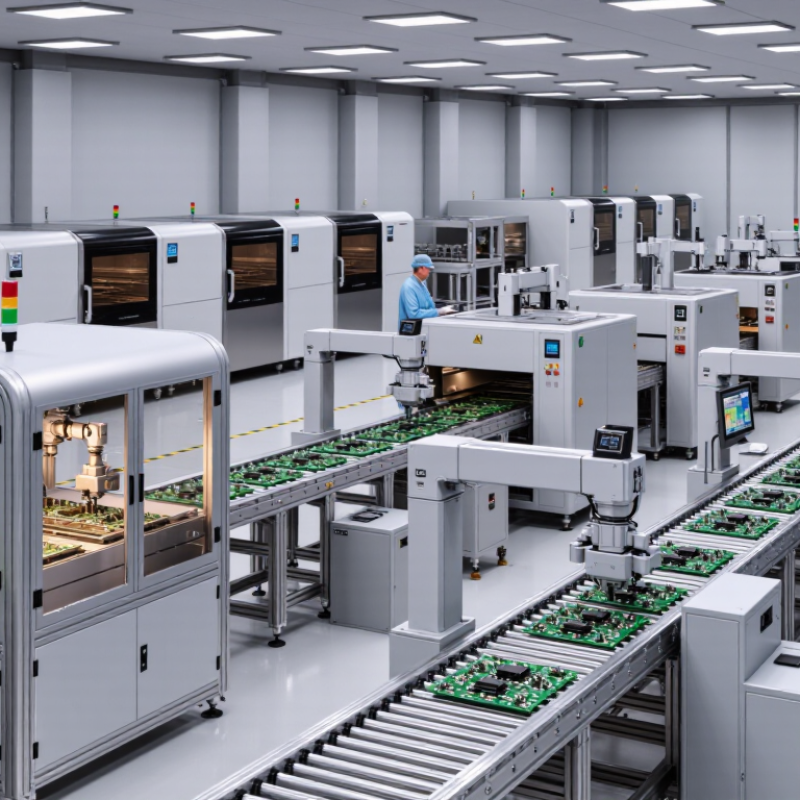
The global PCB assembly equipment market is entering a steady expansion cycle. Fortune Business Insights estimates the market at approximately USD 2.6 billion in 2023. Its forecast suggests growth toward about USD 4.0 billion by 2032, with a compound annual growth rate near 5%.
This outlook reflects rising demand for compact electronics, electric vehicles, medical devices, and industrial controls. Automated placement systems, solder paste inspection, reflow equipment, and optical inspection remain major investment areas. MarketsandMarkets also identifies automation and connected production as key market drivers through 2030. However, estimates differ between reports. Some studies count only assembly machines, while others include inspection software and production services. That difference matters.
Regional demand is uneven. Asia-Pacific continues to represent the largest manufacturing base, supported by dense electronics supply chains. North America and Europe are investing more in regional production, traceability, and resilient sourcing. The shift may increase equipment demand, but installation costs and technician shortages remain practical barriers. Growth will not be perfectly smooth.
Tips: Compare machine uptime, placement accuracy, service response, and software compatibility. A lower purchase price can hide training, maintenance, and integration costs. Ask suppliers for verified production data from similar board types.
A useful 2030 purchasing model should include total ownership cost, not only equipment price. It should also test smaller batch sizes and frequent product changes. Many forecasts appear optimistic here. Real factories still face changeover delays, operator learning curves, and uneven component availability.
SMT Line Equipment: Printers, Pick-and-Place Machines, and Reflow Ovens
A reliable SMT line begins with a stable solder paste printer. Engineers should check stencil alignment, squeegee pressure, paste temperature, and board support. A printer that leaves uneven deposits can create hidden defects before placement begins. Regular inspection of paste volume is essential. Small errors multiply.
Pick-and-place machines must match the product mix, component range, and required throughput. High-speed placement is valuable, but accuracy matters more for fine-pitch packages and small passive parts. Feeder condition, nozzle cleanliness, and vision calibration directly affect placement quality. In practice, line operators should record stoppages and repeated misplacements. These records reveal problems that machine specifications may not show. Do not guess.
Reflow ovens require careful thermal profiling for each board design. Zone temperature, conveyor speed, and soak time influence solder joint strength and component safety. Engineers should measure profiles at several board locations, especially near large copper areas and heavy components. IPC-based inspection practices can support consistent acceptance decisions. Still, a profile may pass once and drift later. Preventive maintenance, traceable process data, and trained technicians improve supplier reliability. Some line designs look efficient on paper, yet changeover time remains underestimated. That oversight deserves honest review.
Inspection and Testing Leaders Using SPI, AOI, AXI, and ICT Technologies
Choosing PCB assembly equipment suppliers worldwide requires more than comparing machine speeds. Inspection and testing capability often reveals a supplier’s real manufacturing maturity. In production audits, I look for clear links between SPI, AOI, AXI, and ICT data. Each system should support a specific quality decision, not simply produce attractive charts.
SPI measures solder paste volume, height, area, and position before component placement. It can catch open deposits early, when correction remains inexpensive. AOI then checks placement, polarity, solder joints, and visible defects. However, reflective surfaces and crowded assemblies can confuse optical systems. Good suppliers combine software review with trained operator judgment.
AXI examines hidden solder connections beneath packages and shields. It is valuable for detecting voids, bridges, and incomplete joints that cameras cannot see. ICT checks electrical paths, component values, shorts, and certain assembly faults. The strongest equipment providers connect these technologies through traceable records and controlled calibration. That sounds straightforward. It is not always perfect.
A reliable supplier also explains false calls, inspection coverage, and maintenance intervals. During one factory review, a low defect rate looked impressive until sampling limits were examined. The data needed context. Buyers should ask how programs are validated, how difficult boards are handled, and how operators respond to uncertain results. Experienced suppliers welcome those questions. Their systems should improve decisions, not hide weaknesses.
Supplier Evaluation by Placement Speed, OEE, IPC Standards, and Service Coverage
Top PCB Assembly Equipment Suppliers Worldwide
Supplier Evaluation by Placement Speed, OEE, IPC Standards, and Service Coverage
Selecting PCB assembly equipment suppliers worldwide requires more than comparing catalog speeds. In factory trials, a quoted placement rate rarely matches mixed-board production. Measure verified placements per hour on your actual component mix, feeder changes, and inspection pauses. Record changeover time, first-pass yield, and downtime by cause. Speed can mislead. OEE provides a better operating picture, combining availability, performance, and quality. Request test data from comparable lines, not only ideal demonstrations.
A reliable evaluation should examine IPC standards in daily practice. Check machine documentation, process controls, calibration records, and operator training against relevant IPC requirements. Ask how nonconforming assemblies are contained and traced. During an audit, review sample build records, maintenance logs, and corrective-action evidence. Paper compliance is not enough. The uncomfortable question is whether the supplier can repeat results after installation.
Service coverage deserves equal weight. Map response times, local technicians, spare-parts access, software support, and remote diagnostics across each production site. A strong supplier defines escalation routes and keeps critical components available. Check contract exclusions carefully. Our early scorecard overvalued placement speed and undervalued training delays. That mistake changed the ranking. A practical scorecard should weight OEE, verified quality, IPC discipline, and lifecycle support beside headline speed.
Top PCB Assembly Equipment Suppliers Worldwide: Industry Reference Benchmarks
This chart uses non-brand industry reference values for evaluating PCB assembly equipment by placement speed, OEE, IPC-related process requirements, and service coverage. The figures are benchmarks rather than supplier-specific claims.
Reference points: high-speed SMT placement equipment can reach approximately 60,000 components per hour; 85% OEE is widely used as a world-class manufacturing target; four commonly referenced IPC documents include IPC-A-610, J-STD-001, IPC-9851, and IPC/WHMA-A-620; continuous technical support is represented by 24-hour-per-day coverage.