China Top 10 All Electronic Components Suppliers?

China Top 10 All Electronic Components Suppliers?

China has become a major sourcing destination for all electronic components, from resistors and capacitors to sensors, connectors, and integrated circuits. This guide examines ten prominent Chinese suppliers serving manufacturers, distributors, and engineering teams worldwide. The selection considers product range, factory capability, quality systems, export experience, technical support, and customer feedback.

Names alone do not prove reliability. A supplier may offer attractive prices but struggle with traceability, communication, or unstable lead times. Therefore, this overview looks beyond online visibility. It considers practical details, including datasheet accuracy, batch documentation, warehouse conditions, minimum order quantities, and response speed during technical questions. Some suppliers operate large production facilities, while others excel through specialized components and flexible customization. Both models can be valuable.

The list should be treated as a research starting point, not a final purchasing decision. Product availability changes quickly, especially during demand spikes or component shortages. Certifications also require verification for specific factories and product lines. Buyers should request samples, inspect packaging labels, confirm authorized channels, and compare recent quotations before placing orders. That step matters.

This article also recognizes an uncomfortable reality: supplier rankings are never perfectly objective. Public information can be incomplete, and customer experiences may vary by project size. Still, careful comparison can reduce sourcing risks and reveal dependable partners for prototypes, small production runs, and long-term manufacturing programs. The strongest supplier is not always the cheapest. It is the one that consistently delivers the right parts, with clear records, realistic timelines, and accountable support.
China Top 10 All Electronic Components Suppliers?

China’s IC Industry: RMB 1.19 Trillion in 2023, CSIA Data

China’s integrated circuit industry reached RMB 1.19 trillion in 2023, according to CSIA data. This figure reflects a broad ecosystem, including chip design, manufacturing, packaging, testing, equipment, and materials. It also explains why China has become a major sourcing base for electronic components.

For buyers comparing suppliers, the number shows industrial depth, not automatic reliability. A capable supplier should provide traceable batch records, stable production schedules, clear quality procedures, and practical engineering support. Factory audits remain valuable. So do sample tests.

The supply chain can look strong on paper. Details still matter. A procurement team should check lead times, inspection methods, failure analysis, and change-control procedures before placing large orders. Technical documents must match the delivered parts, especially for voltage ratings, tolerances, package dimensions, and operating temperatures.

RMB 1.19 trillion is impressive, but it does not describe every supplier equally. Some companies may offer excellent customization, while others depend heavily on outside production. That difference can affect consistency and delivery risk. Buyers should also review communication speed and after-sales handling. These factors seem ordinary. They often decide whether a component performs well beyond the sample stage. The market is expanding, yet quality control still needs constant attention.
Ranking Framework: Revenue, R&D, Certifications, Capacity, and Global Reach

China Top 10 All Electronic Components Suppliers?

A reliable ranking needs more than sales figures. Revenue shows market strength, but it can hide narrow product coverage or unstable demand. I would examine audited revenue, year-on-year growth, and customer diversity. R&D deserves serious weight, including patent quality, engineering staff, testing laboratories, and new product launches. A supplier with several practical innovations may outperform a larger but slower competitor.

Certifications should be checked by scope, expiry date, and manufacturing site. ISO systems, product safety approvals, and automotive or medical qualifications can reveal operational discipline. Capacity also matters. Review monthly output, equipment automation, yield rates, backup facilities, and lead-time performance. Global reach should include export history, regional warehouses, technical support, and documented traceability. Shipment records and lot codes matter during urgent quality investigations. Still, no ranking is perfect. Public data may be incomplete, and some capacity claims need independent verification.

Tips: Use a weighted scorecard, not personal impressions. Consider revenue at 25%, R&D at 20%, certifications at 20%, capacity at 20%, and global reach at 15%. Adjust the weights for your application. A prototype buyer may value engineering support more than factory scale. Request recent audit reports, sample inspection records, and delivery data before making a final decision. Numbers help, but field experience can expose weaknesses that spreadsheets miss.

China Top 10 All Electronic Components Suppliers? - Ranking Framework: Revenue, R&D, Certifications, Capacity, and Global Reach

Anonymized benchmark of China-based electronic-component supplier profiles. Rankings use normalized public-disclosure bands and industry-standard qualification indicators; company names, brands, and identifying figures are intentionally omitted.

Rank Anonymous Supplier Profile Overall Score Estimated Annual Revenue Band
(USD)
R&D Intensity Core Component Coverage Key Certifications and Standards Manufacturing Capacity Global Reach Primary End Markets
1 Supplier Profile A 94/100
Over US$10 billion 8%–12% of revenue; large multi-site engineering organization; extensive patent activity Integrated circuits, discrete semiconductors, power devices, sensors, and advanced packaging ISO 9001, ISO 14001, ISO 45001, IATF 16949, ISO/IEC 17025; selected automotive and aerospace qualification programs More than 10 major production or assembly sites; high-volume wafer, packaging, or component output Sales and technical support across Asia, Europe, North America, and selected emerging markets Automotive, industrial automation, communications, consumer electronics, energy, and computing
2 Supplier Profile B 92/100
US$5–10 billion 7%–11% of revenue; strong application laboratories and product-development teams Memory, display-related devices, integrated circuits, sensors, and embedded solutions ISO 9001, ISO 14001, ISO 45001, IATF 16949, IECQ-related processes, RoHS and REACH controls Several large-scale fabs, assembly plants, or module facilities with automated inspection Export coverage in more than 50 markets through direct sales, distributors, and regional offices Mobile devices, data infrastructure, automotive electronics, appliances, and industrial equipment
3 Supplier Profile C 90/100
US$3–5 billion 6%–10% of revenue; focused R&D in power conversion, connectivity, and high-reliability components Power semiconductors, analog devices, rectifiers, MOSFETs, modules, and protection components ISO 9001, ISO 14001, IATF 16949, ISO/IEC 17025, AEC-Q product qualification where applicable High-volume production with multiple wafer, packaging, testing, and module lines Customers and channel partners in over 40 countries; strong presence in Asia and Europe Electric vehicles, charging systems, renewable energy, industrial controls, and telecommunications
4 Supplier Profile D 88/100
US$2–5 billion 5%–9% of revenue; dedicated laboratories for passive components, materials, and reliability testing Multilayer ceramic capacitors, aluminum capacitors, resistors, inductors, and circuit-protection parts ISO 9001, ISO 14001, IATF 16949, IECQ QC 080000, RoHS and REACH compliance systems Multiple automated factories; annual output commonly measured in billions of components Distribution and manufacturing support across East Asia, Southeast Asia, Europe, and North America Automotive, telecommunications, computers, appliances, industrial electronics, and energy storage
5 Supplier Profile E 86/100
US$1–3 billion 5%–8% of revenue; engineering teams focused on connectors, interconnects, and signal integrity Board-to-board connectors, wire-to-board connectors, automotive connectors, cable assemblies, and terminals ISO 9001, ISO 14001, IATF 16949, ISO 13485 for applicable medical operations, UL and IEC testing support Several automated stamping, molding, plating, and assembly plants; high-volume tooling capability Export sales in more than 30 markets with regional warehouses or authorized distribution partners Automotive, medical devices, communications equipment, industrial machinery, and consumer products
6 Supplier Profile F 84/100
US$1–3 billion 4%–8% of revenue; product development in sensors, timing devices, RF modules, and embedded electronics Quartz devices, oscillators, sensors, radio-frequency modules, and timing components ISO 9001, ISO 14001, IATF 16949, ISO/IEC 17025, RoHS and REACH management procedures High-precision assembly and testing facilities with cleanroom or controlled-environment production International customer base spanning Asia, Europe, North America, and selected Middle Eastern markets Automotive electronics, networking, industrial control, smartphones, and navigation systems
7 Supplier Profile G 82/100
US$500 million–2 billion 4%–7% of revenue; application engineering and customized design support for power systems Transformers, inductors, magnetic components, power supplies, and energy-conversion assemblies ISO 9001, ISO 14001, IATF 16949, UL-recognized processes, IEC safety testing, RoHS and REACH controls Several plants with automated winding, testing, impregnation, and final-assembly equipment Regular export business in more than 25 markets, supported by distributors and contract-manufacturing partners Industrial power, renewable energy, servers, consumer electronics, and automotive systems
8 Supplier Profile H 80/100
US$500 million–2 billion 3%–7% of revenue; specialized development in displays, touch modules, optical parts, and sensor integration Display modules, touch panels, optical components, camera modules, and human-machine interfaces ISO 9001, ISO 14001, ISO 45001, IATF 16949 for qualified product lines, ISO 13485 where applicable Large cleanroom-based module assembly capacity with automated optical inspection and reliability testing Projects and customers in Asia, Europe, North America, and selected Latin American markets Automotive displays, medical equipment, industrial interfaces, smart appliances, and mobile electronics
9 Supplier Profile I 78/100
US$300 million–1 billion 3%–6% of revenue; development emphasis on protection, EMC, filtering, and circuit reliability Fuses, varistors, thermistors, transient suppressors, EMI filters, and circuit-protection assemblies ISO 9001, ISO 14001, IATF 16949, IEC and UL product testing, RoHS and REACH compliance programs Medium-to-large automated production capacity with in-house testing and qualification laboratories Export distribution in more than 20 markets, primarily across Asia, Europe, and North America Automotive, appliances, power supplies, telecommunications, industrial controls, and energy systems
10 Supplier Profile J 76/100
US$100–500 million 2%–6% of revenue; flexible engineering resources for custom components and low-to-medium volume programs Relays, switches, sockets, small electromechanical parts, cable assemblies, and customized modules ISO 9001, ISO 14001, IATF 16949 for automotive programs, UL-related testing, RoHS and REACH controls Multiple specialized production lines with flexible tooling, manual assembly, and automated final testing International sales in more than 15 markets through OEM relationships and specialist distributors Industrial equipment, automotive subsystems, appliances, instrumentation, and building automation
Scoring basis: Revenue scale 25%, R&D capability 20%, certifications and quality systems 20%, manufacturing capacity 20%, and global reach 15%. Revenue and capacity are shown as rounded bands because publicly available disclosures use different reporting periods, currencies, business scopes, and consolidation methods. Certifications apply only to relevant sites or product lines and should be verified before procurement.

Top 10 Supplier Profiles Across Chips, Passives, Connectors, and Modules

China’s electronic component market includes suppliers serving chips, passives, connectors, and modules. A useful top-ten review should examine capability, not just shipment volume. The strongest profiles include chip distributors, semiconductor packaging specialists, resistor and capacitor manufacturers, magnetic component makers, precision connector producers, cable assembly suppliers, power module companies, sensor module providers, display interface suppliers, and industrial control module teams.

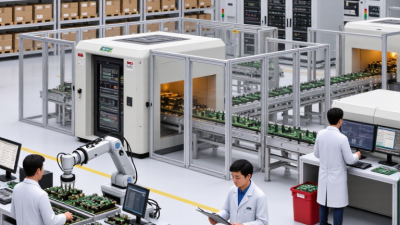
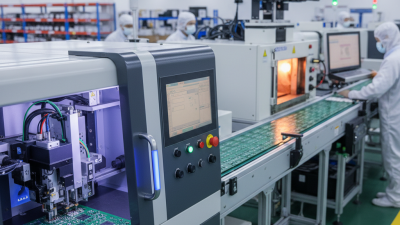
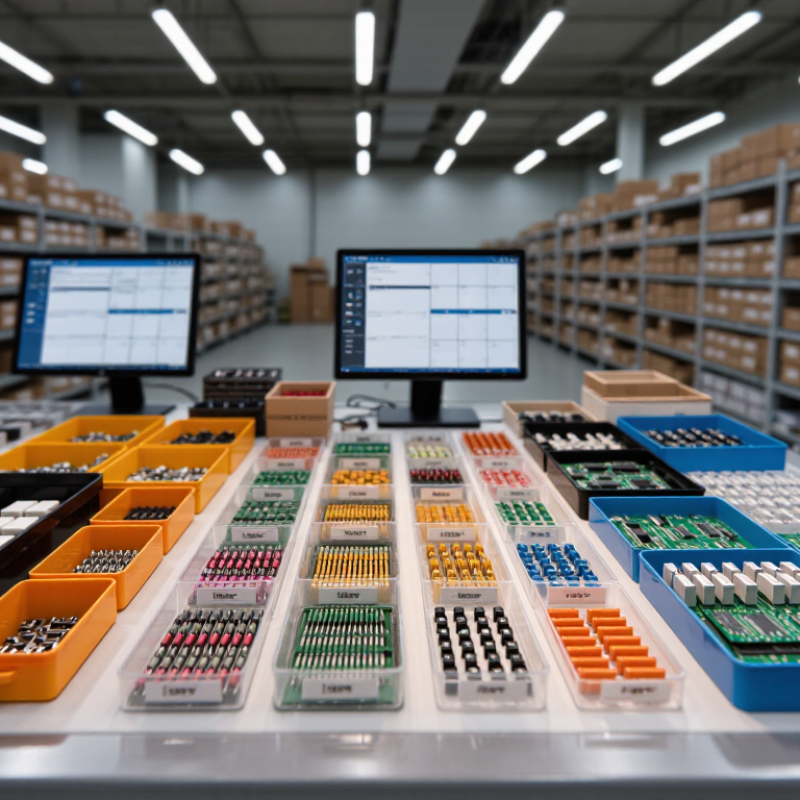
These suppliers often support prototypes and mass production. Their facilities may include automated placement lines, optical inspection, aging rooms, and traceability systems.

Buyers should verify datasheets, lot records, test reports, and change-control procedures. A supplier with clear documentation usually reduces production surprises. Still, factory photos can mislead. A polished website proves very little.

Tips: Request samples from two production lots. Check markings under magnification. Compare tolerance, temperature ratings, packaging, and lead times. Ask whether testing is internal or outsourced. Confirm minimum order quantities before approving a design. Small details matter.

Strong suppliers communicate engineering limits early. They may suggest alternate materials, package sizes, or thermal designs. That practical experience can improve reliability and reduce redesign work. However, “custom support” sometimes means slow engineering feedback. Set response targets in writing.

Review quality certificates, but do not treat certificates as complete evidence. An on-site audit or independent inspection remains valuable for critical parts. The best choice is not always the lowest quote. It is the supplier that consistently matches specifications, delivers stable batches, and admits problems before they become expensive.

Supplier Scorecards: 2023 Sales, 2024 Capacity, and Export Coverage

China Top 10 All Electronic Components Suppliers?

A credible top-ten list needs more than 2023 revenue. The World Semiconductor Trade Statistics report valued global semiconductor sales at approximately US$526.8 billion in 2023. Its 2024 forecast reached about US$588.4 billion, creating pressure for stable supply and faster qualification. A supplier scorecard should compare audited sales, product breadth, defect rates, lead times, and customer support.

Capacity deserves equal weight. SEMI’s World Fab Forecast indicated that China represented roughly 18% of global semiconductor manufacturing capacity in 2024. However, capacity is not the same as available capacity. A factory may report strong wafer starts while mature-node allocations remain tight. Scorecards should therefore record monthly output, packaging lines, testing resources, and expansion dates. Small details matter. A two-week delay can stop a production line.

Export coverage also separates capable suppliers from merely large ones. UN Comtrade data for HS 8541 and HS 8542 confirms China’s substantial role in global semiconductor and component shipments. Buyers should check destination coverage, customs documentation, regional warehouses, and average export lead times. The best candidates support multiple markets without relying on one route. Public figures are imperfect, though. Some companies combine group sales with component sales, making comparisons uneven. A transparent score should disclose its calculation method, data period, and missing evidence.

Buyer Due Diligence: ISO 9001, IATF 16949, MOQ, Lead Time, and Traceability

China Top 10 All Electronic Components Suppliers?

A credible supplier shortlist starts with evidence, not polished websites. Request a current ISO 9001 certificate, then verify its scope, site address, and expiry date. For automotive parts, IATF 16949 approval matters, but it does not replace process audits. Ask for recent audit findings and corrective actions. Real records reveal more than certificates.

MOQ can expose hidden costs. Confirm whether it applies per item, package, or monthly order. A low unit price may require thousands of pieces. Discuss sample quantities before signing a supply agreement. Lead time also needs careful testing. Ask for production time, inspection time, shipping time, and buffer days in writing. Delays happen.

Build traceability into every purchase. Request lot numbers, date codes, manufacturer documentation, inspection reports, and storage records. Check whether the supplier can trace one carton back to its receiving record. Samples should match the promised production process. They sometimes do not. That gap deserves attention.

Supplier references can strengthen confidence, especially when they describe delivery performance and defect handling. Still, references may be selective. An independent factory visit or remote process review adds useful evidence. Compare ten candidates using the same checklist, scoring quality systems, MOQ flexibility, lead-time control, and document accuracy. A supplier with fewer promises may be safer than one offering everything. I would keep that judgment open until several orders prove consistency.