
Why Choose a 125amp MCCB for Global Electrical Safety?

Why Choose a 125amp MCCB for Global Electrical Safety?

Choosing a 125amp Mccb can strengthen protection in commercial panels, industrial feeders, and demanding distribution systems. Its rated current supports circuits that exceed smaller breaker capacities without immediately requiring a larger frame. However, safe selection depends on more than the number printed on the label.

A properly specified 125amp Mccb can interrupt excessive current before overheated conductors damage insulation, terminals, or nearby equipment. Its molded case also helps protect internal components from dust, accidental contact, and mechanical stress. In practical installations, engineers examine cable ampacity, ambient temperature, prospective short-circuit current, and coordination with upstream devices. They may also review adjustable trip settings, making sure overload and instantaneous protection match the system design.

Small details matter.

International projects often reference IEC 60947-2, while local regulations and inspection practices may add further requirements. Qualified professionals should verify the breaker’s interrupting capacity, voltage rating, pole configuration, terminal arrangement, and certification documents. A product suitable for a 400-volt factory panel may not suit a different network or enclosure temperature. That assumption can be costly.

Field experience also shows that installation quality affects real protection. Loose lugs, undersized conductors, poor ventilation, and missing maintenance records can undermine a reliable breaker. Thermal scans and scheduled functional checks provide useful evidence, but they do not replace correct engineering. No device solves every risk.

This introduction examines why the 125amp Mccb remains relevant to global electrical safety, where it performs well, and where careful review is still necessary. Good engineering includes doubt.
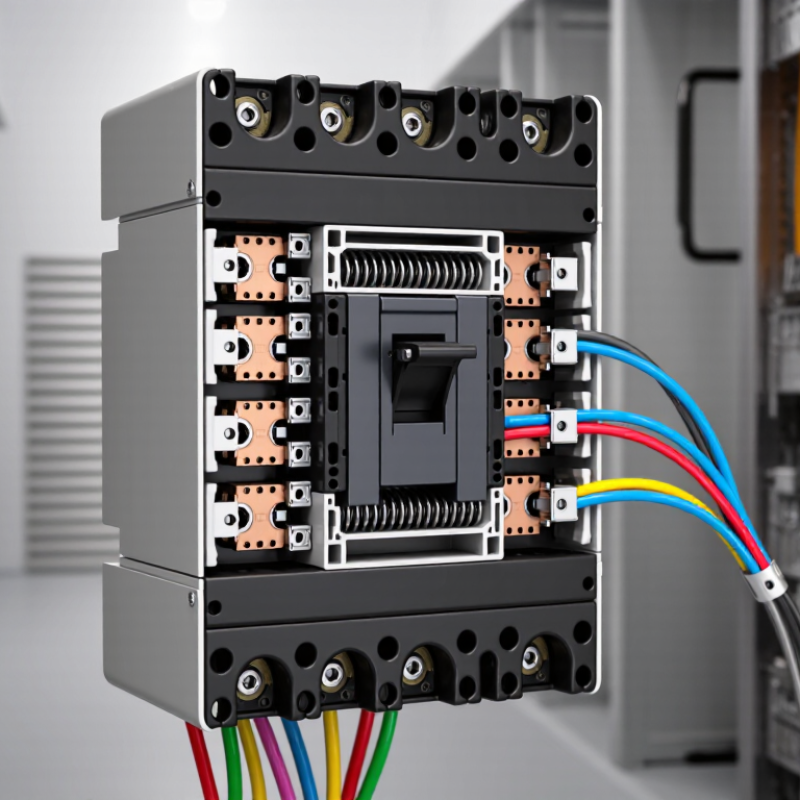
Why Choose a 125amp MCCB for Global Electrical Safety?

What Is a 125A MCCB and How Does It Work?

Why Choose a 125amp MCCB for Global Electrical Safety?

What Is a 125A MCCB and How Does It Work?

A 125A molded-case circuit breaker protects electrical circuits from excessive current. Its 125-amp rating indicates the maximum continuous current under specified conditions. It does not mean every installation should carry 125 amps continuously. Cable size, ambient temperature, enclosure ventilation, and load type still matter.

Inside the breaker, thermal protection responds to sustained overloads. A heated bimetal strip bends and releases the mechanism after a delay. Magnetic protection reacts much faster to short-circuit current. It trips the contacts open, limiting damage to cables, panels, and connected equipment. The interruption rating must match the prospective fault current at the installation point. That detail is easy to miss.

In practical panel inspections, technicians check terminal tightness, conductor condition, and signs of heat discoloration. They also verify that the breaker’s poles, trip settings, and accessories suit the system. A 125A MCCB may protect a motor feeder, distribution board, or commercial sub-circuit. However, motor starting currents can cause unwanted trips if settings are chosen casually. Coordination with upstream and downstream protective devices is essential. A clean calculation can still overlook real operating conditions. Residual-current protection may also be required, because an MCCB alone does not provide complete protection against electric shock. Selection should follow applicable electrical standards and be confirmed by a qualified professional.

How Does a 125A MCCB Protect Electrical Systems?

Why Choose a 125amp MCCB for Global Electrical Safety?

A 125A molded-case circuit breaker protects systems by interrupting overloads and short circuits before conductors overheat. Its thermal trip responds to sustained excess current. Its magnetic trip acts much faster during a severe fault. That difference matters. A loose terminal may heat quietly for hours, while a phase-to-phase fault can release destructive energy instantly.

The 125A rating is not a universal safety guarantee. Engineers must verify cable capacity, prospective short-circuit current, ambient temperature, and coordination with upstream devices. IEC 60947-2 specifies performance requirements for circuit breakers, including tested interruption and trip characteristics. In practice, technicians should inspect the trip setting, terminal torque, and discoloration around busbar connections. A warm plastic smell is an early warning, not a minor inconvenience.

The International Energy Agency’s Electricity 2024 report recorded global electricity demand growth of 2.2% in 2023 and expects average annual growth near 4% through 2026. More energized infrastructure increases the need for dependable fault protection. NFPA’s Fire Loss in the United States During 2022 report recorded 1,504,500 fires and approximately $18.1 billion in direct property damage; not every incident was electrical, but the scale remains sobering. A 125A MCCB can limit damage, protect maintenance personnel, and improve system selectivity when correctly specified. Still, settings are sometimes copied from old drawings. That habit deserves questioning.

Why Choose a 125amp MCCB for Global Electrical Safety? - How Does a 125A MCCB Protect Electrical Systems?
Data Dimension Typical 125A MCCB Data Electrical Safety Function Selection or Verification Requirement
Rated Current (In) 125 A Defines the continuous current level the circuit breaker is designed to carry under specified conditions. Choose a rating that protects the cable while allowing the intended load to operate without nuisance tripping.
Common Pole Configurations 2-pole, 3-pole, or 4-pole Provides switching and protection for single-phase, three-phase, or three-phase-plus-neutral circuits. Select the pole arrangement according to the system topology and whether the neutral conductor must be switched.
Rated Operational Voltage (Ue) Application-dependent; many industrial systems use approximately 400–415 V AC, while some systems use up to 480 V AC. Ensures the breaker can safely interrupt and withstand the system voltage. The MCCB voltage rating must be equal to or higher than the actual system voltage and compatible with the applicable standard.
Rated Frequency Commonly 50 Hz or 60 Hz Supports correct operation in the electrical distribution system. Confirm the frequency stated on the product nameplate and installation documentation.
Overload Protection Thermal or electronic long-time trip function Trips when current remains above the permissible level for long enough to cause conductor overheating. Set or select the long-time protection in accordance with cable ampacity, load current, and coordination requirements.
Short-Circuit Protection Magnetic or electronic instantaneous trip function Responds rapidly to high fault currents, limiting thermal and mechanical stress on conductors and equipment. Verify that the instantaneous setting and trip characteristics are suitable for the prospective fault current and downstream equipment.
Interrupting Capacity Model- and voltage-dependent; commonly specified in kA, such as 18 kA, 25 kA, 36 kA, or higher. Indicates the maximum prospective short-circuit current the MCCB can safely interrupt at its rated voltage. The interrupting rating must be equal to or greater than the available short-circuit current at the installation point.
Trip Curve and Coordination Adjustable or fixed thermal-magnetic/electronic characteristics Helps coordinate the 125A MCCB with upstream and downstream protective devices. Carry out a time-current coordination study where selectivity, motor starting, or critical loads are involved.
Cable Protection Suitable for feeders with ampacity designed around the 125A protective-device rating Reduces the risk of cable insulation damage and fire caused by sustained overcurrent. Cable size must be calculated using installation method, ambient temperature, grouping, conductor material, and allowable voltage drop.
Insulation Voltage (Ui) Manufacturer- and construction-dependent; often higher than the operating voltage Represents the insulation withstand level used for design and dielectric separation. Confirm that the stated insulation voltage is appropriate for the distribution system and installation environment.
Impulse Withstand Voltage (Uimp) Product-specific value, typically stated in kV Indicates resistance to transient overvoltages such as switching surges and atmospheric disturbances. Check compatibility with the installation overvoltage category and the system’s surge-protection design.
Standards and Compliance Common reference standards include IEC 60947-2 and UL 489, depending on the market and application. Provides a framework for testing electrical, mechanical, temperature-rise, and short-circuit performance. Use the standard required by the installation jurisdiction and verify certification for the intended voltage and interrupting rating.
Environmental Operating Conditions Performance depends on ambient temperature, altitude, humidity, enclosure, and pollution level. Maintains reliable operation when the breaker is installed in industrial, commercial, or outdoor distribution equipment. Apply manufacturer derating data for high ambient temperature, high altitude, enclosure heating, or contaminated environments.
Optional Accessories Auxiliary contacts, alarm contacts, shunt trip, undervoltage release, motor operator, and rotary handles Enables remote status monitoring, emergency disconnection, interlocking, and automated switching. Confirm accessory voltage, control-circuit requirements, installation space, and compatibility with the selected MCCB frame.
Maintenance and Inspection Periodic inspection based on operating conditions and local electrical rules Helps identify loose connections, overheating, mechanical wear, contamination, and abnormal tripping. Follow the applicable maintenance program; de-energize and apply safe isolation procedures before inspection or testing.
Main Safety Advantage Combines overload and short-circuit protection in a compact, resettable device Protects cables, switchboards, and connected equipment while allowing the circuit to be restored after a fault is cleared. Correct sizing, installation, testing, and coordination are essential; a 125A rating alone does not guarantee system safety.
Important Technical Note Values such as breaking capacity, voltage rating, trip settings, and derating limits vary by construction and certification. Prevents incorrect substitution of one 125A MCCB for another with different performance characteristics. Always verify the nameplate, technical datasheet, local code requirements, and the calculated fault level before installation.

What Safety Standards Govern 125A MCCB Applications?

Why Choose a 125A MCCB for Global Electrical Safety?

A 125A MCCB can protect feeders, machinery, and commercial distribution panels when its ratings match the installation. A current rating alone proves very little. Ratings are not guarantees. IEC 60947-2 governs low-voltage circuit breakers, including performance tests, temperature limits, and short-circuit interruption. It requires manufacturers to declare Icu and Ics values. Icu is the ultimate breaking capacity, while Ics supports service continuity after fault testing. In the United States, UL 489 and NFPA 70 commonly guide molded-case breaker selection and installation. Local authorities may adopt additional requirements.

The installation must also follow IEC 60364 or the applicable national electrical code. Designers should verify conductor ampacity, ambient temperature, voltage, pole configuration, and prospective short-circuit current. Selective coordination may be required for essential services.

NFPA research has reported roughly 33,000 U.S. home fires annually involving electrical distribution and lighting equipment. That figure is sobering, although it does not represent MCCB failures alone. The IEA’s Electricity 2024 report forecasts global electricity demand growth of about 4% in both 2024 and 2025. More energized infrastructure means more attention to fault protection.

Fit matters. A 125A device with inadequate interrupting capacity remains unsafe. Engineers should document calculations, test trip settings, and review maintenance access. Real installations are rarely perfect, and assumptions deserve a second look.

Where Are 125A MCCBs Used in Global Electrical Installations?

A 125A MCCB is commonly installed in commercial buildings, workshops, and light industrial facilities. It protects feeder circuits supplying lighting panels, air-conditioning systems, pumps, and small production equipment. Its adjustable trip settings can support changing loads without replacing the entire breaker. This matters as electricity networks expand. The IEA Electricity 2024 report forecasts global electricity demand growth of about 4% in 2024, followed by strong growth through 2026.

In solar farms and commercial renewable systems, 125A MCCBs often protect inverter outputs, battery feeders, and distribution sections. IRENA’s Renewable Capacity Statistics 2025 recorded 585 gigawatts of renewable capacity added globally in 2024. That growth creates more compact, distributed electrical installations. A 125A device can fit well between smaller branch breakers and larger main protection. It is useful in offices, retail centers, data rooms, and agricultural facilities. Field reality is messier.

Selection still requires engineering judgment. A 125A rating alone does not guarantee safety. Designers must verify prospective fault current, cable capacity, ambient temperature, and short-circuit withstand. IEC 60947-2 provides the relevant framework for low-voltage circuit-breaker performance. Coordination with upstream and downstream protection is also essential, especially where motors or inverters create temporary current surges. Some installations need a different rating. That uncomfortable detail deserves attention. Local inspection data, maintenance records, and actual load measurements should guide the final choice, rather than habit or catalogue convenience.

How Should a 125A MCCB Be Selected and Maintained?

Selecting a 125A MCCB begins with the system, not the label. Confirm operating voltage, frequency, poles, and available short-circuit current at the installation point. The breaker’s interrupting rating must exceed that fault level.

This is critical.

Match the trip curve to the protected cable and equipment. Check continuous load, starting current, ambient temperature, enclosure conditions, and altitude. A 125A frame is not automatically suitable for a 125A setting. Adjustable thermal-magnetic or electronic protection can improve coordination, but only after a documented calculation.

Verify compatibility with upstream and downstream devices. Follow IEC 60947-2, applicable local electrical rules, and the equipment instructions.

Maintenance should be practical and recorded.

With power isolated and absence of voltage verified, inspect terminals for heat discoloration, loose hardware, dust, and moisture. Retorque connections to the specified value; guessing can damage the terminal. Operate the mechanism periodically where site procedures allow, and test trip functions using calibrated equipment.

Review nuisance trips instead of simply increasing the setting. That shortcut can leave cables unprotected.

In field inspections, small problems often appear first: a warm lug, a cracked seal, or an unclear label. Mistakes happen. A second inspection is often worthwhile.

Article Source: