
2026 Top SMPS Power Supply Types for Global Buyers?

2026 Top SMPS Power Supply Types for Global Buyers?

For global buyers, choosing an Smps Power Supply is not just a matter of comparing wattage and price. The right option depends on the load, installation space, input voltage, cooling conditions, and service requirements. Common choices include enclosed AC-DC units, open-frame supplies, DIN-rail models, and DC-DC converters. Each solves a different problem. A compact unit may fit neatly into a control cabinet, yet run too hot when ventilation is poor.

The International Energy Agency’s Energy and AI report estimates that data centres consumed about 415 TWh of electricity worldwide in 2024. That figure highlights why power-conversion efficiency matters, especially in equipment operating continuously. It does not, however, tell buyers which supply type will suit a specific application. Robert W. Erickson, a power-electronics authority and co-author of Fundamentals of Power Electronics, offers a useful principle, paraphrased here: select the conversion approach to match the application, not the other way around. This is a practical guide, not a verified verbatim quotation. Buyers should also check datasheets for efficiency curves, operating temperature, protection features, and applicable certifications. Small print matters.

This 2026 guide compares leading SMPS Power Supply types for global purchasing teams, from industrial control panels to embedded equipment. It also considers a detail that product tables can obscure: performance in a laboratory may differ from performance inside a warm, crowded enclosure. No single type is best for every buyer. The trade-offs deserve a closer look.
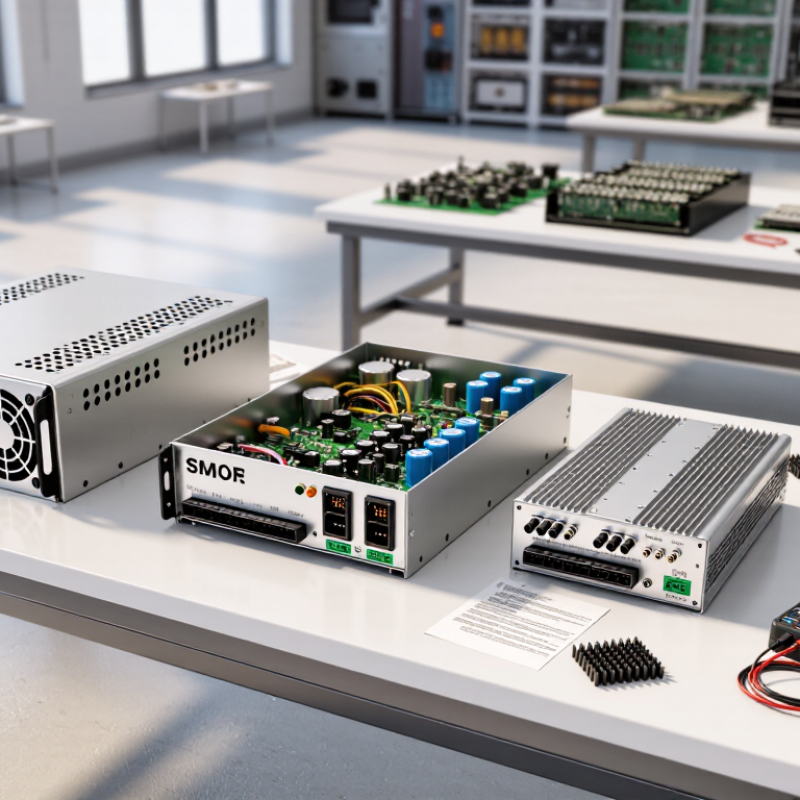
2026 Top SMPS Power Supply Types for Global Buyers?

What Is an SMPS and How Does It Convert Electrical Power?

An SMPS, or switched-mode power supply, converts electrical power by switching current rapidly rather than reducing voltage through a large, continuously active transformer. At the input, a rectifier turns AC into DC, and capacitors smooth the resulting voltage. A switching transistor then pulses that DC at high frequency. The pulses pass through a compact transformer when electrical isolation or a different voltage is needed. On the output side, rectifiers and filters produce steadier DC for the connected equipment.

A feedback circuit monitors output voltage and adjusts the switching pattern when the load changes. This helps a supply respond when a device starts up or suddenly draws more current. Heat still escapes. Conversion is never perfectly efficient, and performance can vary with load, temperature, and component quality.

The European Commission’s Regulation (EU) 2019/1782 sets a 0.10-watt no-load power limit for AC-to-DC external power supplies rated up to 49 watts. That figure shows why idle consumption matters, even when a supply is not actively charging or powering a device.

A common design tension remains: reducing losses can increase cost or thermal complexity. The label’s maximum wattage alone does not tell the whole story.

Which Factors Shape SMPS Selection for Global Buyers in 2026?

For global buyers, SMPS selection starts with the real supply conditions, not the catalog headline. Check the full input-voltage range, frequency, peak load, and expected operating temperature. A unit rated for 100 watts may deliver less inside a sealed cabinet at 50°C. Heat still wins. The IEA’s Global Energy Review 2025 reports that worldwide electricity demand grew 4.3% in 2024. That figure does not predict a buyer’s load, but it underscores why efficiency and thermal headroom matter in expanding electrical systems. Compare efficiency across the likely load range, not only at full load.

Next, match output behavior to the equipment. Motors, radios, and digital controls can create different startup surges, noise sensitivities, and transient demands. Review derating curves, ripple limits, hold-up time, and electromagnetic compatibility test results. Ask for test conditions; a single efficiency number can hide a lot. The Uptime Institute’s 2024 Global Data Center Survey also highlights power availability as an operational concern, particularly relevant to continuous-duty installations. Buyers should verify applicable safety and EMC documentation for the destination market, plus connector fit, cooling method, and service access. A smaller supply can look cheaper on paper. It may be a poor choice if it runs hot or leaves little margin for brief peaks. That trade-off deserves a second look.

What Are the Main Types of SMPS Power Supplies?

Switch-mode power supplies (SMPS) are commonly grouped by the energy they convert. AC-DC models turn mains electricity into regulated DC for equipment such as control panels, routers, and LED fixtures. DC-DC models change one DC voltage into another, often inside vehicles, battery systems, or electronic devices. Simple distinction. Some DC-DC units provide electrical isolation between input and output; others do not. Isolation can matter when grounding, safety, or noise control is important, so check the equipment requirements rather than relying on the product category alone.

Circuit topology offers another useful classification. Flyback designs are common at lower power levels and can support multiple outputs, while forward and resonant designs suit other power and efficiency needs. Buck converters reduce voltage; boost converters raise it. SMPS units also come as open-frame boards, enclosed supplies, or DIN-rail modules. A metal case may help with protection and heat management, but ventilation and mounting still matter. Compare input range, output voltage and current, efficiency, operating temperature, and required approvals for the intended market. A tidy category chart can hide real differences: two supplies with the same output rating may behave differently under startup loads or poor airflow. Selection takes a little checking.

2026 Top SMPS Power Supply Types for Global Buyers: What Are the Main Types of SMPS Power Supplies?

SMPS Type Typical Input Typical Output Common Applications Key Advantages Selection Considerations
Enclosed AC–DC Power Supply AC mains; many models support a specified universal input range Regulated DC, commonly a single output Industrial equipment, control systems, test equipment, and general electronics Protective enclosure; straightforward mounting and wiring Check input range, output voltage and current, cooling method, protection features, and applicable safety approvals.
Open-Frame AC–DC Power Supply AC mains Regulated DC, with single- or multiple-output options Products with an internal chassis or housing, including instruments and embedded equipment Compact integration and airflow flexibility within the end product Requires suitable enclosure and protection against contact, dust, and other environmental hazards.
DIN-Rail Power Supply AC mains or, for some models, DC input Regulated DC for control-cabinet systems Industrial automation, PLCs, sensors, and electrical control panels Designed for DIN-rail installation; convenient for panel wiring and maintenance Verify rail compatibility, ambient-temperature derating, output capacity, and cabinet ventilation.
PCB-Mount or Board-Level AC–DC Supply AC mains, depending on module design Low- to medium-power regulated DC Embedded devices, instruments, and products with limited board space Integrates directly with a circuit board and can reduce assembly complexity Review isolation requirements, creepage and clearance, thermal conditions, and PCB layout guidance.
External AC–DC Adapter AC mains Low-voltage DC delivered through a cable or connector Consumer electronics, networking equipment, and small office devices Keeps mains conversion outside the end product; easy to replace or service Match the output voltage, current capacity, connector, polarity, plug configuration, and required regional approvals.
LED Power Supply / LED Driver AC mains or DC input, depending on the driver Constant-current or constant-voltage output, as required by the LED load LED luminaires, signage, and architectural lighting Designed to supply LED loads with the appropriate output regulation method Determine whether the load needs constant current or constant voltage; check dimming compatibility and environmental rating.
DC–DC Converter DC input from a battery, bus, or another DC supply Stepped-up, stepped-down, or inverted DC output Vehicles, battery systems, telecom equipment, and distributed power systems Converts one DC voltage level to another without an AC mains input stage Check input range, output regulation, isolation needs, efficiency, ripple, and transient response.
Redundant or Hot-Swap Power Supply AC or DC input, depending on system design Regulated DC, often supplied through parallel modules Servers, communications systems, and other equipment designed for service continuity Can support continued operation during a module failure or replacement when used in a compatible system Confirm load-sharing or redundancy support, system backplane compatibility, and the intended fault-tolerance design.

Buyer note: Product specifications vary by model. Confirm the datasheet, operating conditions, safety approvals, and regional requirements before selection.

How Do Leading SMPS Types Differ in Performance and Application?

SMPS types differ less by their basic conversion process than by installation, cooling, and load behavior. Enclosed AC-DC supplies suit control cabinets and general equipment; their cases protect components and help manage heat. Open-frame units fit compact devices where airflow and internal shielding are designed into the product. DIN-rail models mount directly inside industrial panels, while external adapters keep mains voltage outside small consumer devices. DC-DC converters serve another role: they regulate power between voltage levels after an upstream source has already converted it.

Application changes the performance priorities. In a sealed cabinet, check operating temperature and derating curves, not just the headline wattage. A rail-mounted supply may handle vibration well, yet still need space for airflow. For a portable device, adapter size, standby consumption, and connector strain matter more. Small details count. The International Energy Agency’s Electricity 2024 report estimates data centres used about 415 TWh in 2024 and may use around 945 TWh by 2030. That forecast does not measure SMPS demand directly, but it underscores why conversion losses and heat deserve attention in high-uptime systems.

For procurement, compare efficiency at the expected load, input-voltage range, ripple, protection features, and installation conditions. A supply rated for peak output may run hot if the actual load stays near that limit. Datasheets help, but test conditions differ. I would verify critical figures with thermal tests in the finished enclosure; this takes time, and it is easy to skip. That can be a costly assumption.

2026 Top SMPS Power Supply Types for Global Buyers

How do leading SMPS types differ in performance and application?

The bars show indicative efficiency ranges near rated load, not guaranteed specifications. Actual results depend on input voltage, output power, switching frequency, components, and thermal design. Flyback designs are common in low-power adapters; forward and half-bridge designs suit many mid-power supplies; LLC resonant designs are often used where high efficiency is important; synchronous buck converters are widely used for low-voltage DC conversion.

How Can Buyers Match an SMPS Type to Regional Requirements?

Regional fit begins with the input supply, not the product label. Check the local voltage range, 50 or 60 Hz frequency, grounding, and likely surge conditions. A wide-input SMPS may suit several mains systems, but it does not remove the need to check derating and installation limits. Small details matter. For a control cabinet, a DIN-rail unit can simplify mounting and wiring. An open-frame supply may fit better inside a protected machine, while an enclosed model is easier to install where access is limited.

Climate and compliance can change the choice. Hot rooms, dust, humidity, and high altitude may reduce a supply’s usable output; compare the manufacturer’s derating curves with the site conditions. For outdoor or washdown areas, check the enclosure rating and cooling method, not just the wattage. Buyers should also verify applicable safety and electromagnetic-compatibility requirements with local technical or import specialists, since requirements differ by market and application. A tidy specification sheet can still miss a difficult site condition. I would allow margin for startup current and future load, but not guess: measure the load and confirm the protection settings before ordering.