Top 10 Tips for Choosing the Right Electronic Components for Your Projects

Top 10 Tips for Choosing the Right Electronic Components for Your Projects

When embarking on a DIY electronics project, the choice of electronic components can significantly influence the outcome of your work. Selecting the right components is not merely a matter of picking what looks interesting; it's about ensuring compatibility, reliability, and efficiency in your design. With countless options available in the market, understanding how to navigate through the myriad of choices is essential for both novice creators and experienced engineers alike.

The right electronic components can elevate your project, making it more functional and successful. From resistors and capacitors to microcontrollers and sensors, each component plays a crucial role in the overall performance of your circuit. Hence, taking the time to evaluate their specifications, suitability, and the purpose they serve becomes paramount. In this guide, we will explore valuable tips that will help you make informed decisions when selecting electronic components for your projects, ensuring that your innovation thrives and meets your expectations.
Top 10 Tips for Choosing the Right Electronic Components for Your Projects

Understanding Your Project Requirements and Specifications

When embarking on an electronics project, understanding the specific requirements and specifications is crucial to ensuring success. According to a report by the International Electronics Manufacturing Initiative, nearly 70% of project failures can be traced back to inadequate upfront planning and misalignment of component specifications with project goals. Establishing clear project parameters, such as voltage and current needs, operational environments, and compatibility with other components, can significantly enhance the likelihood of a project's success.

Moreover, consideration of future scalability and flexibility is essential. Data from the Electronics Component Industry Association suggests that 54% of engineers overlook the need for adaptability in component selection, which can result in costly redesigns later on. To avoid such pitfalls, it is advisable to anticipate potential enhancements or changes in product design from the onset. By taking the time to thoroughly evaluate your project requirements and specifications, you can set a solid foundation that not only meets current needs but also accommodates future expansion and innovation.
Researching Component Types and Their Functions

When embarking on an electronic project, the first step in ensuring success is to understand the various types of components available and their specific functions. Different components, such as resistors, capacitors, diodes, and microcontrollers, each serve distinct purposes within a circuit. Resistors control the flow of current, capacitors store and release energy, while diodes allow current to flow in one direction only. Familiarizing yourself with these fundamental components is essential, as it lays the groundwork for designing effective and functional electronic systems.

Moreover, it’s crucial to delve deeper into component specifications, such as voltage ratings, current ratings, and tolerance levels. Understanding these parameters helps ensure that the components will work harmoniously together and perform reliably in your circuit setup. Additionally, engaging in community forums or reading datasheets can provide valuable insights and real-world applications of various components. This research not only enhances your overall knowledge but also serves as a guiding tool in selecting components that meet the specific needs of your project, thereby minimizing the risk of errors and inefficiencies in your design.

Top 10 Tips for Choosing the Right Electronic Components for Your Projects - Researching Component Types and Their Functions

Component Type Function Key Specifications Application Examples
Resistor Limits current flow and divides voltages. Resistance (Ohms), Power Rating (Watts) Voltage dividers, signal attenuation.
Capacitor Stores electrical energy and filters signals. Capacitance (Farads), Voltage Rating (Volts) Power supply filtering, coupling/decoupling.
Diode Allows current to flow in one direction only. Forward Voltage (Volts), Current Rating (Amps) Rectifiers, signal demodulation.
Transistor Amplifies and switches electronic signals. Hfe (Gain), Maximum Collector Current (A) Amplifiers, switch circuits.
Microcontroller Processes data and controls other components. Clock Speed (MHz), Memory (KB) Embedded systems, robotics.
Inductor Stores energy in a magnetic field. Inductance (Henries), Current Rating (A) Filters, energy storage in switching supplies.
Sensor Detects changes in the environment. Sensitivity, Range, Output Type Temperature, motion, light detection.
Relay Electromechanical switch for controlling high power devices. Coil Voltage, Contact Current Rating Automated systems, motor controls.
LED (Light Emitting Diode) Emits light when current flows through it. Forward Voltage (V), Luminous Intensity (mcd) Indicators, displays, lighting.
Oscillator Generates a periodic waveform. Frequency (Hz), Duty Cycle (%) Clock signals, audio signals.

Evaluating Quality and Reliability of Electronic Components

When selecting electronic components for your projects, evaluating their quality and reliability is paramount. Components can significantly influence the performance and longevity of your design. Start by reviewing certifications and industry standards that validate a component's reliability. This can include compliance with international safety and environmental regulations. Reliable components usually come from reputable suppliers with a track record, which can also ease concerns regarding counterfeit products.

One important tip is to assess the component's datasheet thoroughly. The datasheet provides crucial information such as electrical specifications, operating conditions, and reliability ratings. Pay particular attention to parameters like temperature range, lifespan, and failure rates, as these factors influence how the component will perform under various conditions. Additionally, consider the component’s end-of-life status; components that are being phased out can lead to difficulties in sourcing replacements in the future.

Lastly, test the components if possible. Prototype your design with the components before finalizing your choice. This testing phase will not only confirm the components’ performance in real-world applications but also help identify any potential issues early in the project lifecycle. Selecting components based on rigorous evaluation can save time, resources, and frustration down the line, ensuring that your project stands the test of time.

Comparing Pricing and Availability from Various Suppliers

Top 10 Tips for Choosing the Right Electronic Components for Your Projects

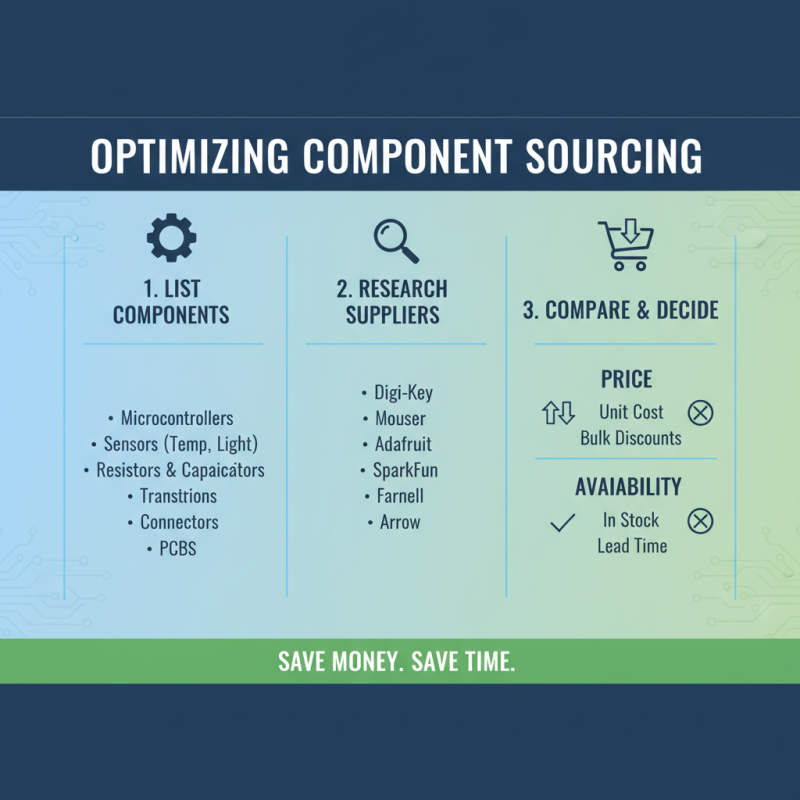
When embarking on electronic projects, one critical aspect to consider is the pricing and availability of components from various suppliers. The market is filled with a plethora of options, making it essential to compare both cost and stock levels to ensure you make informed decisions. Start by creating a list of the components you need and check multiple suppliers. This not only helps you find the best prices but also ensures that the components are readily available when you need them.

In your search for the right components, keep an eye out for promotions or bulk purchase discounts, which can significantly reduce costs. Don't forget to consider shipping costs and delivery times, as these can impact your project's timeline. Additionally, be aware of suppliers' return policies; knowing that you can return unused components can provide peace of mind and flexibility in your budgeting.

As you choose your components, it's also wise to assess their compatibility and reviews from other users. Testing components in small batches before making larger purchases can help mitigate risk and ensure that what you’re selecting fits your project requirements. Overall, thorough research and diligent comparison will maximize your project's efficiency and success.

Ensuring Compatibility with Existing Systems and Components

Top 10 Tips for Choosing the Right Electronic Components for Your Projects

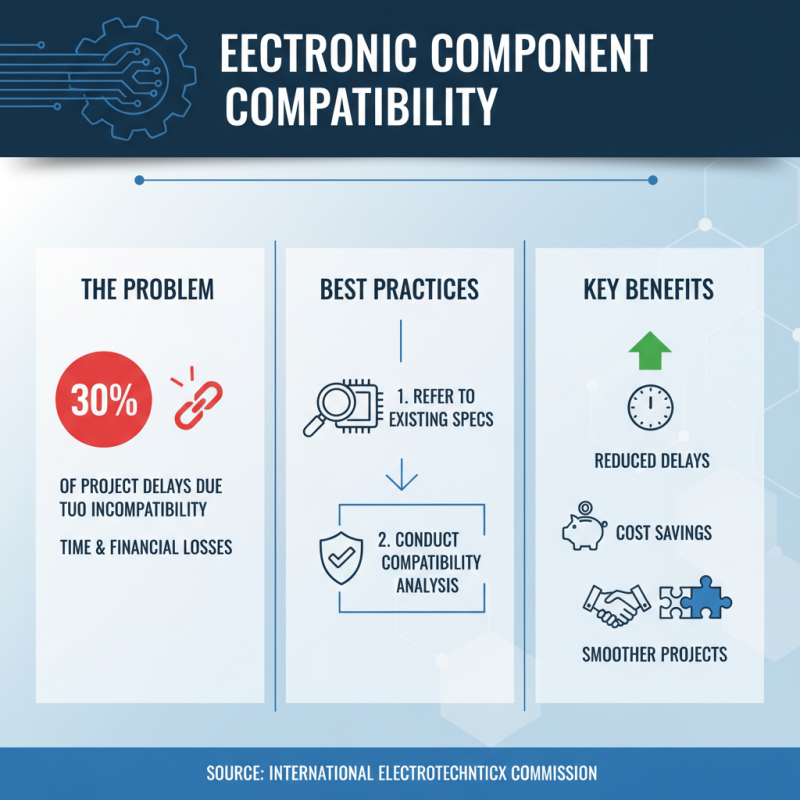
When selecting electronic components for your projects, ensuring compatibility with existing systems and components is crucial. According to a report by the International Electrotechnical Commission, approximately 30% of project delays in electronics are attributed to compatibility issues. This statistic underscores the importance of careful component selection, as mismatches can result in substantial time and financial losses. As a best practice, always refer to the specifications of existing components and conduct a compatibility analysis prior to making a purchase.

Moreover, leveraging standardized interfaces and protocols can greatly enhance compatibility. The Institute of Electrical and Electronics Engineers (IEEE) states that adherence to established standards can improve interoperability between different systems, reducing the risks associated with unforeseen integration challenges. By evaluating the existing architecture of your system and ensuring that new components meet specific requirements—such as voltage levels, communication protocols, and power ratings—you can create a more robust and efficient project. Consideration of these factors will not only streamline the design process but also foster long-term reliability and performance in your systems.