
How to Choose Embossed Aluminum Sheet Suppliers?

How to Choose Embossed Aluminum Sheet Suppliers?

Choosing an Embossed Aluminum Sheet supplier requires more than comparing prices on a spreadsheet. The supplier must understand alloy selection, temper, embossing depth, thickness tolerance, and the final application. A roofing panel, elevator interior, and industrial floor need different performance priorities.

Dr. J. Gilbert Kaufman, a respected aluminum metallurgy author, offers a useful warning: “A specification is only as reliable as the inspection behind it.” Buyers should request mill test certificates, production samples, surface inspection records, and clear explanations of testing methods. Check whether the supplier can maintain a consistent pattern across repeated batches. Tiny height differences can affect light reflection, bonding, and installation.

Look closely.

Ask about alloy grades, such as 1050, 3003, or 5052, and confirm the required temper. Verify sheet thickness at several points, not only at the edge. Review embossing depth, flatness, coating adhesion, and corrosion resistance. A reliable supplier should identify its rolling mill, explain traceability, and provide realistic production and shipping schedules.

Factory experience matters. A supplier may display attractive samples but struggle with a large order. Request references from similar projects. If possible, inspect packaging, labeling, and moisture protection before shipment. Poor wrapping can leave pressure marks or stains on the surface.

The cheapest quotation may hide inconsistent tolerances, delayed replacements, or weak documentation. Still, expensive does not always mean better. I have learned that a polished certificate cannot replace physical verification. Buyers should compare evidence, not promises, before choosing an Embossed Aluminum Sheet supplier.
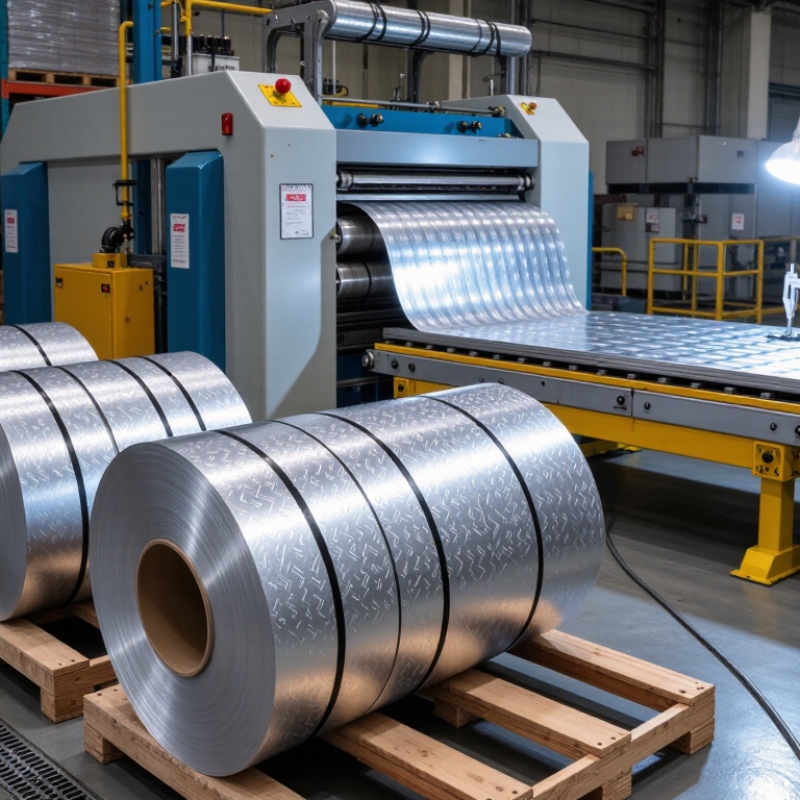
How to Choose Embossed Aluminum Sheet Suppliers?

Define Specifications: 3003-H14 or 5052-H32, 0.3–6 mm, Pattern, and Size

How to Choose Embossed Aluminum Sheet Suppliers?

Define the alloy before comparing prices. 3003-H14 suits general forming, panels, and decorative applications. It offers useful corrosion resistance and moderate strength. 5052-H32 provides higher strength, especially for demanding enclosures and marine-related environments. Ask suppliers for mill test certificates, temper records, and traceable batch numbers.

Thickness usually ranges from 0.3 to 6 mm. Thin sheets need careful leveling and protective packaging. Thicker sheets require consistent rolling pressure and accurate flatness control. Request actual tolerance data, not only nominal dimensions. A 0.2 mm difference can affect bending results. Small errors matter.

Specify the pattern clearly including rib shape, pitch, depth, and direction. Pattern height can change the effective thickness and usable surface area. Confirm standard sizes, cut-to-length options, edge conditions, and squareness. Review a physical sample under angled light. Photos often hide uneven embossing.

I once treated pattern depth as a cosmetic detail; that was a costly assumption.

A sample can still mislead if it comes from another production batch. Require inspection records for both appearance and mechanical properties, then compare them with your drawings before placing a larger order.

Verify Compliance with ASTM B209, EN 573-3, and ISO 9001 Standards

Choosing an embossed aluminum sheet supplier requires more than comparing patterns or prices. Start by checking whether the alloy, temper, thickness, and sheet form match ASTM B209 requirements. ASTM B209 covers aluminum and aluminum-alloy sheet and plate, while EN 573-3 verifies chemical composition and material designation. Ask for a recent mill test certificate, not a generic brochure. It should show the alloy, temper, lot number, dimensions, and test results. Small details matter.

ISO 9001 certification indicates a controlled quality management system, but it does not automatically prove product compliance. Request the certificate scope, issuing body, validity date, and audit status. Compare these records with samples from the same production lot. Measure thickness at several points, inspect embossing depth, and check for cracks, dents, stains, or uneven edges. Paperwork can look complete while traceability remains weak. That deserves attention.

Tips: Ask how nonconforming sheets are isolated and documented. Confirm whether independent testing is available for disputed results. Keep approved samples and written tolerances before ordering. If a supplier avoids sharing batch records, pause the evaluation. A reliable supplier should explain limitations clearly, including properties not covered by a specific standard.

How to Choose Embossed Aluminum Sheet Suppliers? - Verify Compliance with ASTM B209, EN 573-3, and ISO 9001 Standards

Evaluation Dimension Relevant Standard What to Verify Required Evidence Practical Acceptance Check
Base alloy and product form ASTM B209/B209M
EN 573-3
Confirm the alloy designation, sheet or plate classification, temper, and whether the embossed product is manufactured from compliant wrought aluminum sheet. Material test certificate, purchase specification, alloy and temper statement. The certificate and purchase order should show the same alloy, temper, product form, and applicable standard requirements.
Chemical composition EN 573-3
ASTM B209/B209M
Check that the measured elemental composition falls within the limits for the specified wrought aluminum alloy. Heat number, laboratory chemical analysis, and traceable material test certificate. Compare reported values with the alloy limits in the applicable edition of EN 573-3 or the ordered ASTM alloy specification.
Mechanical properties ASTM B209/B209M Verify tensile strength, yield strength, and elongation for the selected alloy, temper, and thickness range. Tensile-test results, test method, specimen direction, thickness range, and heat or lot identification. Results should meet the minimum or specified ranges stated for the ordered alloy and temper; do not rely only on nominal alloy names.
Thickness and dimensional accuracy ASTM B209/B209M
Purchase specification
Define whether thickness means base-metal thickness, embossed overall thickness, or both. Also specify width, length, flatness, and squareness. Dimensional inspection report, calibrated measuring-tool records, and approved drawing. Measure the base thickness and overall embossed profile separately where required, using the agreed sampling plan and tolerances.
Embossed pattern and surface condition ASTM B209/B209M
Purchase specification
Specify pattern type, pitch, embossing height, rolling direction, surface finish, allowable dents, scratches, stains, and burrs. Approved sample, technical drawing, surface-inspection criteria, and pre-shipment photographs. Compare production pieces with the approved sample under consistent lighting; reject cracks, delamination, severe distortion, or unacceptable surface damage.
Traceability and batch control ASTM B209/B209M
ISO 9001:2015
Confirm that coils, sheets, test certificates, inspections, and shipping documents can be linked through a heat, lot, or batch number. Lot identification system, material certificates, inspection records, and packing-list references. Select a random package and trace it back to the production lot, raw material certificate, inspection result, and dispatch record.
Quality management system ISO 9001:2015 Verify that the supplier operates a documented quality management system covering purchasing, production, inspection, nonconformity control, and corrective action. Valid ISO 9001 certificate, certification scope, issuing certification body, and certificate validity status. Check that the certificate scope covers the relevant manufacturing or supply activities and independently confirm its validity where possible.
Inspection and test equipment ISO 9001:2015
ASTM B209/B209M
Assess whether gauges and test instruments are suitable, identified, calibrated, and protected from use when inaccurate. Calibration certificates, equipment register, inspection procedures, and test-laboratory records. Calibration dates should cover the production and inspection period; instruments should have clear identification and calibration status.
Nonconforming product control ISO 9001:2015 Determine how the supplier identifies, segregates, evaluates, and disposes of material that fails dimensional, chemical, mechanical, or visual requirements. Nonconformity procedure, corrective-action records, concession process, and customer complaint records with sensitive information removed. The supplier should demonstrate documented decisions, root-cause analysis, corrective actions, and verification of effectiveness.
Pre-shipment documentation ASTM B209/B209M
EN 573-3
ISO 9001:2015
Confirm that the final document package matches the ordered specification and shipment identification. Certificate of conformity, material test certificate, dimensional report, packing list, and inspection release. Review documents before shipment and verify consistency of alloy, temper, dimensions, quantity, lot number, and inspection status.

Note: ASTM B209/B209M addresses aluminum and aluminum-alloy sheet and plate requirements; EN 573-3 specifies the chemical composition of wrought aluminum alloys; ISO 9001:2015 specifies quality management system requirements. The applicable edition, alloy, temper, thickness range, and contractual tolerances should be confirmed before purchase.

Evaluate Capacity: MOQ, Monthly Output, Lead Time, and Export Experience

Choosing embossed aluminum sheet suppliers requires more than checking surface patterns. Capacity decides whether quality survives repeat orders. Ask for MOQ by alloy, temper, thickness, width, and embossing design. A supplier offering 500 kilograms may not support stable monthly production. The International Aluminium Institute reported about 70 million tonnes of primary aluminum production in 2023. That scale shows availability, not supplier reliability. Review actual production records.

Request the last three months of output for comparable sheets. Compare it with your forecast and peak-season demand. A factory should explain machine loading, inspection points, and backup capacity. Lead time must include tooling, sampling, production, packing, and port dispatch. Short promises can hide unfinished steps. UNCTAD’s Review of Maritime Transport 2023 notes that over 80% of global merchandise trade by volume moves by sea. Export experience therefore matters. Check destination markets, packing photos, shipping documents, and on-time delivery data. One perfect shipment proves little.

Tips:
Ask for a capacity sheet. Verify MOQ in writing. Request monthly output evidence. Separate production days from shipping days. Use the World Bank’s 2023 Logistics Performance Index as a reference for timeliness, tracking, and logistics competence. A low MOQ may seem attractive, but it can reduce production efficiency. Reconsider that trade-off.

Check Quality Data: Thickness Tolerance, Embossment Depth, and Surface Finish

How to Choose Embossed Aluminum Sheet Suppliers?

A reliable supplier should provide measured quality data, not only attractive sample photos. The Aluminum Association’s Aluminum Standards and Data explains that sheet tolerances vary by alloy, temper, width, and thickness. ASTM B209/B209M follows the same principle. Therefore, reject vague claims such as “standard tolerance.” Request the actual tolerance table for your selected grade and size. Measure thickness on the flat land, not only across the raised pattern. A difference of 0.05 mm can affect bending, weight, and assembly fit.

Embossment depth needs separate control. Ask for the nominal depth, minimum depth, maximum depth, and sampling method. A digital height gauge or optical profilometer can record the pattern across several locations. Ten-point sampling is more informative than one center reading. Supplier drawings should show peak shape, pitch, and allowable variation. One weakness in many inspections is measuring only one sheet. That can hide roll-to-roll variation. A supplier’s report should include batch numbers, instrument calibration, and test dates.

Tips: Ask for three production samples, not one showroom piece. Check gloss, scratches, stains, and uneven rolling under angled light. ISO 21920-2 identifies parameters such as Ra and Rz for surface-texture evaluation, but Ra alone may miss directional marks. Request both numerical readings and clear photographs. Also compare the certificate with your own inspection; paperwork can be correct while the delivered surface still feels wrong.

Compare Total Cost: Material Price, Packaging, Freight, Warranty, and Traceability

How to Choose Embossed Aluminum Sheet Suppliers?

A low material price can hide expensive weaknesses. Compare the alloy, temper, embossing depth, tolerance, and actual usable weight. The U.S. Geological Survey reported about 70 million metric tons of primary aluminum production worldwide in 2023. This scale does not remove price risk. Energy, alumina, and regional premiums still influence quotations. Ask suppliers to show the pricing formula and validity period.

Packaging deserves a line-by-line review. Check sheet separators, moisture barriers, edge protection, pallet strength, and loading photos. Damaged corners can create more waste than a higher unit price. The International Aluminium Institute states that recycling aluminum can save up to 95% of the energy used for primary production. Therefore, request recycled-content evidence, but verify it through certificates and batch records. Claims without documents are weak.

Freight is not just ocean freight. Include inland trucking, port charges, insurance, customs handling, and possible storage. UNCTAD’s Review of Maritime Transport reports that shipping carries over 80% of world merchandise trade by volume. Small delays can therefore affect delivery budgets. Warranty terms should define dent limits, coating defects, replacement timing, and inspection procedures. Traceability should connect each bundle to heat numbers, production dates, test reports, and packing records. In supplier audits, the cheapest offer is often incomplete. I may still overlook hidden handling costs, so a landed-cost worksheet and a second quotation review are sensible safeguards.