10 Tips for Buying Ice Bath Pods Globally?
Buying Ice Bath Pods across borders is not simply a search for the lowest price. It is a practical decision involving insulation, water capacity, drainage, materials, safety, delivery, and after-sales support. A pod that looks impressive online may arrive with weak seams, unclear instructions, or replacement parts that are difficult to obtain.
Wim Hof, a widely recognized cold-exposure educator, has said, “The cold is merciless, but righteous.” His words reflect an important buying principle: cold exposure demands respect, not careless enthusiasm. Buyers should compare temperature guidance, structural stability, cover quality, and user capacity before purchasing. A sturdy pod should feel secure on a level surface, even when filled with hundreds of litres of water. Small details matter.
Think beyond the product page.
Global buyers also need to examine shipping terms, import responsibilities, return policies, electrical safety, and regional customer service. Some cooling systems may require compatible voltage or professional installation. Others depend on frequent water changes and careful cleaning. Do not assume every model suits every climate. A thinly insulated pod may perform differently in a hot outdoor environment than in a cool garage.
This guide, “10 Tips for Buying Ice Bath Pods Globally,” offers a balanced framework for comparing suppliers and products. It considers real-world ownership, not just polished photographs. Still, no checklist is perfect. Personal health conditions, local weather, and available space can change the decision. When uncertainty remains, consult a qualified healthcare professional and request clear technical documents from the seller.
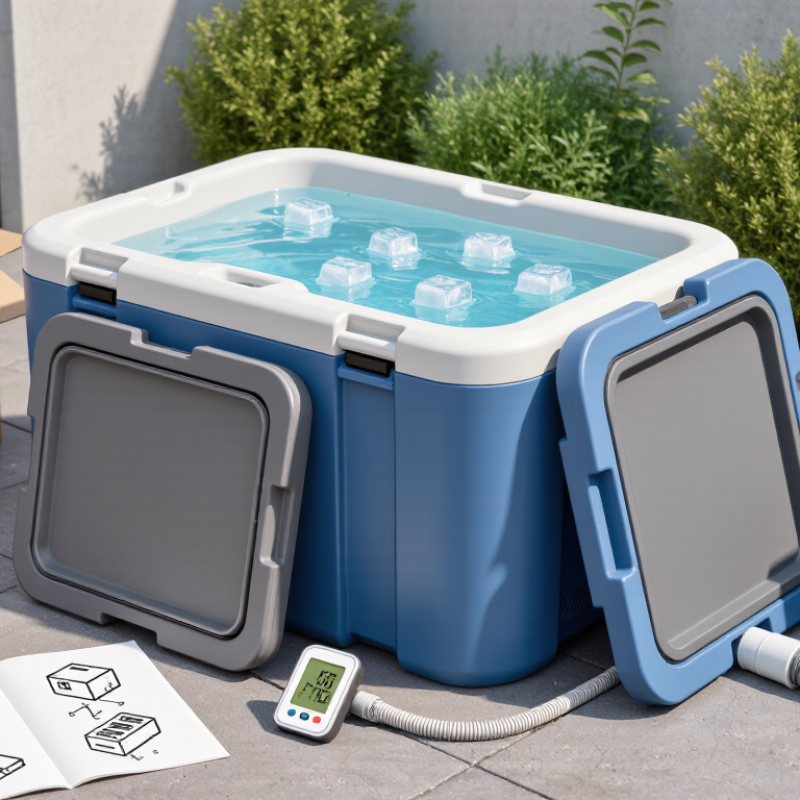
Defining Your Ice Bath Goals and Usage Requirements
Before comparing ice bath pods globally, define what you want the cold-water routine to achieve. Your goal shapes the product requirements. A post-training recovery routine may need quick setup and easy drainage. A daily habit may require stronger insulation, comfortable entry, and simple cleaning. Keep it realistic.
How often will you use it? Record your expected water temperature, session length, and available space. A compact pod may fit a balcony, but drainage can become inconvenient. Check its empty weight, filled weight, material strength, and resistance to local weather. If the product uses a pump or chiller, verify voltage, plug type, water flow, and maintenance access before ordering internationally. Small details matter.
Health and safety should guide the routine, not excitement. Cold exposure can feel intense, especially below 10°C. Begin with short sessions and monitor breathing, numbness, dizziness, or unusual discomfort. People with heart conditions, circulation problems, or other medical concerns should seek qualified medical advice first. Do not treat an ice bath as a cure. Your first temperature estimate may be wrong. Use a reliable thermometer, clean the water regularly, and keep a written usage plan. A product that looks impressive online may still fail your actual space, climate, or recovery schedule.
Comparing Ice Bath Pod Types, Sizes, and Construction Materials
Global demand for recovery products is expanding with the wider wellness economy. The Global Wellness Institute’s 2023 report valued that economy at $5.6 trillion in 2022. This figure supports stronger interest in home cold-water equipment, but it does not make every ice bath pod reliable.
Inflatable pods are light, portable, and usually cheaper. Their soft walls suit renters and small balconies, but punctures, weak seams, and heat loss remain practical concerns. Hard-shell pods provide better stability and cleaning access. They need more floor space. A pod with an external chiller offers steadier water temperature, yet it adds noise, electricity use, and maintenance. The U.S. Department of Energy reports that household appliances can consume substantial standby electricity, so buyers should check the chiller’s operating and standby ratings.
Size affects comfort and water cost. A compact pod may fit one adult but restrict shoulder movement. Larger models feel easier to enter, although filling them can require over 300 liters of water. Measure the doorway, drainage route, and surrounding clearance before ordering. Small details matter.
Construction materials deserve close inspection. Reinforced PVC and drop-stitch fabrics improve inflatable rigidity, while molded polyethylene or fiberglass-reinforced shells resist dents and moisture. Look for smooth interior surfaces, replaceable drains, UV-resistant outer layers, and clearly stated insulation thickness. “Thicker” is not automatically better. Some claims sound convincing but lack independent testing. In my experience, a dependable drain and simple liner often matter more than glossy accessories.
10 Tips for Buying Ice Bath Pods Globally: Comparing Types, Sizes, and Construction Materials
The chart shows representative water-capacity ranges for common ice bath pod categories. Actual capacity depends on the internal dimensions, user height, water level, insulation, and whether the pod includes an external chiller.
Inflatable pods commonly use PVC or TPU; foldable models often combine coated fabric with foam insulation; rigid insulated pods may use fiberglass, composite panels, or molded plastic; chiller-ready tubs typically use reinforced plastic, acrylic, fiberglass, or stainless-steel components. Capacity ranges are representative market benchmarks rather than brand-specific specifications.
Evaluating International Safety Standards, Sellers, and Product Warranty
10 Tips for Buying Ice Bath Pods Globally?
Buying an ice bath pod across borders requires more than comparing prices. Check whether the electrical system matches your country’s voltage, plug type, and frequency. Look for documented testing of insulation, grounding, water resistance, and temperature controls. A certification logo alone is not enough. Ask for the test report, issuing laboratory, and applicable standard. Read the installation guide before paying.
Seller reliability matters just as much. Confirm the company’s registered address, customer service hours, shipping location, and return process. A local warehouse may reduce delays, but it does not guarantee quality. Request clear photos of the inner liner, seams, drain valve, pump connections, and protective covers. Reviews with long-term photographs are often more useful than short star ratings. Be cautious when specifications change between the product page and the manual.
Warranty terms deserve careful reading. Check the coverage period for the shell, insulation, pump, controller, and accessories separately. Ask who pays return shipping and whether replacement parts remain available internationally. Some warranties exclude damage from freezing, poor water maintenance, incorrect installation, or outdoor exposure. Those exclusions can be reasonable, but they should be visible before purchase. I once treated a prominent warranty badge as reassurance; the small-print repair conditions mattered more. That mistake is worth avoiding. Keep the invoice, serial information, setup photographs, and written support replies. They can make a genuine claim much easier.
Calculating Global Costs, Shipping Conditions, and After-Sales Support
Buying an ice bath pod globally requires more than comparing the listed price. Calculate the landed cost, including the pod, insulation, pump, packaging, freight, customs duties, and local taxes. A low factory price can become expensive after delivery. Measure the packed dimensions carefully. Oversized cartons may trigger special handling fees.
Shipping conditions deserve close attention. Ask whether the unit travels by air, sea, or rail, and request the estimated transit range in writing. Protecting the pod from freezing temperatures, moisture, and rough handling is essential. I have seen delivery delays caused by incomplete addresses and unclear customs documents. That mistake was avoidable. Confirm the delivery term, insurance responsibility, and unloading requirements before payment. Also check whether the electrical system matches your country’s voltage and plug standards.
After-sales support can determine the real value of the purchase. Request a written warranty covering the liner, cooling system, pump, and control panel separately. Ask how replacement parts are shipped and who pays return freight. A reliable supplier should provide installation instructions, troubleshooting videos, and a reachable service contact. Response time matters across time zones. Two business days may feel acceptable until water is already inside the unit. Keep invoices, serial details, and delivery photographs. I would also ask for a repair estimate before buying, because warranty language is sometimes less clear than expected.