
How to Choose a Stainless Steel Wire Mesh Filter?

How to Choose a Stainless Steel Wire Mesh Filter?

Choosing a Stainless Steel Wire Mesh Filter starts with the material the filter must capture. A fine screen may retain small particles, but it can also clog sooner. A coarser mesh may allow better flow, while letting unwanted material pass. The right choice depends on particle size, fluid conditions, operating temperature, and cleaning method.

Mesh count alone can mislead. Check the opening size, wire diameter, weave, and filter area together. For example, two screens with the same mesh count may have different openings if their wires differ in thickness. Ask suppliers for a specification sheet, and compare the stated aperture with your process needs. A small sample test can reveal flow loss or blinding that a chart cannot predict.

As no verifiable expert source was provided, I won’t assign a quotation to a named specialist. A useful working principle is: “Choose the opening for the particles, then confirm that the complete filter can sustain the required flow.” It is a practical rule, not a substitute for testing. Even careful calculations can miss changes in viscosity, particle shape, or cleaning frequency. That deserves a second look.

This guide will examine mesh openings, stainless steel grades, weave types, and operating conditions. It will also cover supplier questions and common selection errors. The aim is a filter that fits the real process—not simply the finest mesh available.
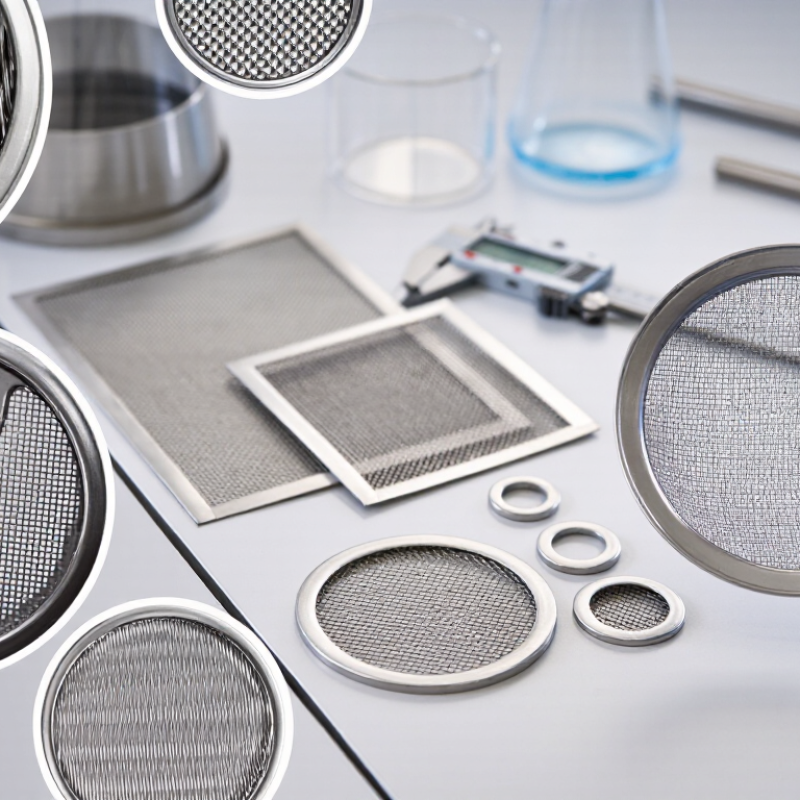
How to Choose a Stainless Steel Wire Mesh Filter?

Define Particle Cutoff: ASTM E11 No. 200 Has a 75 µm Opening

ASTM E11 No. 200 identifies a nominal sieve opening of 75 µm. That figure is a useful starting point when choosing stainless steel wire mesh for filtration. It does not guarantee that every particle larger than 75 µm will be retained. Not always.

Particles may approach an opening edge-on, while irregular flakes can bridge across several wires. Mesh weave, wire diameter, manufacturing tolerance, and wear can affect effective passage. Treat No. 200 as a reference point, not a perfectly sharp cutoff. When separation performance matters, check aperture data and confirm the mesh condition.

Match the opening to the material and operating conditions. A 75 µm mesh may suit coarse polishing or prefiltration, but it can clog quickly in a dirty, viscous stream. Flow rate and pressure drop deserve attention too. Test a sample under conditions close to the real process, then inspect both retained solids and filtrate. One number can feel reassuring, yet it may hide particle variation; a clean bench test may not reflect a loaded filter.

Match Mesh Count, Wire Diameter, and Open Area to Required Flow

How to Choose a Stainless Steel Wire Mesh Filter?

Match Mesh Count, Wire Diameter, and Open Area to Required Flow

Mesh count tells you how many openings span a unit of length, but it does not tell the whole filtration story. Wire diameter changes each opening’s size and the cloth’s open area. For square weave, open area is calculated as (aperture ÷ (aperture + wire diameter))² × 100. For example, a 100-micrometer aperture with 50-micrometer wire yields about 44% open area. That matters. More open area can support greater flow, but it may provide less support for fine particles.

ISO 9044:2016 sets out technical requirements and testing methods for industrial woven wire cloth. ASTM E2016 also covers industrial woven wire cloth and its specifications. Use these references to check how aperture, wire diameter, and tolerances are defined before comparing supplier data. A higher mesh count alone does not guarantee a better filter. Not always. A thicker wire can reduce open area even when the nominal mesh count stays unchanged.

Match the opening to the particle size you need to retain, then check flow under actual operating conditions. Viscous fluid, pressure, and captured solids can all slow a filter. A test with clean water may not predict performance with a thick process liquid. Ask for aperture and open-area figures, not just mesh count, and verify them against a sample when possible. The calculation helps; real flow still needs testing.

Choose 304 or 316L: 316L Contains 2–3% Molybdenum

When choosing a stainless steel wire mesh filter, match the alloy to the liquid, not just the price. Grade 304 suits many clean, low-chloride applications, such as water or food handling. Grade 316L is often a better choice when the process contains salt, brine, or other chlorides. The key difference is molybdenum: 316L typically contains 2–3%, while 304 generally has little or none. That small addition can improve resistance to pitting and crevice corrosion.

The benefit is practical. Chlorides may attack tiny imperfections or areas where liquid sits beneath deposits. A 316L mesh can better withstand these conditions, though it is not corrosion-proof. Higher temperatures, concentrated chemicals, and poor rinsing can still cause damage. “316L” also indicates low carbon content, which helps reduce sensitization risk during welding. Details matter.

Check the actual operating conditions before selecting a mesh. Note the liquid’s composition, temperature, cleaning routine, and how long residue remains on the wires. Then confirm the opening size and wire diameter meet the filtration and strength requirements. A finer mesh is not automatically better; it can clog sooner and increase pressure drop. If conditions vary, a small trial using the real process liquid can reveal issues that a specification sheet cannot. That extra check may feel inconvenient, but corrosion surprises are worse.

Specify Weave, Edge Finish, and Tolerances Under ISO 9044

How to Choose a Stainless Steel Wire Mesh Filter?

Specify Weave, Edge Finish, and Tolerances Under ISO 9044

Start with the opening size your process needs, then specify the weave and wire diameter. Plain weave suits many general filtration tasks; twill weave can accommodate finer wires in some applications. State the nominal aperture, mesh count, wire diameter, and stainless steel grade on the drawing. Mesh count alone is not enough. Two screens can share a mesh count yet have different openings.

Use ISO 9044 as the reference for industrial woven wire cloth requirements and testing. Name the edition and agree which tolerances apply to aperture and wire diameter. Ask for inspection records showing how measurements were taken and how many points were checked. A caliper measurement at one spot may miss local variation. That detail matters when a filter must fit a housing without bypass gaps.

Define the edge finish separately. Specify woven selvage for a finished woven border, or cut edges when the panel will be framed or trimmed. Describe any folded edge, welded frame, or required finished dimensions; ISO 9044 does not settle every assembly detail. A neat drawing can still leave room for interpretation. I would check a sample against the drawing before approving a large order, especially if the mesh is thin or the edge is folded.

Confirm Pressure, Temperature, and Cleaning Limits Before Validation

A stainless steel wire mesh filter should be assessed against the conditions it will actually face, not just its nominal micron rating. Confirm the maximum operating pressure and the pressure difference across the mesh as it collects debris. A filter can handle steady pressure yet deform during a sudden surge or backwash. Check the temperature range, including startup, shutdown, and brief process excursions. Small details matter. The mesh, support structure, and joining method may respond differently to heat.

Cleaning limits deserve equal attention. Record the cleaning solution, concentration, temperature, contact time, and rinse method. Verify that repeated cleaning will not weaken the mesh or leave residues that affect the process. A clean-looking filter is not necessarily undamaged. It is easy to focus on particle capture and overlook the next cleaning cycle; that oversight can make test results misleading. Test the real cycle. Run validation with representative fluid, expected flow, pressure changes, and realistic fouling. Inspect the mesh afterward for distortion, broken wires, or loosened joints. Even then, one test may not reveal gradual wear. Note any assumptions, and revisit them when operating conditions change.

How to Choose a Stainless Steel Wire Mesh Filter? - Confirm Pressure, Temperature, and Cleaning Limits Before Validation

Selection Dimension What to Check Practical Guidance Information to Confirm Before Validation
Mesh grade Match the alloy to the process fluid, contaminants, and cleaning chemicals. Type 304 stainless steel is commonly used in general service. Type 316L contains molybdenum and is often selected for improved resistance to chloride-containing environments; it is not immune to chloride corrosion. Specify the grade for the mesh, support layers, housing, and wetted fittings. Check the chemical composition and corrosion suitability for the actual fluid and concentration.
Filtration opening Define the target particle size and whether the requirement is nominal or absolute. Woven mesh opening depends on both mesh count and wire diameter. Mesh count alone does not define the clear opening or guarantee a specific particle-removal efficiency. Request the nominal aperture in micrometres, opening tolerance, test method, and particle-retention performance under the intended flow conditions.
Operating pressure Check both system pressure and pressure differential across the filter element. There is no universal pressure rating for wire mesh. Capacity depends on the element geometry, wire diameter, support structure, end connections, housing, and temperature. Confirm maximum operating and design pressure, expected clean and dirty differential pressure, allowable differential pressure, and the point for cleaning or replacement.
Temperature Evaluate the complete assembly at normal operation, start-up, shutdown, and upset conditions. The usable temperature limit is set by the full assembly—not just the stainless-steel grade. Seals, joints, supports, corrosion conditions, and thermal cycling can impose lower limits. Document the minimum and maximum process temperatures, exposure duration, temperature cycling, and the limits of every wetted component.
Flow and loading Estimate flow rate, fluid viscosity, contaminant concentration, and solids characteristics. Higher viscosity, higher flow, or increased solids loading can raise pressure drop and shorten the interval between cleaning cycles. Validate flow at the expected operating range, clean-element pressure drop, dirt-holding behavior, and the effect of peak or intermittent solids loading.
Cleaning method Check chemical compatibility and mechanical limits for the planned cleaning process. Backwashing, rinsing, ultrasonic cleaning, and chemical cleaning may be suitable in different applications. Strong oxidizers, acids, alkalis, chlorides, and aggressive brushing can damage the mesh or its assembly depending on conditions. Confirm cleaning chemicals and concentrations, temperature, contact time, rinse requirements, permitted mechanical action, and the number of validated cleaning cycles.
Construction and support Review the mesh weave, layer arrangement, seams, edge treatment, and support design. Fine mesh can deform or tear if unsupported under differential pressure. A support layer can improve strength but may affect flow and cleaning access. Check dimensions, joining method, support arrangement, bypass risk, and inspection criteria for damage after operation and cleaning.
Validation criteria Define measurable acceptance limits before testing. Validation should represent the actual fluid, operating temperature, flow range, pressure differential, and cleaning procedure. Set acceptance criteria for particle retention, clean pressure drop, maximum differential pressure, leakage or bypass, corrosion, and post-cleaning performance.

Important: These are general selection guidelines, not product ratings. Confirm pressure, temperature, chemical compatibility, and cleaning limits for the complete filter assembly under the actual service conditions before approval.