How to Choose the Right Solar Light Pole?
Choosing the right solar light pole is more than comparing prices and panel sizes. It requires a practical understanding of lighting needs, site conditions, energy storage, and long-term maintenance. A pole that works beside a quiet garden path may fail on an exposed coastal road. The setting matters.
Begin with the purpose of the installation. Identify the required brightness, operating hours, coverage area, and expected pedestrian or vehicle activity. Pole height influences light distribution, wind exposure, and foundation requirements. A professional assessment should also examine local weather patterns, soil stability, shading from trees, and seasonal sunlight. Small details can change the entire design.
The solar light pole should match the solar panel, battery, LED fixture, controller, and structural material as one system. An oversized lamp may drain the battery too quickly, while a weak battery can leave a pathway dark before dawn. Aluminum may reduce weight, while galvanized steel can provide strong outdoor protection when properly treated. Check technical specifications, testing records, warranty terms, and installation guidance from reliable manufacturers. These details reveal more than attractive product photographs.
No choice is perfect. A lower purchase cost may create higher maintenance expenses later. Battery replacement, cleaning, corrosion checks, and foundation inspections should be considered before installation. It is also wise to compare real project experience, not only laboratory claims. Ask whether the system has performed through heavy rain, cloudy weeks, and strong seasonal winds. Careful selection reduces surprises and helps the solar light pole deliver safe, consistent illumination for years.
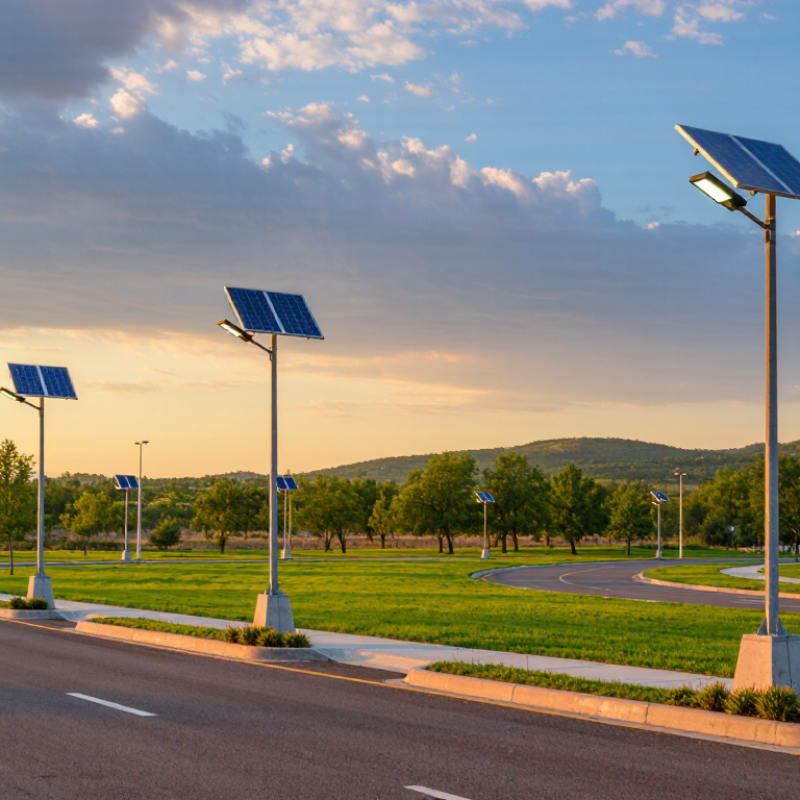
Define the Purpose and Installation Requirements
Choosing a solar light pole starts with purpose, not appearance. Start with purpose.
A footpath needs even, low-glare lighting for safe movement. A parking area may require wider coverage and higher illumination levels. Remote roads often need dependable operation through several cloudy nights.
Define the operating hours, expected users, and required brightness before selecting equipment. Then inspect the site at night. Dark corners, tree shadows, and nearby windows can change the design. Measure the shadows. A photometric plan can confirm pole height, spacing, and light distribution. Do not judge performance by wattage alone.
Installation conditions deserve equal attention. Check daily sunlight, seasonal shading, soil strength, drainage, wind exposure, and underground utilities. Details matter. The foundation must match the pole height and local structural requirements.
Panels need a clear solar path throughout the year. Batteries require secure protection and suitable temperature control. Follow applicable electrical and construction standards.
A practical site review can prevent expensive relocation, although early measurements are never perfect. Future trees, weather changes, or altered traffic patterns may weaken the original plan. Leave room for adjustment, and have a qualified installer verify the design before purchase.
Evaluate Pole Height, Material, and Structural Strength
How to Choose the Right Solar Light Pole?
Pole height should match the road width, mounting angle, and required lighting uniformity. A six-meter pole may suit a small walkway, but wider roads often need eight to twelve meters. Excessive height can reduce ground-level brightness when the luminaire is underpowered. The Illuminating Engineering Society recommends checking average illuminance and uniformity, not brightness alone. IRENA’s Renewable Capacity Statistics 2024 reports global solar capacity reached about 1,419 GW by the end of 2023. This growth increases demand for reliable outdoor solar systems, but poor pole selection still causes glare, dark zones, and maintenance problems. Material matters too. Hot-dip galvanized steel offers strong corrosion resistance and practical cost control. Aluminum reduces weight, yet it may require careful connection design in windy locations. Coastal projects deserve extra protection.
Tips: Verify the wind zone first. Request yield strength, coating thickness, and foundation calculations. Do not accept “heavy-duty” as technical evidence.
Structural strength depends on more than wall thickness. Engineers should assess wind pressure, panel area, luminaire weight, anchor bolts, and soil conditions. ASCE 7-22 provides procedures for calculating wind loads, while EN 40 guidance supports lighting-column design and testing. A taller pole creates a larger bending moment, especially when the solar panel sits above the luminaire. I would avoid selecting a pole from height alone. That shortcut looks efficient, but it can hide foundation failure risks. Field experience also shows that loose bolts and water inside unsealed sections appear earlier than expected. The design may be sound on paper, yet installation quality remains imperfect and needs inspection.
Match Solar Panels and Batteries to Lighting Needs
How to Choose the Right Solar Light Pole?
Matching the solar panel and battery starts with the lighting load, not the pole height. Record the fixture wattage, nightly operating hours, dimming schedule, and local solar conditions.
A 40-watt lamp running for 12 hours needs 480 watt-hours nightly. Add system losses, usually 20–30%, before sizing the battery and panel.
The IEA PVPS Trends 2024 report recorded more than 440 GW of new photovoltaic capacity installed globally in 2023. That growth does not mean every location receives reliable sunlight.
Use the site’s worst-month peak sun hours, not its annual average. A 200-watt panel may produce about 800 watt-hours daily under four effective sun hours.
Clouds matter. Shade from trees can reduce output sharply.
Battery capacity should cover several low-sun nights. Three nights at 576 watt-hours require 1,728 usable watt-hours. With an 80% usable-depth assumption, select approximately 2,160 watt-hours of nominal storage.
Lithium-based batteries often support deeper cycling, while lead-acid systems need more conservative discharge limits. Verify these values in testing documents.
Real temperatures can reduce capacity, and cold winters expose weak designs quickly. Size for winter.
A neat spreadsheet can still mislead if it ignores dust, aging, or incorrect installation angles. Field inspections should confirm the panel’s tilt, cable condition, and nighttime illumination before approval.
Compare Light Output, Coverage, and Energy Efficiency
How to Choose the Right Solar Light Pole?
Compare Light Output, Coverage, and Energy Efficiency
Choosing a solar light pole starts with the area it must illuminate, not its advertised lumen rating. Lumens measure total light, while coverage depends on beam angle, mounting height, and pole spacing. A narrow beam may brighten a walkway but leave dark gaps between poles. A wider distribution can improve uniformity across parking areas.
Measure the site.
Check the required illuminance for roads, paths, entrances, or work zones. Photometric layouts are more reliable than simple lumen comparisons. For example, a pole producing fewer lumens may cover a larger area with better uniformity. Glare also matters. Excessive brightness can reduce visual comfort and waste energy.
Energy efficiency includes more than the panel size. Compare LED efficacy, battery capacity, charging time, and expected autonomy during cloudy weather. Motion dimming can reduce consumption when areas are empty. However, aggressive dimming may create safety concerns near crossings or security-sensitive locations. Local shade, winter sunlight, dust, and temperature can change real performance.
A practical review should examine several nights of operation. Check light levels after midnight, not only at installation. A higher battery capacity is not always the best choice. Oversized components may increase cost without improving useful coverage. I have found that early assumptions about “enough sunlight” can be wrong, especially near trees or tall buildings. Recheck the layout before approving pole spacing.
How to Choose the Right Solar Light Pole?
Compare light output, coverage, and energy efficiency
Higher-wattage poles generally produce more light and cover a larger area, but the best choice depends on the required illuminance, pole spacing, mounting height, and optical distribution. Coverage estimates assume an average maintained illuminance of approximately 10 lux and typical outdoor lighting utilization. LED efficacy is shown as lumens per watt; higher values indicate better energy efficiency.
Check Installation Conditions, Maintenance, and Total Cost
How to Choose the Right Solar Light Pole?
A solar light pole should match the site, not just the product sheet. During field assessments, I check sunlight across the entire year, especially winter shadows from trees and nearby buildings. A pole may receive strong midday sun but still perform poorly after long afternoon shade. Soil strength, drainage, wind exposure, and installation access also affect the foundation design. If trucks cannot reach the site, manual assembly may increase labor and safety risks.
Maintenance is often underestimated. Choose a design that allows ground-level access or safe servicing for batteries, controllers, and LED modules. Inspect panels for dust, bird deposits, and fallen leaves after storms. Battery replacement is a predictable cost, but vandalism, corrosion, and water ingress can create surprises. In one project, the original maintenance estimate ignored difficult terrain. The equipment worked well, but service visits became expensive. That mistake changed our later assessments.
Tips: Request a five-year cost estimate. Include foundations, transport, installation, inspections, battery replacement, and disposal. Compare lighting performance during cloudy periods, not only clear evenings. Ask for test data and warranty conditions in writing. Avoid choosing the lowest purchase price without checking replacement parts and local service skills. Small compromises during planning can become large expenses later.