2026 How to Choose the Right Electronic Components for Your Project?
Choosing the right electronic components for your project can be a daunting task. Electronic components come in various types and specifications, making selection critical. From resistors to microcontrollers, each part plays a vital role in your project's success.
Consider the specific requirements of your project. What voltage and current levels will you encounter? How will the components interact with each other? Often, beginners overlook these details. It's crucial to assess compatibility among different electronic components. This helps prevent circuit malfunction or suboptimal performance.
Don't forget to take budget into account. Some components may seem appealing but could strain your finances. It's essential to balance quality and cost. Sometimes, cheaper options lead to more issues down the line. Reflect on your choices carefully to avoid wasting time and resources.
Understanding the Basics of Electronic Components
Understanding the basics of electronic components is crucial for any successful project. Electronic components can vary significantly in functionality and purpose. Resistors, capacitors, and diodes are among the most common. Each component has a unique role that can greatly affect your circuit.
When selecting components, consider their specifications carefully. For example, a resistor's resistance value determines how much current flows. A wrong value can lead to circuit failure. Similarly, capacitors store energy, but their voltage rating is critical. Overloading a capacitor can cause it to fail.
Practical experience is essential. Start with simple projects. You may choose the wrong components initially, but that’s part of the learning process. Make notes of what works and what doesn’t. Tweaking your designs based on real-world outcomes will improve your skills. Remember, patience and practice go hand in hand in electronics.
Identifying Project Requirements and Specifications
When working on an electronic project, determining your requirements is crucial. Understand the purpose of your project. What do you want to achieve? Will it be simple or complex? These questions help narrow down your options. For instance, a basic LED circuit demands fewer components than a microcontroller-based system. This clarity guides your component choices.
Identifying specifications is another key step. Consider voltage ratings, current needs, and component sizes. A mismatch can lead to failure. Are you using breadboards or custom circuits? This decision impacts your component selection. You might find a perfect part on paper, but does it fit your layout? Physical dimensions matter.
Be mindful of the environmental factors. Will your project be exposed to moisture or extreme temperatures? These conditions affect component durability. Testing various parts can reveal unexpected weaknesses. It’s essential to leave room for adjustments and rethink your choices. Sometimes, the fastest path leads to obstacles you didn’t anticipate. Reflecting on these aspects can refine your project and ensure success.
Evaluating Component Quality and Reliability
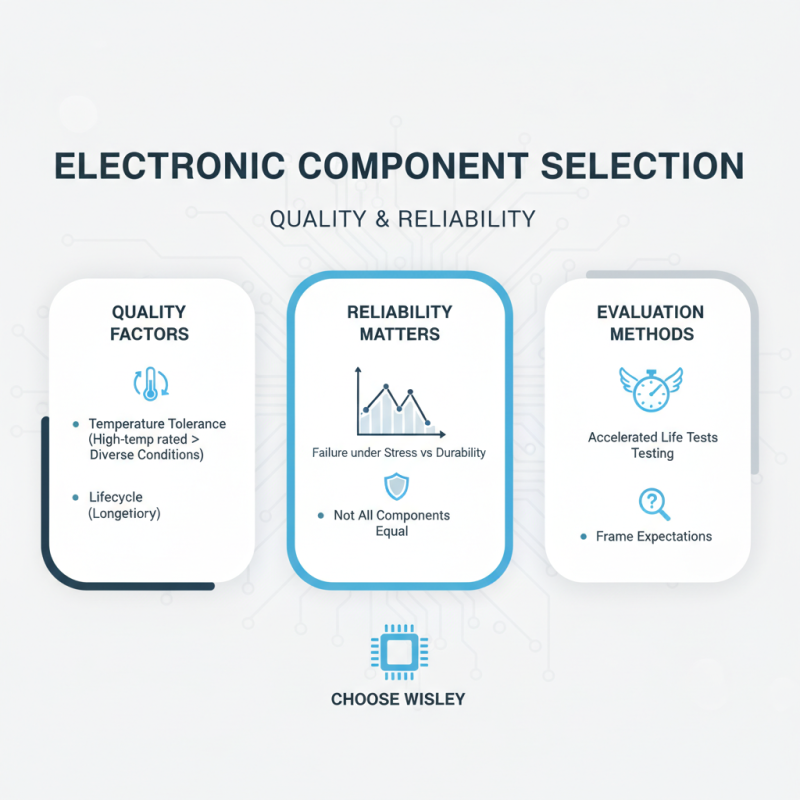
When choosing electronic components, evaluating their quality and reliability is crucial. Not all components are created equal. Some may fail under stress while others may last longer than expected. Consider factors such as temperature tolerance and lifecycle. Components rated for high temperatures often perform better in diverse conditions. Reliability testing, such as accelerated life tests, can help frame expectations.
Look for third-party certifications that indicate quality standards. These certifications offer assurance that components can withstand various operational demands. However, be aware that not all tests replicate real-world conditions. This discrepancy can lead to unexpected failures in your project. Each component's datasheet includes essential information but can be overwhelming. It's vital to focus on relevant details.
Reflect on the importance of sourcing components from reputable suppliers. Cheaper options may seem appealing but can compromise overall project integrity. Balancing cost and quality is challenging yet essential. Consider the potential cost of component failure, which could derail your project. In the end, investing time in evaluating component quality pays off. It builds reliability into your designs and enhances overall performance.
Comparing Cost-Effectiveness and Availability of Components
When selecting electronic components, cost-effectiveness and availability are crucial. Reports indicate component pricing can fluctuate by as much as 30% based on market demand. Additionally, lead times can extend up to 52 weeks for certain parts. This variability complicates budget planning and project timelines.
Tip: Always check inventory levels before making decisions. It's wise to have alternative components ready. This approach minimizes delays and unexpected costs. Comparing suppliers can also reveal price differences, saving you money.
Consider sourcing components globally. While some regions offer lower prices, lead times might be longer. Balancing cost and availability is essential. A component that costs less today may not be in stock tomorrow. Thorough research is vital here.
Tip: Use tools that allow real-time tracking of component prices. These tools can help identify trends and spot potential shortages early. Being proactive can save time and resources in the long run, but remember, not all low-cost options guarantee quality.
Integrating Components into Your Design for Optimal Performance
When integrating electronic components into your design, optimal performance is crucial. A study by the Electronics Industry Association found that 70% of product failures stem from poor component selection. This statistic highlights the impact of choosing the right components. Factors like power ratings, tolerance, and thermal stability directly affect reliability.
Consider the layout of your circuit. A well-designed PCB can reduce noise and improve signal integrity. For instance, using proper grounding techniques can cut electromagnetic interference by up to 30%. However, many designers overlook this aspect. It’s not just about the components; it's also about how they interact.
Testing prototypes is essential but often neglected. According to a recent survey, about 50% of engineers fail to conduct sufficient testing before production. This can lead to costly recalls and redesigns. A thoughtful approach to component integration, along with thorough testing, can enhance performance significantly. Emphasizing these details can prevent larger issues down the line.