
Choosing Marine Generator Sets is not simply a matter of selecting the highest available power rating. A vessel’s operating profile should guide every decision, from harbor maneuvering to offshore service. A tugboat faces sharp load changes, while a research vessel may require quiet, stable electricity for sensitive instruments. The difference matters.
Marine engineer and author Nigel Calder has repeatedly stressed a practical principle: “Reliability begins with proper sizing, installation, and maintenance.” That advice remains highly relevant. Before comparing models, operators should calculate continuous loads, starting currents, emergency demand, and future equipment additions. Refrigeration compressors, thrusters, pumps, radar systems, and battery chargers can create sudden electrical peaks. A generator that appears adequate on paper may struggle at sea.
Look beyond rated kilowatts. Check voltage, frequency, fuel consumption, cooling design, exhaust routing, vibration control, and service access. Certification from a recognized classification society can also support safer vessel operations, depending on the ship’s trading area and requirements. Redundancy deserves careful thought. Two smaller units may provide better flexibility than one oversized machine, yet they can increase maintenance complexity.
There is no perfect choice.
A larger generator is not automatically safer. Oversizing can cause inefficient loading, carbon buildup, and unnecessary fuel costs. Undersizing may produce voltage dips and premature wear. The best decision balances reliability, lifecycle cost, crew capability, and real operating conditions. Still, specifications alone cannot predict every failure. Salt air, poor ventilation, neglected filters, and rushed installations often reveal weaknesses that brochures never mention.
Before choosing a marine generator set, define how much electrical power the vessel truly needs. Create a complete load list for navigation, lighting, communication, pumps, refrigeration, HVAC, galley equipment, and battery chargers. Record each item’s rated power, operating voltage, frequency, and starting current. Small loads become significant when they run continuously.
Separate essential loads from comfort and occasional loads. Main engines, fire pumps, steering systems, and navigation equipment may require priority during emergencies. Large motors can draw several times their running current during startup. This temporary demand can cause voltage dips and nuisance trips. I have seen estimates fail because they counted running power but ignored starting sequences. A spreadsheet helps, but it is not reality.
Measure actual consumption when possible, especially on an operating vessel. Compare harbor loads, cruising loads, and peak hotel loads. Apply a realistic diversity factor, but do not use it to hide missing information. Include reserve capacity for future equipment, maintenance, and unusual operating conditions. Excessive capacity can cause low-load operation, wet stacking, and poor fuel efficiency. Insufficient capacity may overload the generator during a hot day or rough passage. Check the results against the vessel’s electrical drawings, class requirements, flag-state rules, and emergency power arrangement. A qualified marine electrical engineer should review the final load analysis before equipment selection.
This illustrative load profile represents a medium-sized vessel during normal operation. The estimated continuous demand is 475 kW. A 20% design allowance raises the planning load to 570 kW, helping account for load variation, future additions, and generator operating margin. Final generator selection should also consider motor starting current, redundancy, voltage, frequency, and classification requirements.
How to Choose Marine Generator Sets for Your Vessel?
Assess Marine Operating Conditions and Regulatory Standards
A suitable marine generator begins with the vessel’s real operating profile, not its brochure rating. Record continuous load, starting currents, standby demand, and likely future equipment. A ferry may face frequent load changes, while an offshore vessel may run for days under steady demand.
Look closely at the environment. Salt spray attacks electrical connections, and high humidity can weaken insulation. Engine-room temperatures may exceed 45°C during heavy operation. Vibration, pitching, restricted airflow, and limited maintenance space also affect generator performance. During sea trials, monitor voltage recovery after large motors start. Small details matter.
Regulatory checks should include the vessel’s flag-state rules, classification requirements, and applicable international conventions.
Emission limits, exhaust treatment, fuel systems, fire protection, noise control, and emergency power arrangements may all influence the selection. Confirm required documentation, testing procedures, and survey stages before purchase. A generator that meets a shore-based specification may still fail a marine approval review.
I would also compare performance at partial load.
Poor loading can cause deposits, wet stacking, and unnecessary maintenance. This is often overlooked. Build a load bank test into commissioning, then verify alarms, shutdowns, synchronization, and black-start behavior. Keep assumptions visible, because an attractive calculation can hide an inconvenient operating reality.
Choosing a marine generator set starts with the vessel’s real operating profile, not a brochure rating. A diesel generator usually offers strong load response, proven maintenance routines, and reliable starting in rough conditions. Gas-fuelled units can reduce certain emissions, but they require fuel storage, ventilation, and carefully managed gas systems. Dual-fuel sets add flexibility, although their controls and maintenance can be more demanding.
Fuel availability affects every voyage. Diesel is widely accessible, but fuel quality still requires filtration and regular testing. LNG may support cleaner operation, yet cryogenic tanks consume valuable space. Methanol can simplify liquid-fuel handling, but the crew needs suitable training and safe procedures. Fuel savings alone should not decide the purchase. Onboard storage volume matters.
Performance should be checked at the loads the vessel actually sees. A set running constantly below 30% load may suffer poor combustion and unnecessary maintenance. Select units that handle motor-starting surges, hotel loads, and emergency demand without excessive voltage dips.
Parallel operation improves redundancy, but synchronization systems need testing under realistic conditions. Keep spare capacity for future equipment, but oversized generators can waste fuel.
I have seen specifications look excellent until sea trials exposed slow recovery after a large pump started. That detail is easy to miss.
Noise, vibration, cooling-water temperature, service access, and control-panel clarity also affect daily reliability. Classification requirements and local emissions rules should be verified with qualified marine engineers before installation.
No selection is perfect. The best choice balances fuel, space, crew capability, and dependable performance.
Choosing generator capacity starts with a real load profile, not a guess from the vessel’s size. List navigation systems, pumps, lighting, refrigeration, communication equipment, and hotel loads. Record their running power and starting current. Motors can briefly demand several times their normal current. This surge may trip protection or slow the generator.
Select capacity in both kW and kVA. The power factor affects the kVA requirement. Include a practical reserve, often around 15% to 25%, but avoid excessive oversizing. An oversized generator may run lightly loaded, causing inefficient combustion and maintenance concerns. Check operating conditions, too. High ambient temperature, engine-room ventilation, altitude, and seawater temperature can reduce available output.
Configuration deserves equal attention. Two smaller generator sets can provide redundancy and flexible fuel use. Parallel operation requires compatible governors, automatic synchronizing, load sharing, and properly rated switchgear.
A single larger set may save space, but one failure could remove most electrical capacity. Critical vessels may need separated machinery spaces and independent distribution paths.
Think beyond the specification sheet. Test starting sequences with the largest motor running. Verify emergency loads and black-start behavior. A dockside test can miss vibration, heat, and exhaust restrictions at sea. I have seen careful calculations fail because the actual cable lengths created excessive voltage drop. Leave room for future equipment, but document every assumption. Perfect sizing is rare; honest review is safer.
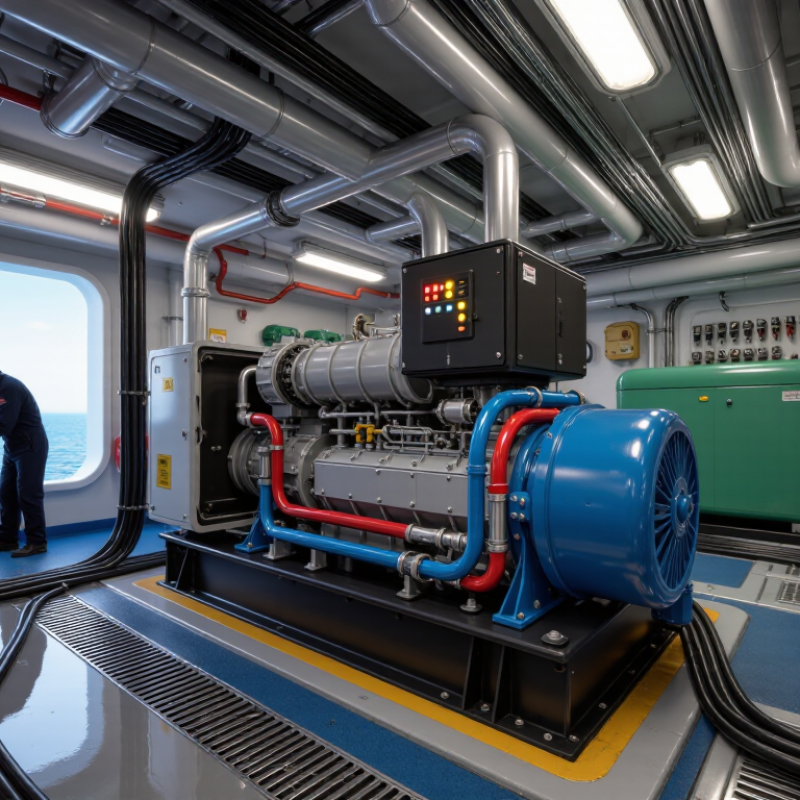
Selecting a marine generator set starts with the engine room, not the catalogue. Measure the available footprint, service clearance, access routes, and deck loading limits. A compact unit may fit tightly but leave no room for filter changes. Check vibration mounts, exhaust routing, ventilation, cable paths, and the vessel’s center of gravity. Installation drawings should be reviewed by a qualified marine electrician and surveyor.
Maintenance access affects real operating costs. Technicians need space to reach oil filters, belts, fuel filters, cooling pumps, and battery terminals. Record expected service intervals and spare-part availability before purchase. Fuel efficiency matters, but so does performance under changing loads. A generator running far below its suitable load may suffer inefficient operation and carbon buildup. That detail is easy to overlook.
Safety requires more than an emergency stop button. Confirm fuel shutoff arrangements, exhaust insulation, ventilation capacity, fire detection, grounding, and protection against seawater leaks. Test alarms under realistic conditions. Include routine load-bank testing in the maintenance plan. Lifecycle cost should cover fuel, inspections, consumables, repairs, downtime, and eventual replacement. A cheaper installation can become expensive when access is poor. No spreadsheet predicts every failure. Recheck assumptions with actual duty cycles, seasonal routes, and crew skills before approval.