How to Choose a Woofer Sound System for Global Buyers?
Choosing a Woofer Sound System for international use is not simply a matter of selecting the largest driver or loudest amplifier. A buyer in Berlin, Dubai, or São Paulo may face different room sizes, power standards, climate conditions, and installation expectations. The right system should deliver controlled low frequencies without muddy vocals, rattling panels, or exhausting listeners after a long event. It should also match the amplifier’s impedance, power output, connector type, and regional voltage requirements.
Dr. Floyd Toole, a respected loudspeaker researcher and author of Sound Reproduction, stated, “The primary determinant of sound quality is the direct sound.” This principle remains practical. A 12-inch woofer in a carefully tuned cabinet may outperform a larger model with poor crossover design. Buyers should examine frequency response, maximum sound pressure level, enclosure material, thermal protection, warranty support, and independent measurements. Certification documents matter too. They can simplify customs clearance and reduce installation risks.
Real-world testing is essential. Play speech, acoustic bass, and electronic music at moderate volume. Listen near the front, center, and rear of the room. Does the bass stay tight? Does the cabinet vibrate against the floor? Small details reveal expensive mistakes. No system is perfect, and specifications can look impressive while hiding weak performance. This guide will compare practical options for global buyers, while acknowledging an uncomfortable truth: the best Woofer Sound System depends on the room, audience, budget, and installer’s judgment.
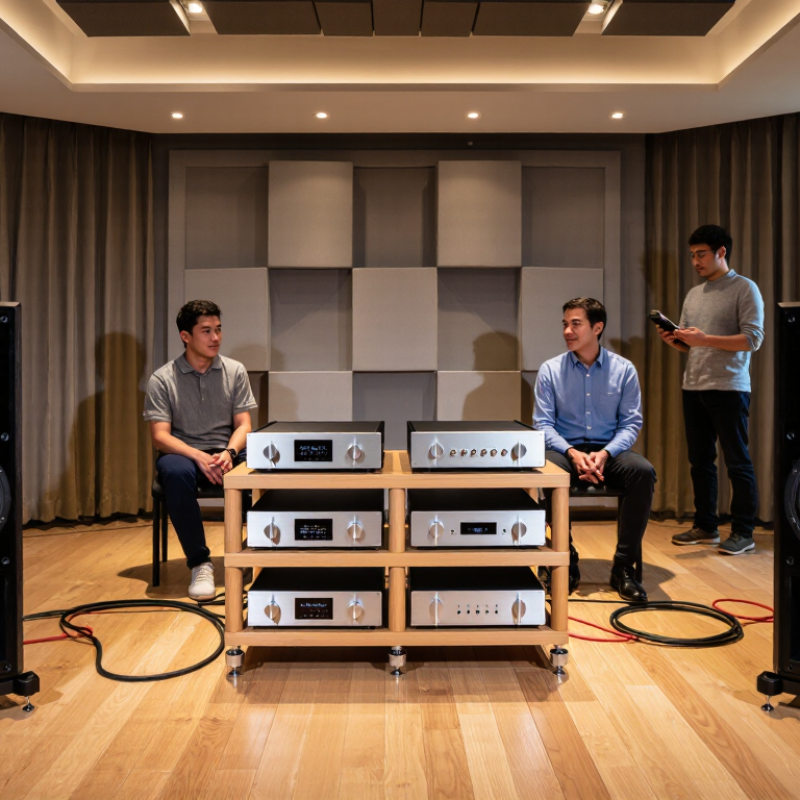
Define Woofer Sound System Requirements and Listening Goals
Choosing a woofer sound system begins with defining the listening goal, not chasing the largest cabinet. A 2024 Grand View Research analysis values the global loudspeaker market at approximately 7.9 billion dollars in 2023. That growth reflects varied needs, from compact apartment listening to high-output event spaces. Measure the room first. Note its length, ceiling height, wall materials, and listening distance.
Decide whether you want deep movie impact, accurate music playback, or strong outdoor coverage. Movie effects may benefit from extension near 30 Hz, while acoustic music often needs controlled bass rather than maximum pressure. A 2021 World Health Organization report states that more than 1.5 billion people live with hearing loss. Therefore, louder is not automatically better. Set a comfortable listening level, and check whether bass remains clear at moderate volume. My early assumption was simple: more watts meant better sound. It did not.
Use sensitivity, impedance, frequency response, and continuous power ratings together. Peak power figures can look impressive but may hide real listening limits. A woofer rated around 88–92 dB sensitivity can produce useful output with moderate amplification, depending on room size. Placement also changes the result. A corner may increase bass, but it can create a heavy, uneven response. Leave space from walls, test several positions, and record short listening notes. Human judgment is valuable, yet memory is unreliable. A basic measurement microphone may reveal problems your ears miss.
Compare Woofer Types, Sizes, and Enclosure Designs
Choosing a woofer sound system starts with the listening space, not the largest advertised driver. A compact 8-inch woofer can deliver tight bass in a bedroom or small studio. A 10-inch model adds fuller low frequencies without demanding excessive room space. Twelve-inch and 15-inch woofers suit larger halls, outdoor events, and powerful sound reinforcement. Bigger is not always better. Poor placement can make deep bass sound loose and uneven.
Woofer type also changes the listening experience. A passive woofer needs an external amplifier, while a powered unit includes amplification and often adjustable crossover controls. Dynamic cone woofers are widely used because they offer practical output and straightforward maintenance. Check continuous power handling, impedance, sensitivity, and usable frequency range. Peak wattage alone can mislead buyers. I once chose a system by peak power and underestimated heat buildup during long sessions.
Enclosure design deserves equal attention. Sealed cabinets usually produce controlled, accurate bass and work well for critical listening. Ported cabinets can produce louder low frequencies, but port noise may appear when the design is poorly matched. Bandpass enclosures offer strong output in a narrower range and require careful setup. Cabinet material, internal bracing, grille protection, and carrying weight matter for international shipping. Test the woofer at moderate volume first. Listen for vibration, muddy vocals, and delayed bass. Local voltage, connector standards, warranty support, and replacement parts should also influence the final choice. Small details matter.
Check Power, Sensitivity, Impedance, and Amplifier Compatibility
Choosing a woofer sound system starts with honest power data, not the largest number on a carton. Continuous or RMS power reflects sustained operation; peak power is brief and often overstated. IEC 60268-5 measurement practice supports comparing sensitivity under controlled conditions. A woofer rated at 90 dB sensitivity produces about 3 dB more output than one rated at 87 dB with the same power. Every 3 dB increase requires roughly twice the amplifier power. Every 10 dB increase needs about ten times more power, according to established acoustic engineering calculations.
Check impedance across the operating range, not only the nominal figure. An 8-ohm woofer may dip near 4 ohms, demanding greater current from the amplifier. The amplifier should remain stable at that minimum load and match the woofer’s continuous power rating. Leave practical headroom, commonly 3–6 dB, for musical transients. Professional AV system guidance, including AVIXA’s 2024 industry outlook, shows how varied global installations are, so room size and duty cycle matter more than a universal wattage target. Small rooms need control; large venues need displacement.
Sensitivity can mislead.
Confirm whether it was measured at 1 watt/1 metre or 2.83 volts/1 metre. For a 4-ohm woofer, 2.83 volts equals about 2 watts, creating a 3 dB advantage over a 1-watt measurement. I still see buyers compare these figures directly. That mistake is easy to make. Check the test method, frequency range, impedance curve, and amplifier protection before ordering.
Evaluate Connectivity, Durability, Certifications, and Regional Standards
How to Choose a Woofer Sound System for Global Buyers?
A Woofer System should fit the buyer’s complete setup, not only produce deep bass. Check Bluetooth, Wi-Fi, USB, XLR, and RCA connections before ordering. A small venue may need balanced XLR input for longer cable runs. A home user may prefer simple wireless pairing. Test connection stability in the intended room. Walls, crowded networks, and metal furniture can weaken wireless signals.
Durability also matters during shipping, installation, and repeated use. Look for reinforced corners, strong handles, protected control panels, and a clear operating temperature range. An IP rating can help in humid locations, but it does not make every system weatherproof. I have seen buyers focus on power ratings while overlooking ventilation. That mistake can shorten equipment life. Leave space around the amplifier and inspect the cooling path regularly.
Certifications require careful checking. Confirm that the documents match the exact model, voltage, frequency, and sales region. Safety, electromagnetic compatibility, and energy requirements can differ between countries. The plug type is only one detail. A system designed for 120 volts may not suit a 230-volt installation without proper compatibility. Ask for test reports, user manuals, warranty terms, and local service information. Paperwork can look convincing. Its scope matters more. Regional standards may also change, so buyers should verify current requirements with qualified local professionals. No checklist is perfect, and ignoring that fact can create expensive surprises.