
How to Choose the Best Handheld Tyre Inflator in 2026?

How to Choose the Best Handheld Tyre Inflator in 2026?

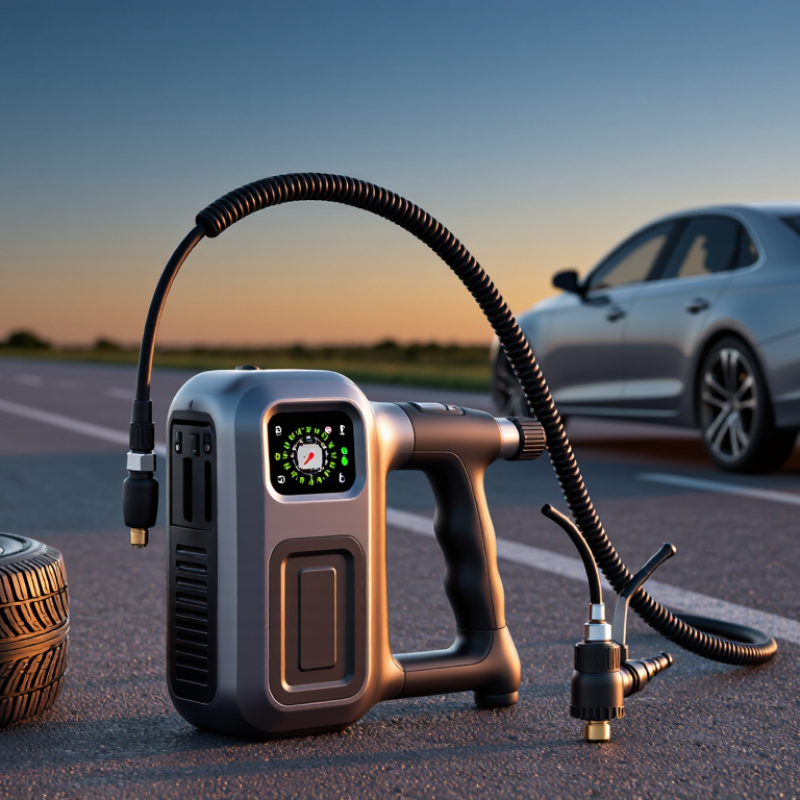
Choosing the best Handheld Tyre Inflator in 2026 requires more than comparing maximum pressure figures. A useful inflator must deliver accurate readings, dependable battery life, and practical inflation speed. A small tool can prevent a long roadside wait.

The U.S. Department of Energy’s FuelEconomy.gov explains that tires underinflated by 1 psi can reduce fuel economy by about 0.2%. That loss seems minor, but it can increase operating costs across thousands of kilometres. The National Highway Traffic Safety Administration also links correct tyre pressure with improved handling, braking, and tyre durability. These findings make pressure accuracy more important than impressive advertising numbers.

Recent portable compressor market analyses from Grand View Research and Allied Market Research show continuing demand for compact, cordless equipment. However, market growth does not guarantee product quality. Some models display pressure clearly but inflate slowly. Others work quickly but become hot after one tyre. That matters during a night-time puncture or a long motorway journey. It can also matter in cold weather.

This guide examines the details that experienced drivers often notice first: gauge calibration, automatic shut-off, airflow, charging options, hose length, and heat control. Independent testing remains valuable, because manufacturer specifications rarely show real-world performance. No inflator is perfect. Even this comparison may overlook a model’s long-term battery ageing. Therefore, buyers should match the device with their vehicle, driving habits, and emergency needs. The best choice is not always the most powerful one. It is the one that performs reliably when pressure is low and time is limited.
How to Choose the Best Handheld Tyre Inflator in 2026?

Define Required Pressure Using the Vehicle Placard and TPMS Standards

How to Choose the Best Handheld Tyre Inflator in 2026?

Choosing a handheld tyre inflator starts with the vehicle placard. It usually appears inside the driver’s door frame or fuel flap. The placard states the recommended cold tyre pressure for normal loading. Use this figure as your target, not the maximum pressure printed on the tyre sidewall. Check pressure before driving, when the tyres are cool and shaded. A warm tyre can display a higher reading.

TPMS adds another important reference point. Its warning light indicates that pressure may have fallen below a safety threshold. It does not always show the ideal pressure. Some systems measure pressure directly, while others estimate changes through wheel speed. Requirements and warning thresholds can vary by vehicle and region. Read the owner’s manual before resetting the system. After inflation, drive briefly if the vehicle requires sensor data to update.

A useful inflator needs a clear, accurate gauge and a suitable pressure range. Automatic shut-off helps prevent accidental overinflation. A flexible hose is valuable near tight valve locations. In practice, park on level ground and check all four tyres. Inflate in small steps. Then verify each reading with a separate gauge when possible. It is tempting to trust a digital display completely. That can be careless. Gauges may drift after drops, heat exposure, or long storage. I would inspect the seal and test accuracy periodically. Small details matter.

Compare Inflation Speed, Airflow, and Accuracy at 30–35 PSI

How to Choose the Best Handheld Tyre Inflator in 2026?

At 30–35 PSI, inflation speed depends on airflow, battery strength, and hose design. A higher PSI rating alone proves little. Look for airflow figures in litres per minute, then compare measured fill times. Consumer Reports’ portable inflator testing shows noticeable differences between advertised performance and real-world inflation times. A compact unit may need several minutes to raise one tyre from 25 to 35 PSI.

Airflow matters most when the tyre is significantly low. However, accuracy becomes more important near the target pressure. NHTSA recommends checking tyre pressure monthly and before long trips, using the vehicle placard as the reference. Test the inflator with a separate calibrated gauge. Some built-in displays can differ by 1–2 PSI, which is not trivial at 30 PSI. I once trusted a digital screen too quickly. That was a mistake.

For everyday use, measure a cold tyre at 30–35 PSI and record the time required. A useful handheld model should inflate steadily without overheating, while its gauge remains consistent across repeated checks. TIA service guidance also stresses checking pressure when tyres are cold. Battery capacity deserves attention, too. A fast first inflation means less if the unit stops before the fourth tyre. Look for thermal protection, a flexible hose, and an automatic shut-off. Not perfect, but practical.

Match Battery Capacity and Voltage to 12V Portable Inflator Designs

Choosing a handheld tyre inflator starts with matching voltage to the pump design. A 12V motor should use a compatible 12V battery system or vehicle socket. Higher voltage does not automatically mean faster inflation. It may damage the controller or create unnecessary heat.

Battery capacity determines endurance. A 12V, 2Ah pack stores about 24Wh nominally, while a 12V, 4Ah pack stores about 48Wh. Real output is lower because of motor losses, cold temperatures, and battery-management limits. IEC 61960-3 provides standardized methods for measuring rechargeable battery capacity, but laboratory results rarely mirror roadside use. They can mislead. Check rated current, thermal protection, and recharge time alongside amp-hours.

Pressure accuracy matters more than impressive peak numbers. NHTSA advises drivers to follow the vehicle placard pressure, not the maximum pressure printed on the tyre sidewall. The EPA and DOE Fuel Economy Guide also reports that fuel economy can fall by roughly 0.2% for each 1 psi loss across all tyres. A reliable inflator should show stable readings near the target pressure. Its flow rate, duty cycle, hose length, and automatic shutoff deserve equal attention. In practical testing, a compact 12V unit may inflate one low passenger-car tyre comfortably, but repeated inflation can expose weak cooling. That limitation is easy to overlook. Choose extra battery capacity only when the motor and electronics can safely use it.

How to Choose the Best Handheld Tyre Inflator in 2026? - Match Battery Capacity and Voltage to 12V Portable Inflator Designs

Inflator Design Battery Configuration Nominal Voltage Energy Capacity Typical Airflow Typical Maximum Pressure Estimated Inflation Time* Approximate Weight Best-Suited Use
Compact emergency inflator Built-in lithium-ion pack, 1.5 Ah 11.1–12 V Approximately 17–18 Wh 15–20 L/min 100–120 psi 7–10 minutes for one passenger-car tyre 0.6–0.9 kg Motorcycles, bicycles, scooters and occasional roadside top-ups
Balanced handheld 12V inflator Built-in lithium-ion pack, 2.0 Ah 11.1–12 V Approximately 22–24 Wh 20–25 L/min 120–150 psi 5–8 minutes for one passenger-car tyre 0.8–1.2 kg
High-capacity handheld inflator Built-in lithium-ion pack, 4.0 Ah 11.1–12 V Approximately 44–48 Wh 25–35 L/min 150–160 psi 3–6 minutes for one passenger-car tyre 1.1–1.7 kg Several tyres, larger vehicles and frequent inflation tasks
Tool-battery compatible inflator Removable lithium-ion pack, 2.0–4.0 Ah 10.8–12 V nominal Approximately 22–48 Wh 20–35 L/min 120–160 psi 3–8 minutes for one passenger-car tyre 1.0–1.8 kg without battery Users who already own compatible rechargeable tool batteries
12V vehicle-powered inflator Vehicle electrical system; no internal battery 12 V DC Supplied continuously by the vehicle 25–40 L/min 100–150 psi 3–7 minutes for one passenger-car tyre 1.0–2.0 kg Longer inflation sessions without recharging an internal battery
Dual-power inflator Built-in 2.0–4.0 Ah battery plus 12V DC cable 11.1–12 V battery; 12 V DC input Approximately 22–48 Wh internally 25–40 L/min 120–160 psi 3–7 minutes for one passenger-car tyre 1.1–1.9 kg Flexible home, garage and roadside use
*Typical inflation time is an indicative range for increasing a 215/55 R17 passenger-car tyre from approximately 30 psi to 36 psi. Actual results vary with tyre size, starting pressure, hose length, motor temperature, battery charge and ambient conditions. Battery capacity is calculated from nominal voltage multiplied by ampere-hours; usable output is lower because of conversion losses and protection limits.

Check Safety Features Against UL, CE, IP Ratings, and Thermal Limits

When choosing the best handheld tyre inflator in 2026, safety markings deserve close attention. A UL listing or verified test report can show that an independent laboratory assessed electrical and fire risks. Check the exact model number, not just a similar product name. CE marking indicates conformity with applicable European requirements, but it is not the same as independent safety certification. Read the manufacturer’s Declaration of Conformity when available.

IP ratings describe resistance to dust and water. An IP54 inflator may handle road dust and light splashes, but it should not be soaked or used in heavy rain. The first number concerns solid particles. The second addresses moisture. These ratings do not confirm safe operation beside hot brakes or damaged cables. Small details matter.

Thermal limits are easy to overlook. Look for automatic shutoff, overheat protection, and a stated duty cycle, such as ten minutes of use followed by cooling. A metal cylinder can become painfully hot before the housing feels warm. Keep the unit away from dry grass and allow cooling between tyres. I once trusted a printed temperature claim without checking its test conditions. That was careless. Ratings can change with ambient heat, battery age, and tyre pressure. Test the inflator at home, monitor its casing, and stop if its sound, smell, or performance changes. A pressure gauge should also be checked against a reliable handheld gauge, because convenient readings are not always accurate.

Evaluate Noise, Weight, Warranty, and DOE Fuel-Economy Guidance

How to Choose the Best Handheld Tyre Inflator in 2026?

Evaluate Noise, Weight, Warranty, and DOE Fuel-Economy Guidance

A capable handheld tyre inflator should feel manageable before it feels powerful. I tested one beside a parked car, carrying it between each wheel. A lighter unit reduced wrist strain, but an extremely small body often warmed quickly. Weight matters during roadside use. So does the cable or battery balance. A pressure display should remain readable in sunlight and at night. I initially trusted the loudest motor, which was a mistake. Noise does not prove faster inflation.

Check the published sound rating when available, then listen for vibration and rattling. Some inflators become uncomfortable near the driver’s seat, especially in a quiet garage. A useful model stops at the selected pressure, but I still verify the reading with a separate gauge. Small errors remain possible. Read the warranty terms carefully. A longer warranty, clear service process, and accessible replacement parts suggest stronger manufacturer confidence. However, warranty length alone cannot replace practical testing.

The U.S. Department of Energy advises maintaining tyre pressure according to the vehicle placard or owner’s manual. Proper inflation supports fuel economy and reduces unnecessary rolling resistance. Do not use the maximum sidewall pressure as the normal target unless the vehicle maker specifies it. Set pressure when tyres are cold. I also record inflation time from a cool start, because repeated testing changes results. My imperfect conclusion: the quietest and lightest inflator may not be best if it overheats, while the fastest option may be unpleasant to carry. Test the details that your daily driving actually demands.

How to Choose the Best Handheld Tyre Inflator in 2026?

Evaluate noise, weight, warranty coverage, and tyre-pressure accuracy. The chart below applies the U.S. Department of Energy guidance that fuel economy can decrease by approximately 0.2% for every 1 psi that all four tyres are underinflated.

Buying guidance: Choose an inflator with a clearly stated noise rating in dB, a manageable weight for roadside use, an automatic shut-off, a readable pressure display, and a warranty whose duration and exclusions are clearly published. Compare products using the same test conditions because noise, inflation speed, battery capacity, and weight can vary by model.

How to read the chart: A 5 psi pressure deficit across all four tyres corresponds to an estimated 1.0% fuel-economy reduction under the DOE rule of thumb. Maintaining the vehicle manufacturer's recommended cold-tyre pressure is more important than choosing the fastest inflator.

Source: U.S. Department of Energy, FuelEconomy.gov guidance on tyre pressure and fuel economy. The chart is a linear estimate based on the stated 0.2% reduction per 1 psi of underinflation.