
China Top 10 JS Twin Shaft Concrete Mixer Manufacturers

China Top 10 JS Twin Shaft Concrete Mixer Manufacturers

China’s concrete equipment industry has developed rapidly, especially in high-capacity mixing systems. The Js Twin Shaft Concrete Mixer is now widely considered for ready-mix plants, precast factories, infrastructure projects, and demanding construction sites.

Its appeal is practical. Two horizontal shafts create strong counter-rotating movement. Aggregates, cement, water, and admixtures are distributed more evenly. A well-designed machine can shorten mixing cycles while maintaining stable output. However, performance depends on more than shaft speed. Liner materials, paddle geometry, sealing systems, gearbox protection, and maintenance access all deserve close inspection.

Dr. Peter C. Taylor, a recognized concrete technology specialist, has emphasized a useful principle: “Concrete quality begins with control of the process, not with hope.” That idea applies directly to mixer selection. A powerful machine cannot correct poor batching, inconsistent moisture, or careless maintenance.

This guide examines China’s top 10 Js Twin Shaft Concrete Mixer manufacturers through practical criteria. These include manufacturing experience, product configuration, quality systems, customization capability, export support, and after-sales service. Factory scale matters. It is not everything.

Buyers should also examine test reports, weld quality, spare-parts availability, and actual reference projects. A polished website may reveal little about daily production reliability. Some manufacturers offer competitive prices, yet their technical documentation may remain incomplete. That weakness deserves attention.

The ranking is therefore not presented as an absolute verdict. It is a starting point for careful comparison. Site conditions differ. So do production targets, materials, budgets, and operator expectations. A suitable supplier should prove its claims with data, communication, and consistent equipment performance.
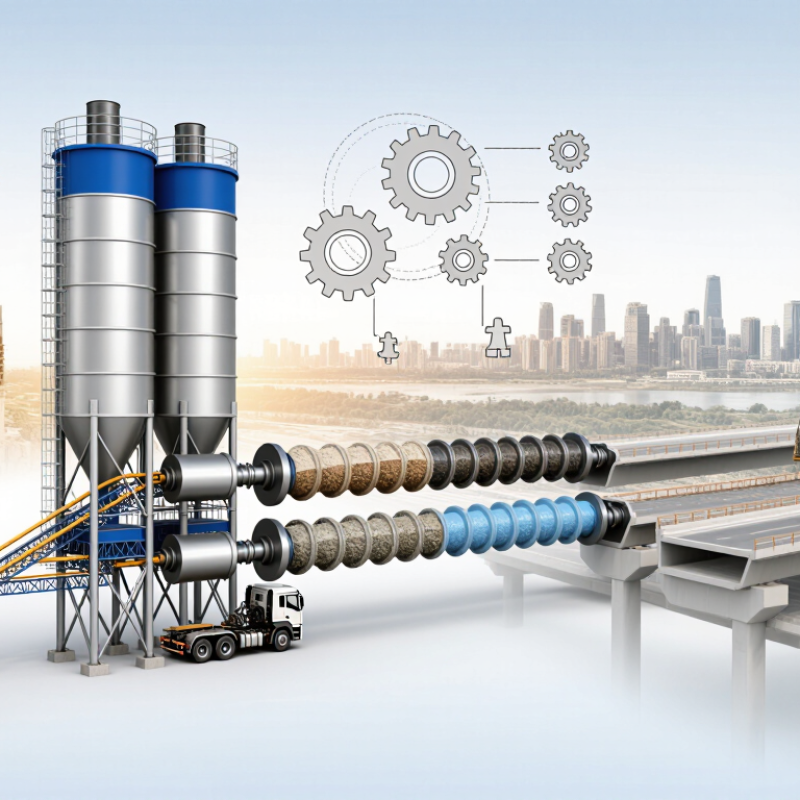
China Top 10 JS Twin Shaft Concrete Mixer Manufacturers

JS Twin Shaft Concrete Mixers: Definition, Design, and Main Applications

A JS twin shaft concrete mixer is a forced-action machine with two parallel horizontal shafts. Each shaft carries mixing paddles that rotate toward the central zone. This movement creates strong overlap and distributes cement, water, sand, and aggregate more evenly. Unlike simple drum mixers, it does not depend mainly on gravity. It actively shears and folds the batch.

The mixer’s design focuses on torque, paddle arrangement, liner protection, and discharge speed. Wear-resistant liners shield the mixing chamber from abrasive aggregate. Adjustable paddles help technicians control mixing intensity and material flow. A reliable water system also supports consistent moisture control. Small errors matter. Excess water can weaken concrete, while poor timing may leave dry pockets. Operators should inspect seals, paddles, and bearings during scheduled maintenance. Practical experience shows that clean discharge gates prevent hidden buildup and unstable batches.

JS mixers serve ready-mix plants, precast yards, construction sites, and infrastructure projects. They handle ordinary concrete, dry mixes, stiff mixtures, and some fiber-reinforced formulations. Their twin-shaft action suits high-volume production and short mixing cycles. However, performance depends on correct loading order and measured ingredients. A powerful machine cannot correct careless proportioning. Some projects may also need a different mixer design. That choice deserves careful testing.

JS Twin-Shaft Concrete Mixers: Typical Theoretical Throughput by Mixer Capacity

The chart shows the theoretical hourly output of common JS twin-shaft mixer capacities, calculated with a 40-second mixing cycle and continuous operation. Actual production depends on loading, discharge, material characteristics, and plant efficiency. Twin-shaft mixers are commonly used for ready-mix concrete, precast concrete, infrastructure projects, dry-mix materials, and other high-consistency applications.

Key Criteria for Evaluating Chinese JS Mixer Manufacturers

China Top 10 JS Twin Shaft Concrete Mixer Manufacturers

Key Criteria for Evaluating Chinese JS Mixer Manufacturers

When comparing Chinese JS twin shaft concrete mixer manufacturers, avoid judging quality by catalog photos alone. A reliable review begins with production evidence. Ask for factory records, welding procedures, material certificates, and recent test reports. Check whether the mixing arms, paddles, and shaft seals use documented materials. These parts face constant abrasion, moisture, and impact.

During factory visits, inspect the mixer frame closely. Uneven weld beads can reveal rushed production. Look inside the mixing chamber for smooth corners and accessible wear plates. Ask technicians to demonstrate a complete mixing cycle with realistic moisture levels. Measure discharge time, noise, and residual concrete after unloading. A clean discharge matters on busy construction sites. Small details matter.

Drive systems also deserve careful attention. Confirm the gearbox model, lubrication method, overload protection, and replacement procedure. Request drawings showing shaft alignment and bearing positions. A serious manufacturer should explain maintenance intervals in practical language. After-sales support is equally important. Check response times, spare-parts availability, installation guidance, and technician experience with export projects.

No checklist is perfect. I once focused too much on motor power and overlooked cleaning access. That mistake increased downtime later. Independent reference checks can reveal problems hidden during a factory tour. Review several operating sites, not only the newest installation. Compare documented performance with actual operator feedback. A trustworthy supplier accepts detailed questions and admits limitations instead of promising flawless results.

China’s Top 10 JS Twin Shaft Concrete Mixer Manufacturers

China’s Top 10 JS Twin Shaft Concrete Mixer Manufacturers are judged by more than production volume. Buyers should examine mixing uniformity, shaft sealing, gearbox protection, and after-sales response. A reliable JS mixer should produce consistent concrete under harsh, dusty conditions. The machine must also tolerate frequent loading cycles and variable aggregate moisture.

China remains a major concrete equipment market. The National Bureau of Statistics reported about 2.02 billion tonnes of cement production in 2023. That scale supports strong demand for durable twin shaft mixers in commercial plants, infrastructure projects, and precast yards.

Industry analysis from Mordor Intelligence also identifies Asia-Pacific as a leading region for concrete equipment consumption. However, market size does not prove manufacturing quality. It is only context.

A practical comparison of the top 10 manufacturers should include verified output tests, bearing temperature records, liner thickness, and spare-parts availability. Ask for references from plants using similar aggregates. Small details matter. For example, a poorly aligned discharge gate can leave wet material behind after every batch. Energy use deserves attention, too; inefficient motors increase operating costs over thousands of cycles. Certification documents help, but site experience is stronger evidence. Rankings can be imperfect. Factory capacity figures may be difficult to verify, and advertised performance may exceed field results. Buyers should compare test data, maintenance records, and contract terms before selecting equipment.

Product Quality, Customization, and Production Capabilities

China’s top ten JS twin shaft concrete mixer manufacturers should be judged by evidence, not polished catalogs. Product quality begins with steel selection, shaft alignment, paddle durability, and controlled welding. Experienced buyers should request inspection records, material certificates, and test reports for each production batch. Small details matter. A poorly sealed bearing can stop a busy concrete line.

Customization also reveals a manufacturer’s technical depth. Reliable suppliers can adjust discharge height, mixing capacity, liner materials, motor configuration, and control systems. They should explain how each change affects torque, maintenance, and service life. A mixer designed for harsh aggregate needs different wear protection from one used for lightweight concrete. Clear drawings and sample approvals reduce costly misunderstandings.

Production capability includes machining accuracy, assembly space, quality checkpoints, and delivery control. Factory visits can show whether shafts are balanced, gearboxes are protected, and finished units receive realistic trial runs. However, no workshop is flawless. Delays, minor coating defects, or revisions may appear, even in experienced factories. What matters is the response: documented correction, transparent communication, and traceable replacement parts. My evaluation would also leave room for doubt, because a short factory visit cannot prove years of field performance. References from comparable projects, service response times, and maintenance feedback provide stronger evidence than impressive equipment alone.

How to Select a Suitable Chinese JS Mixer Manufacturer

China Top 10 JS Twin Shaft Concrete Mixer Manufacturers

Choosing a suitable Chinese JS mixer manufacturer requires more than comparing prices. I would verify production capacity, weld quality, shaft alignment, gearbox torque, and liner thickness through factory records. The Global Cement and Concrete Association estimates that cement and concrete contribute about 7–8% of global carbon emissions. Therefore, efficient mixing and reduced material waste deserve attention. Ask for batch-cycle data, motor power, and actual output under your aggregate conditions. A claimed capacity may not match wet, sticky concrete.

Check whether the manufacturer operates a documented quality system, such as ISO 9001. Request material certificates, welding inspection reports, load-test records, and a factory acceptance test. For concrete performance, compare the mixer’s testing process with ASTM C94/C94M or EN 206 requirements. These standards do not certify a mixer itself, but they clarify production expectations. Speak with at least three operating customers. Photos are helpful, but they are not proof. I once trusted a neat brochure too quickly; spare-part delays later caused avoidable downtime.

Tips: Confirm installation support, electrical compatibility, warranty exclusions, and delivery terms in writing. Ask for the prices of paddles, liners, seals, and bearings. Review the maintenance schedule with your technician. A lower purchase price can become expensive after six months. Require a video test using similar aggregate size and moisture. Small details matter.

China Top 10 JS Twin Shaft Concrete Mixer Manufacturers - How to Select a Suitable Chinese JS Mixer Manufacturer
Profile Typical Discharge Capacity Recommended Production Use Approx. Mixing Cycle Typical Motor Power Maximum Aggregate Size Common Discharge Height Wear-Protection Configuration Documentation to Request Selection Rating
Manufacturer Profile 01 1.0 m³ per batch Small ready-mix plants and precast production 30–45 seconds, excluding loading and discharge 2 × 18.5 kW Up to approximately 80 mm, subject to mixer design 2.7–3.8 m Replaceable wear plates and abrasion-resistant mixing arms General arrangement drawing, motor data sheet, spare-parts list, and test report ★★★★☆
Manufacturer Profile 02 1.5 m³ per batch Commercial concrete and medium-sized construction projects 30–40 seconds, excluding charging time 2 × 30 kW Up to approximately 80 mm 3.0–4.0 m High-chrome or hardened wear components in high-impact zones Technical specification, foundation drawing, installation manual, and inspection checklist ★★★★★
Manufacturer Profile 03 2.0 m³ per batch High-volume batching and infrastructure projects 30–45 seconds, depending on mix design 2 × 37 kW Up to approximately 100 mm 3.2–4.2 m Replaceable liners, reinforced paddles, and protected shaft seals Factory acceptance test, performance curve, electrical diagram, and maintenance schedule ★★★★★
Manufacturer Profile 04 2.5 m³ per batch Large ready-mix plants and major civil works 35–50 seconds, excluding loading and discharge 2 × 45 kW Up to approximately 100 mm 3.5–4.5 m Heavy-duty liners with independently replaceable mixing tools Load test results, component certificates, spare-parts quotation, and warranty terms ★★★★☆
Manufacturer Profile 05 3.0 m³ per batch Continuous commercial operation and large infrastructure sites 35–55 seconds, influenced by moisture and aggregate grading 2 × 55 kW Up to approximately 100 mm 3.8–4.8 m Multi-zone wear protection and serviceable end seals Capacity calculation, lubrication chart, operating manual, and commissioning procedure ★★★★★
Manufacturer Profile 06 3.5 m³ per batch Large-scale concrete supply and precast component production 40–60 seconds, excluding material loading 2 × 55–75 kW Up to approximately 100 mm 4.0–5.0 m Thick replaceable liners and reinforced discharge-gate components Dimensional inspection report, motor efficiency data, packing list, and service contacts ★★★★☆
Manufacturer Profile 07 4.0 m³ per batch High-output ready-mix and infrastructure batching plants 40–60 seconds, depending on concrete formulation 2 × 75 kW Up to approximately 120 mm where permitted by the design 4.0–5.2 m Heavy-duty abrasion liners, reinforced arms, and accessible inspection doors Factory test video, layout drawing, electrical load list, and replacement-part lead times ★★★★★
Manufacturer Profile 08 4.5 m³ per batch Large infrastructure projects requiring high hourly output 45–65 seconds, excluding charging and discharge 2 × 75–90 kW Up to approximately 120 mm, subject to aggregate shape 4.2–5.5 m High-wear liners with adjustable mixing tools and protected bearings Production calculation, foundation loads, installation tolerances, and maintenance records ★★★★☆
Manufacturer Profile 09 5.0 m³ per batch Large commercial batching facilities and demanding project schedules 45–70 seconds, depending on recipe and loading sequence 2 × 90 kW Up to approximately 120 mm 4.5–5.8 m Heavy-duty wear plates, replaceable paddles, and reinforced shaft sealing Capacity verification, noise and vibration test, quality plan, and after-sales response procedure ★★★★★
Manufacturer Profile 10 6.0 m³ per batch Very high-volume production and major infrastructure programs 50–75 seconds, depending on material characteristics 2 × 110 kW Up to approximately 120 mm, subject to engineering approval 4.8–6.0 m Extra-thick liners, reinforced mixing arms, and easy-access service areas Complete technical proposal, performance guarantee, commissioning plan, and critical-spares inventory ★★★★☆
Selection note: The figures above are representative engineering ranges for JS-series twin-shaft concrete mixers and should be confirmed against the supplier’s final quotation. Actual capacity, cycle time, motor power, aggregate size, and discharge height vary with concrete formulation, moisture content, installation layout, local electrical standards, and operating conditions.