What Is the Breaking Capacity of RCD for 2026 Top Types?
Understanding the Breaking Capacity Of Rcd is crucial for electrical safety. RCDs, or residual current devices, help prevent electrical shocks and fires by disconnecting circuits when they detect an imbalance. In 2026, as technology advances, the types of RCDs available will vary significantly in their specifications.
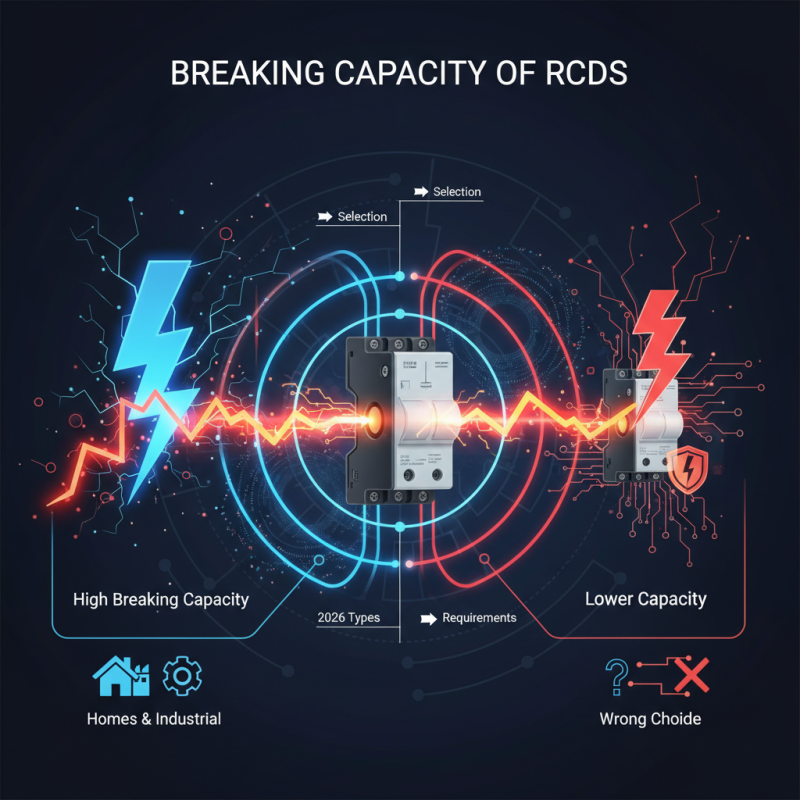
The breaking capacity of RCD is a key factor in selecting the right device for your needs. Higher breaking capacities indicate better performance under fault conditions. It reflects how much fault current an RCD can interrupt safely. Knowing this can enhance safety in homes and industrial environments.
However, not all RCDs are created equal. Some might fail under specific conditions. Choosing the wrong RCD could lead to potential hazards. It's essential to consult with experts and consider your unique requirements. Emphasizing the importance of breaking capacity can help ensure the proper protection of people and property.
Definition of Breaking Capacity in RCDs
The breaking capacity of Residual Current Devices (RCDs) is critical. It defines the maximum fault current that an RCD can interrupt without being damaged. This capacity ensures the device can effectively protect against electric shocks and electrical fires. According to industry reports, RCDs commonly have breaking capacities ranging from 6 kA to 10 kA. Understanding these values helps in selecting suitable devices for different applications.
RCDs must meet specific standards to ensure reliability. The International Electrotechnical Commission (IEC) provides guidelines on these devices. An RCD with insufficient breaking capacity may not trip during an overcurrent, leading to potential hazards. When selecting RCDs, consider factors like the installation environment and expected fault currents. This approach will help mitigate risks effectively.
Tips: Always consult updated industry standards when selecting RCDs. Regular testing of RCDs is essential to ensure functionality. It's also wise to stay informed about advances in RCD technology and safety measures. Exploring different models and their breaking capacities can lead to better decision-making.
Importance of Breaking Capacity in Electrical Safety
The breaking capacity of a Residual Current Device (RCD) plays a crucial role in ensuring electrical safety in homes and businesses. This capacity determines how much current the RCD can interrupt safely without failing. If the breaking capacity is too low, the RCD may not operate effectively during a fault. Consequently, the risk of electric shock or fire increases significantly.
When selecting an RCD, consider its breaking capacity ratings carefully. A higher rating may be necessary for commercial settings where larger equipment operates. Homes generally require lower breaking capacities. However, it is critical to match the RCD's capacity with the overall system requirements.
Tips: Always consult a qualified electrician before installation. They can guide you through the specific needs based on your system. Regular testing of RCDs is essential. It ensures they function correctly under fault conditions. Even the best devices can fail if not maintained.
RCDs are essential yet often overlooked components of safety. Many people might install them without understanding their importance. A compromised RCD can lead to tragic outcomes. Therefore, assess your home or business's electrical safety regularly. Being proactive can save lives and property.
Overview of RCD Types and Their Applications
Residual Current Devices (RCDs) play a crucial role in electrical safety. They protect against electrical shock and fire caused by ground faults. Understanding the various types of RCDs and their applications is essential for effective safety measures.
There are several RCD types available. Type AC detects alternating current, while Type A detects pulsating direct current. Type B is designed for applications involving smooth direct currents. Each type serves a specific purpose, from household installations to industrial setups. Choosing the right RCD type can be challenging, as it requires an understanding of the specific electrical environment.
In practical applications, RCDs can be found in homes, offices, and factories. A residential RCD can prevent electric shocks when using power tools or appliances. However, not all installations use the appropriate type. This discrepancy can lead to ineffective protection, which is a critical issue. Users should regularly test their RCDs to ensure functionality. While RCDs are reliable, they are not foolproof. Regular checks and maintenance can enhance safety and ensure compliance with regulations.
What Is the Breaking Capacity of RCD for 2026 Top Types? - Overview of RCD Types and Their Applications
| RCD Type | Breaking Capacity (kA) | Application | Number of Poles |
| Type A | 6 | Residential | 2 |
| Type B | 10 | Industrial | 3 |
| Type F | 6 | Commercial | 4 |
| Type S | 4 | Solar | 2 |
| Type AC | 6 | General | 2 |
Evaluation Criteria for RCD Breaking Capacity
When evaluating the breaking capacity of residual current devices (RCDs), several key criteria come into play. The breaking capacity is the maximum fault current that an RCD can safely interrupt without causing harm. According to industry reports, understanding this rating is crucial for ensuring safety in electrical installations. Many reports highlight that a standard RCD's breaking capacity can range from 6 kA to 100 kA. Higher ratings are necessary for industrial applications, while residential systems often manage with lower ratings.
One significant factor influencing an RCD's breaking capacity is the specific application. For instance, RCDs used in commercial settings may require higher capacities due to greater electrical loads. Additionally, environmental factors can impact performance. Fault currents in damp conditions can be more intense. As such, a critical review of the installation environment is essential. Not all RCDs are created equal; selecting the appropriate device mandates a thorough understanding of local regulations and standards.
In practice, some installations reflect a mismatch between RCD ratings and actual needs. This mismatch may stem from either inadequate assessment or a lack of expert guidance. Gaps in installation practices still exist. Professionals often overlook these details, putting systems at risk. Therefore, continual education and adherence to updated guidelines are vital for electrical safety. This ensures the chosen RCD meets both performance and safety standards effectively.
Future Trends in RCD Technology for 2026
The evolution of Residual Current Devices (RCDs) is set to transform the electrical safety landscape by 2026. Industry reports indicate a consistent growth rate of 7.2% annually in RCD technology, driven by increased awareness for safety and regulatory mandates. With the rise of decentralized energy sources and smart home technology, RCDs must adapt. Next-generation models are expected to integrate advanced sensing technologies. This can enhance their response time to electrical faults.
Manufacturers are focusing on compact designs while boosting breaking capacity. Reports show that RCDs with a breaking capacity above 63A are gaining traction. These devices provide better protection in high-load scenarios commonly seen in modern electrical installations. Moreover, smart RCDs now include features like remote monitoring, which can alert users to potential hazards in real-time. This could significantly reduce accidents and improve overall safety standards.
Despite these advancements, some challenges remain. Many users still overlook the importance of regular testing and maintenance of RCDs. Misunderstandings about their operation can lead to underutilization. Additionally, the transition to smart technologies may create unexpected vulnerabilities. It’s crucial for stakeholders to address these potential gaps in knowledge to truly harness the benefits of future RCD technologies.
Breaking Capacity of RCD for 2026 Top Types
This chart represents the estimated breaking capacity of various residual current devices (RCDs) in 2026. The values indicate the maximum fault current (in Amperes) that each type of RCD can handle, showcasing the trends in RCD technology advancements.