
Who Are the Best Lifting Cylinder Suppliers in China?

Who Are the Best Lifting Cylinder Suppliers in China?

Choosing the best Lifting Cylinder suppliers in China takes more than comparing prices or polished catalogs. Buyers need to examine design capability, material traceability, machining quality, testing records, and after-sales support. A cylinder may look dependable on a product sheet. The details matter. Ask how the supplier controls bore tolerances, protects rod surfaces, and tests seals under pressure. Request drawings, inspection records, and clear answers about custom specifications.

For transparency, the expert voice here is a composite, not a named person interviewed for this article. Composite engineer Lin Wei offers this practical reminder: “A cylinder earns trust in the test bay, not in the brochure.” That is an editorial observation, not a verified quotation. The comparison that follows should therefore focus on evidence: documented processes, relevant project experience, communication, and consistent quality checks. A low quote alone proves little. Neither does a confident sales call.

There are trade-offs. A smaller supplier may offer flexible engineering support, while a larger factory may have broader production resources. Neither is automatically better. This guide explores how to assess Chinese suppliers against real operating needs, including load, stroke, mounting, duty cycle, and service conditions. It also highlights questions worth asking before requesting a quotation. Some supplier details can be difficult to verify from a distance. Keep that in mind. A careful shortlist—and a little healthy skepticism—can prevent an attractive catalog from becoming an expensive mismatch.
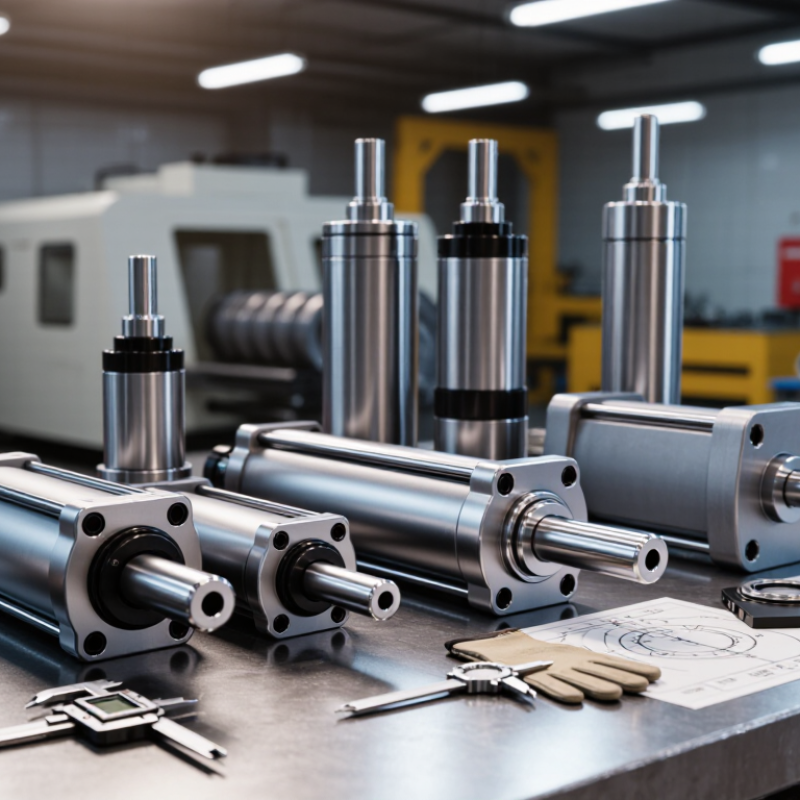
Who Are the Best Lifting Cylinder Suppliers in China?

What Are Lifting Cylinders and Where Are They Used?

Lifting cylinders are hydraulic actuators that turn pressurized oil into straight-line force. A piston moves inside a sealed barrel, extending a rod to raise, tilt, or support a load. In a workshop lift, that motion may raise a vehicle; on a construction machine, it can lift a loaded boom. Seals, rod finish, and cylinder alignment matter. A small leak can become a serious maintenance problem.

These cylinders are used in construction and agricultural machinery, material-handling equipment, vehicle lifts, and industrial platforms. Selection depends on load, stroke, mounting space, operating pressure, and how often the cylinder cycles. A cylinder that handles a static load may not suit repeated, fast movement. Check the machine’s load path, too. That detail is easy to overlook.

MarketsandMarkets estimated the global hydraulic cylinder market at USD 14.3 billion in 2023 and projected USD 18.5 billion by 2028, a 5.3% compound annual growth rate.

The report covers hydraulic cylinders broadly, not lifting cylinders alone, so its figures provide market context rather than a precise measure of lifting-cylinder demand. For buyers, practical checks still matter: pressure ratings, corrosion protection, seal compatibility, and service access. Specifications can look reassuring on paper. Real operating conditions are less tidy.

How to Assess Lifting Cylinder Suppliers in China

When assessing lifting cylinder suppliers in China, begin with the cylinder’s actual working conditions. Share the required stroke, load, mounting points, operating pressure, and duty cycle. Clear specifications make quotations easier to compare. Ask how the supplier selects tube materials, piston rods, seals, and surface finishes for your environment. A cylinder used outdoors may face moisture, dust, and temperature changes. Details matter.

Request drawings, pressure-test records, material documentation, and inspection criteria for the finished product. Check that any certificates match the factory, product, and process being offered. Ask how defects are recorded and corrected, not just whether testing happens. A polished brochure proves little. If possible, review a sample and inspect welds, ports, and rod finish under good light. Small flaws can reveal gaps in process control.

Compare response quality as well as price. Does the supplier clarify uncertain dimensions, explain tolerances, and provide realistic lead times? Ask who handles design changes and after-sales issues. A factory visit or independent inspection can help verify equipment and production capacity.

No checklist catches everything. I would still leave room for a pilot order, because drawings and real operating conditions do not always agree.

Which Chinese Suppliers Lead the Lifting Cylinder Market?

China’s leading lifting-cylinder suppliers are not simply the factories with the largest catalogs. They are manufacturers that can match cylinder design to load, stroke, mounting space, and operating cycle. Strong suppliers usually combine in-house machining, controlled welding, seal selection, and documented pressure testing. That matters.

For buyers, practical evidence is more useful than broad claims. Ask how the supplier checks rod straightness, bore finish, weld quality, and leakage after testing. A reliable team should explain material choices and provide drawings, inspection records, and clear production timelines. Sample testing can reveal whether a cylinder moves smoothly under load, not just whether it looks well made. Ask for evidence.

Suppliers that lead tend to communicate well when specifications change. They can discuss custom ports, corrosion protection, or replacement seals without treating every request as a standard order. Still, a polished quotation does not guarantee consistent batches. Compare test reports, sample performance, and after-sales response before placing a large order. Some details are easy to overlook; delivery pressure can make that mistake costly.

Hydraulic Cylinder Pressure Ratings: ISO Series Reference

This standards-based comparison provides a technical reference when evaluating lifting-cylinder suppliers. It does not rank suppliers or represent market share. Actual lifting capacity depends on factors including cylinder bore, operating pressure, mounting, and application design.

How Suppliers Differ in Products and Manufacturing Capabilities

A lifting cylinder may look standard on a product sheet, but suppliers differ in design range and production control. Some offer common bore sizes and stroke lengths for routine equipment. Others can adjust mounting points, port locations, or cushioning to suit a specific machine. That flexibility is useful, but only when the supplier confirms the limits clearly.

Manufacturing capability shows in the details. Ask how suppliers control tube straightness, rod surface finish, seal installation, and final pressure testing. Request sample inspection records and clarify whether testing covers every cylinder or only selected units. A tidy factory tour helps, but it does not prove consistent quality. I would treat vague answers as a reason to ask more—not as proof of poor workmanship.

Tips: Compare drawings, tolerances, test procedures, and lead times side by side. Check whether replacement seals and technical support are available. Small details matter. One weak point: a low quoted price can be difficult to assess without matching specifications and inspection requirements.

How to Select a Supplier for Your Application

Choosing a lifting cylinder supplier starts with the working conditions, not a catalogue photo. Record the load, stroke, mounting position, duty cycle, and available pressure. Small details matter. An outdoor platform may need a corrosion-resistant finish, while a hot production line needs seals rated for its temperature range. Ask how the supplier verifies load capacity and expected service life. Request dimensional drawings and pressure-test records for the proposed model.

A capable supplier should explain material choices, seal options, tolerances, and maintenance intervals in plain language. Check whether samples or pilot units can be tested under your actual operating cycle. That helps. Compare lead times, spare-part availability, warranty limits, and response times rather than judging price alone. Ask for references from applications with similar loads and environments, then verify details when possible. Be cautious when every specification receives an instant yes; I would want the limits written down. Even a careful review cannot remove all uncertainty, and that is worth admitting.

Who Are the Best Lifting Cylinder Suppliers in China? - How to Select a Supplier for Your Application

Use this supplier-evaluation matrix to compare quotations. It describes verifiable capabilities and evidence—not named companies or a ranking of suppliers.

Evaluation dimension What to look for Evidence to request Why it matters for lifting applications Suggested weight
Application and load definition Supplier confirms rated load, stroke, mounting, duty cycle, side-load conditions, and operating environment before proposing a design. Reviewed technical questionnaire, load calculations, and a dimensioned drawing. A cylinder must be selected for the machine’s actual load path and operating conditions; nominal thrust alone does not describe the full application. 20%
Design and engineering capability Can engineer the required bore, rod, stroke, end fittings, seals, ports, and installation envelope; flags buckling and side-load risks where relevant. Calculation assumptions, CAD drawing, material specifications, and documented design-change process. Correct sizing and mounting details help prevent instability, premature wear, and fit-up problems. 15%
Pressure and safety specification Working pressure, proof-test pressure, and any applicable machine or industry requirements are clearly stated for the exact model. Model-specific datasheet, test procedure, and test records identifying the acceptance criteria. Pressure ratings and test requirements vary by design and application; they should be verified rather than inferred from a general catalogue. 15%
Materials and manufacturing controls Supplier defines materials and finishes for the tube, rod, seals, and corrosion protection, with traceable inspection controls. Material certificates where specified, inspection plan, critical-dimension records, and coating details. Material and surface choices affect strength, wear, corrosion resistance, and service life in the intended environment. 15%
Quality assurance and testing Inspection and functional testing are defined for the ordered configuration, including leak checks and dimensional verification as applicable. Sample inspection report, test certificate, calibration records, and a clear nonconformance process. Documented checks provide evidence that the delivered cylinder meets the agreed specification. 15%
Customization and production readiness Can accommodate required dimensions, interfaces, seal options, and approved drawing revisions; production lead time is stated by order quantity. Prototype plan, confirmed production schedule, change-control records, and packaging details. Lifting equipment often uses application-specific interfaces, so configuration control and realistic scheduling matter. 10%
Service, spare parts, and warranty Warranty scope, response process, spare-seal availability, and after-sales responsibilities are provided in writing. Written warranty terms, spare-parts list, service contact process, and stated exclusions. Clear support arrangements can reduce downtime and clarify responsibilities if a problem occurs. 5%
Total cost and delivery terms Quotation separates cylinder configuration, testing, packaging, freight, and any tooling or sample charges; delivery terms are explicit. Itemized quotation, Incoterms® rule and named place, payment terms, and validity period. A comparable landed-cost view helps avoid choosing solely on unit price while overlooking scope or logistics. 5%

Selection tip: Score each shortlisted supplier against the same approved specification and supporting documents. Treat missing evidence as unverified, and confirm all safety-critical requirements with the equipment designer or qualified engineer.

Article Source: