
Top 10 Types of Aluminum Precision Parts for Global Buyers

Top 10 Types of Aluminum Precision Parts for Global Buyers

Aluminum Precision Parts sit at the intersection of material choice, machining skill, and dependable inspection. Buyers may compare brackets, housings, heat sinks, fittings, and custom components that look similar in a catalog. Yet a small change in wall thickness, surface finish, or tolerance can affect assembly, heat transfer, and service life. The details matter.

The International Aluminium Institute’s 2021 report, Aluminium for Climate: 2021, projects global aluminium demand could rise from about 86 million tonnes in 2020 to nearly 119 million tonnes by 2030. That estimate signals growing pressure to use the metal efficiently, though demand forecasts are not guarantees. The U.S. Geological Survey’s Mineral Commodity Summaries also tracks aluminium as a major industrial material, with supply and pricing shaped by production and trade. For global buyers, these reports provide context—not a substitute for checking a supplier’s process capability, inspection records, and material documentation.

As aluminium manufacturing specialist Dr. S. K. Das has emphasized, process selection must suit the part’s performance needs. “A precise part begins with a precise requirement.” That is a practical design principle, not a verified verbatim quotation. A drawing with clear datums, tolerances, alloy, and finish gives manufacturers a firmer basis for quotation and inspection. Still, buyers sometimes leave surface expectations vague. That can lead to avoidable rework. This guide examines ten common types of Aluminum Precision Parts and the features buyers should assess before placing an order.
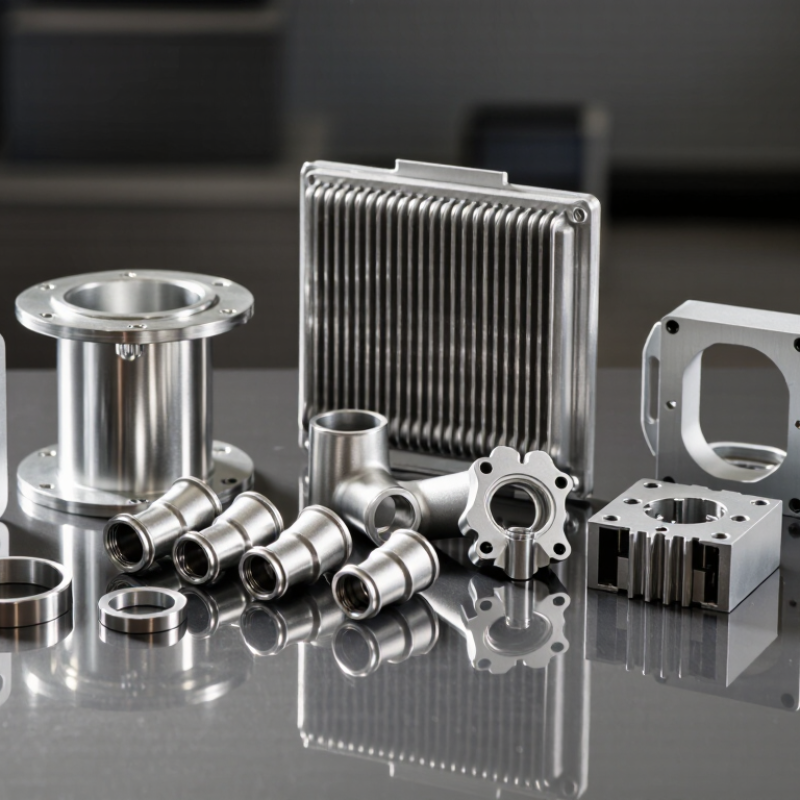
Top 10 Types of Aluminum Precision Parts for Global Buyers

Aluminum Precision Parts: Definition, Properties, and Common Uses

Aluminum precision parts are components machined or formed to meet specified dimensions and functional requirements. They may include housings, brackets, shafts, heat sinks, and fluid-system fittings. “Precision” does not mean every part needs the tightest possible tolerance. It means the dimensions and inspection methods suit the part’s job. A small variation can affect a bearing fit, while a cosmetic cover may allow more movement. That distinction is easy to overlook.

Aluminum is relatively light, conducts heat well, and can be machined efficiently. Its strength, corrosion behavior, and surface finish depend on the alloy, temper, and any treatment applied. For example, a machined housing may need anodizing for added surface protection, but coating can change critical dimensions. Designers should account for that before setting fits. Check drawings, material certificates, and inspection records together.

These parts appear in automation equipment, vehicles, electronics, medical instruments, and aerospace assemblies. A heat sink needs good contact with its mating surface; a bracket must resist loads without unnecessary weight. CNC milling suits many flat or complex shapes, while turning is useful for round components. The best process depends on geometry, quantity, and tolerance. Tighter tolerances can raise cost and inspection time. More precision is not always better.

CNC-Machined Housings and Precision Brackets

Top 10 Types of Aluminum Precision Parts for Global Buyers: CNC-Machined Housings and Precision Brackets

CNC-machined aluminum housings protect electronics, sensors, and compact mechanical assemblies. Their walls may look simple, yet uneven thickness can cause distortion during machining. Designers should specify mounting faces, connector openings, and sealing surfaces clearly. A housing with a 2-millimeter wall and four corner bosses, for example, may need careful tool access and stable fixturing. Fit matters. Check critical dimensions against the mating parts, not only the drawing.

Precision brackets connect components while controlling position and load. They often include slotted holes, ribs, and right-angle faces. These features help with adjustment and stiffness, but can add machining time. For a bracket supporting a small motor, confirm load direction, bolt size, and clearance around moving parts. Ask the supplier how tolerances apply to each datum. Tighter is not always better; it can increase cost without improving assembly.

Tips: Share a 3D model and a dimensioned drawing, then identify the surfaces that truly affect fit. Request inspection results for those features, plus material and finish details. Anodizing can change dimensions slightly, especially in small bores. Leave suitable allowance where needed. One detail is easy to miss: chips trapped in a deep pocket can mark a finished surface, so ask how parts are cleaned and protected before shipment.

Heat Sinks and Electrical Connectors

Heat sinks and electrical connectors show how aluminum precision parts serve very different needs. A heat sink must move heat away from a component, so fin spacing, base thickness, and surface area all matter. Closely spaced fins can increase cooling area, but they may also restrict airflow or collect dust. Small details matter. Machined or extruded profiles should be checked for flatness and consistent dimensions before assembly, especially where a thermal interface must sit evenly.

Electrical connectors need a different balance. Their housings may require precise slots, mounting holes, and contact alignment, while the aluminum body can provide strength and help shield against electromagnetic interference. It is not a substitute for properly designed contacts or insulation. Fit matters. Burrs around a connector opening can complicate assembly, so deburring and dimensional inspection are practical steps, not cosmetic extras.

For global buyers, drawings should specify tolerances, alloy, finish, and inspection points in clear terms. Anodizing can improve corrosion resistance, but coating thickness may affect mating dimensions. That detail is easy to overlook. Samples tested under realistic temperature, airflow, and vibration conditions can reveal problems that a drawing cannot. Still, no single design suits every installation; airflow, electrical load, and maintenance access often change the best choice.

Precision Shafts and Aluminum Gears

Precision shafts and aluminum gears serve different roles, but both depend on accurate geometry. A shaft may guide a sliding component or transfer rotation. Its diameter, straightness, and surface finish affect fit and vibration. For example, even a slight runout can create uneven movement in a compact actuator. Buyers should confirm bearing locations, tolerance requirements, and whether the shaft needs threads, keyways, or cross-holes.

Small details matter. Aluminum gears are valued for low weight and corrosion resistance, especially in mechanisms where reducing moving mass can improve response. Tooth profile, pitch, and concentricity shape how smoothly a gear meshes. Material choice matters too: some aluminum alloys machine cleanly, while others may require extra attention to wear and load. A hard coating can help, but it is not a substitute for correct gear design.

Share drawings with clear dimensions and datum references, and specify the operating speed, load, and environment. Ask how inspection is performed, including checks for shaft runout and gear dimensions. A sample part can reveal issues that a drawing misses. One trade-off is easy to overlook: lighter parts do not automatically last longer. Sometimes the first specification needs revisiting after real-world testing.

Manifolds, Plates, Enclosures, and Aerospace Components

Top 10 Types of Aluminum Precision Parts for Global Buyers

A manifold’s value lies in its internal passages, not its polished exterior. CNC-machined channels must meet flow and sealing requirements, while port positions need to match the assembly drawing. A small burr can disrupt fluid flow or damage a seal. That detail is easy to miss. Buyers should specify alloy, pressure conditions, surface finish, and inspection method before quoting. Aluminum is widely available: the U.S. Geological Survey’s Mineral Commodity Summaries 2024 estimated global primary production at about 70 million metric tons in 2023. Availability, however, does not guarantee consistent machinability or part quality.

Precision plates often serve as mounting bases, heat spreaders, or structural interfaces. Flatness and hole-position tolerances matter when several plates stack together. Enclosures add other demands: thin walls, clean edges, and openings that align with connectors and cables. For aerospace components, weight reduction must not come at the cost of fatigue resistance or traceable inspection records. The International Aluminium Institute reports that roughly 75% of aluminum ever produced remains in use, reflecting its recyclability; recycled content still needs careful material verification. Ask suppliers to document alloy and temper, then review first-article measurements. One practical compromise: overly tight tolerances can raise cost without improving the assembly. Define what truly matters, and test the fit in context.

Top 10 Types of Aluminum Precision Parts for Global Buyers - Manifolds, Plates, Enclosures, and Aerospace Components
# Part Type Common Aluminum Alloys Typical Applications Common Manufacturing Processes Key Purchasing Considerations
1 Hydraulic Manifolds 6061-T6, 6082-T6 Hydraulic power units, mobile machinery, industrial equipment CNC milling, drilling, tapping, cross-hole machining, deburring Specify port standards, passage layout, pressure requirements, cleanliness, and leak-testing criteria.
2 Precision Mounting Plates 6061-T6, 7075-T6 Automation equipment, machine frames, optical and inspection systems CNC milling, face machining, pocketing, hole pattern machining Define flatness, parallelism, hole-position tolerances, surface finish, and any stress-relief requirements.
3 Electronic Enclosures and Housings 6061-T6, 5052-H32 Control systems, instrumentation, communications, and embedded electronics CNC machining, sheet-metal forming, tapping, anodizing, coating Check internal clearances, heat dissipation, sealing features, connector openings, and corrosion protection.
4 Aerospace Structural Components 2024-T3, 7075-T6, 7050-T7451 Aircraft structures, brackets, fittings, and support components Multi-axis CNC machining, pocketing, drilling, finishing Confirm material specifications, traceability, approved inspection plans, and applicable customer or industry requirements.
5 Heat Sinks and Thermal Plates 6061-T6, 6063-T5 Power electronics, LED systems, industrial drives, and thermal-management assemblies Extrusion, CNC machining, fin machining, drilling, surface treatment Evaluate thermal conductivity, fin geometry, mounting flatness, airflow clearance, and contact-surface finish.
6 Precision Brackets and Fittings 6061-T6, 7075-T6 Robotics, aerospace assemblies, vehicles, and industrial machinery CNC milling, turning, drilling, tapping, chamfering Review load direction, fastener interfaces, edge conditions, dimensional tolerances, and assembly fit.
7 Optical and Instrumentation Components 6061-T6, 7075-T6 Measurement instruments, cameras, laboratory equipment, and optical mounts Precision CNC milling, turning, boring, lapping where required Specify datum references, alignment features, surface finish, burr limits, and dimensional inspection methods.
8 Valve Bodies and Fluid Components 6061-T6, 6082-T6 Fluid-control equipment, pneumatic systems, and low- to moderate-pressure assemblies CNC turning and milling, drilling, tapping, deburring, pressure testing Confirm fluid compatibility, sealing geometry, port specification, cleanliness, and required test pressure.
9 Motor and Gearbox Housings 6061-T6, 6063-T5 Electric motors, gear drives, pumps, and automation systems Die casting or extrusion followed by CNC machining; drilling and tapping Check bearing-seat dimensions, concentricity, thermal expansion, mounting interfaces, and finish requirements.
10 Custom CNC-Machined Prototypes 6061-T6, 7075-T6, 5052-H32 Product development, test equipment, low-volume production, and design validation Three-axis or multi-axis CNC milling and turning Provide a current drawing or 3D model, target quantity, critical dimensions, material condition, and finishing requirements.